
Welcome, neighbor-track-sleuth. If you’ve ever squinted at your lawn after a rain and wondered whether those little impressions are evidence of a critter’s morning commute or just your cat rearranging the landscaping, you’re in the right place. I’ll walk you through how to read the prints so you can tell front tracks from back tracks, and what to do if you want to encourage or discourage repeat visitors.
## Front Tracks Versus Back Tracks: Know What You’re Looking At
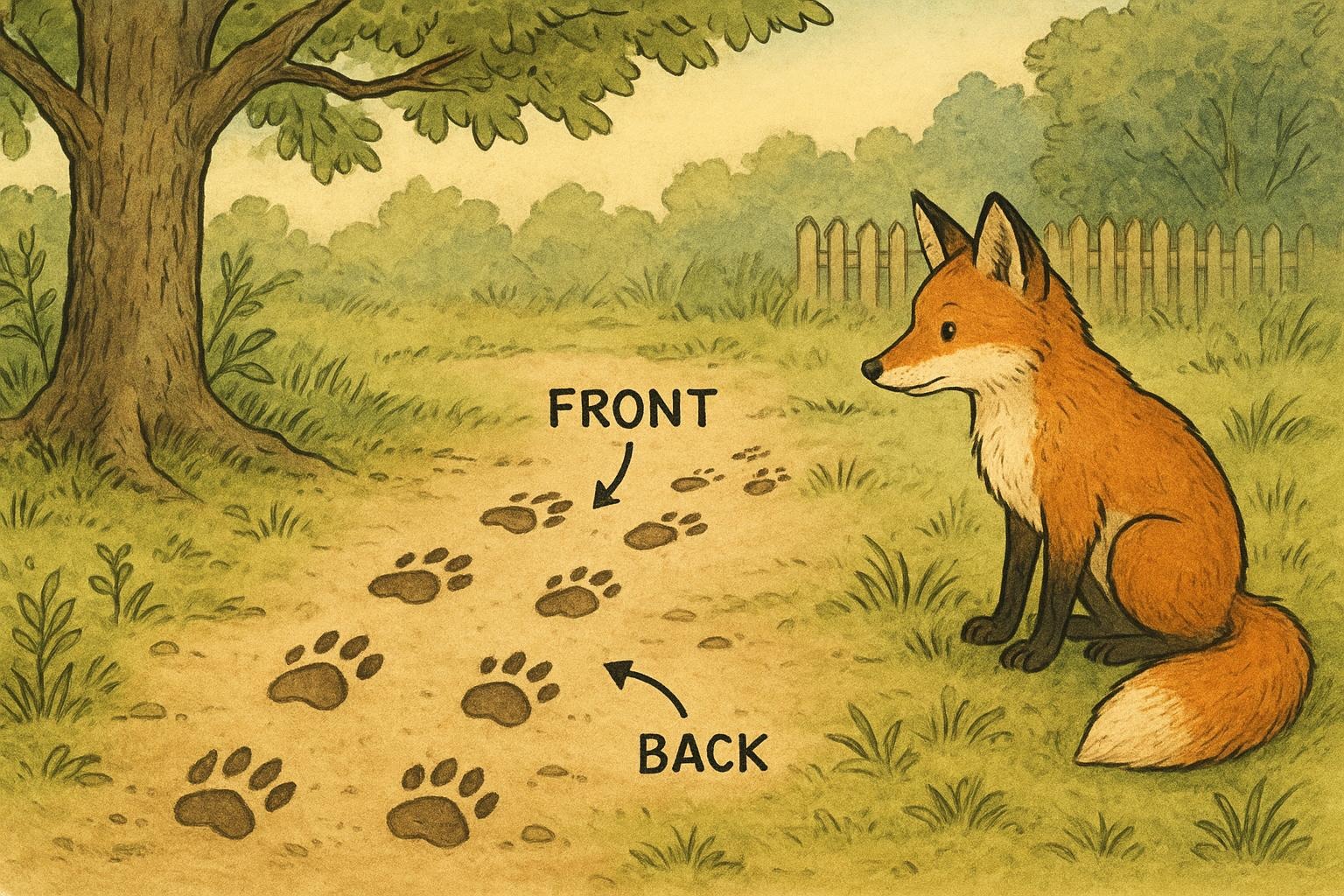
Tracks tell stories, and like any good neighborhood tale, the details matter. When people talk about “front tracks” they usually mean the prints made by an animal’s front feet — the ones that can look noticeably different from the rear prints. Depending on species, the front feet may be broader, show different pad patterns, or leave claw marks in a unique way. Spotting the difference helps you figure out species, gait, and sometimes even behavior (was the animal running, investigating, or carrying something?).
### How Tracks Tell A Story
Tracks are snapshots: spacing shows stride, toe angles show direction, and pressure marks show weight distribution. Smaller mammals like raccoons leave fairly round front tracks with distinct fingers; dogs and foxes show more elongated prints with toe alignment; deer have cloven hooves and their front tracks often appear more splayed because the front legs bear a lot of weight. Look at the leading edge of a print: if the furthest impression is broader and the pad pattern is flatter, you’re probably seeing front tracks.
#### Size, Shape, And Toe Marks
Front feet often have different roles — they steer, dig, or manipulate — and their anatomy reflects that. For example, raccoon front tracks can look almost hand-like with visible finger digits, while raccoon rear tracks are narrower and less dexterous. Compare symmetry: rear tracks may be more uniform because they follow the front feet’s path, whereas front tracks can be oriented slightly wider if the animal is foraging or turning.
### Where To Look In The Yard
Animals prefer certain traffic lines: fence edges, garden beds, the base of trees, and soft soil near water sources. After a fresh rain (prime evidence time), check shallow depressions, muddy spots, or dusty areas at dawn. If you find paired prints that are wider in the front and closer together toward the back, the front impressions are often the more rounded or splayed ones. Don’t forget to note direction — front feet usually hit the ground slightly before the rear feet when moving forward, so the deepest or most forward impressions can point you to which are the front tracks.
## Signs That You’re Seeing Back Tracks Not Front Tracks
Sometimes the simplest way to tell is to look for repetition and rhythm. Animals that plant their front feet for balance will often place back feet into similar, slightly offset spots. When prints appear staggered in a regular pattern where the rear impressions fall inside the path set by the front, you’re likely observing back tracks. Also, if one set of prints is consistently cleaner or shallower, that can indicate the lighter rear feet; front feet often dig in more, especially if they’re used to test ground or manipulate objects.
### Gait Patterns To Recognize
There are four common gait patterns you’ll see in yards: walk, trot, bound, and gallop. Front tracks vs. back tracks show differently in each. In a walk, you’ll see each foot hit in sequence — left front, left rear, right front, right rear — making it easier to identify which is which. In a trot, diagonal pairs hit together and can make fronts and rears look similar, so pay close attention to pad shape and claw marks. If you catch an overlap where one print sits slightly in front of another, that forward print is likely a front track.
#### Environmental Factors That Muddy The Picture
Rain, frost, and sun can alter prints quickly. Wind-driven debris or an animal stepping on grass rather than soil can produce partial impressions. If tracks are smudged, look for the clearest example nearby: sometimes a single crisp print tells more than a dozen messy ones. Also consider seasonal changes — heavy winter coats can alter how deeply a front foot sinks compared to a slender rear foot.
## 1. Create A Tracking Sandpad (Remedy)
If you want to monitor regular visitors or get clearer evidence of front tracks and back tracks, a simple sandpad is the most reliable non-invasive tool. This is a practical remedy, often used by wildlife professionals, to capture clear impressions that let you differentiate front tracks from rear ones.
Materials
– A shallow wooden frame or plastic tray (about 2–3 feet square)
– 1–2 inches of clean play sand
– A flat rock or small board for leveling
– Optional: a camera or smartphone on a tripod
Step-By-Step Creation And Application
1. Select Location: Place the sandpad along known travel lines — near fence edges, under a low limb, or adjacent to a garden bed. Animals follow the path of least resistance.
2. Prepare Frame: Set the wooden frame or tray on level ground, ensuring it won’t wobble. The frame helps keep sand contained and creates a neat recording surface.
3. Add Sand: Pour 1–2 inches of clean play sand into the frame. Avoid overly fine sand that compacts; medium grain gives the best prints.
4. Level Surface: Smooth the sand with a flat rock or board to create an even, blank slate.
5. Leave Overnight: Check the pad at dawn. Avoid touching it until you document the prints.
6. Document Prints: Photograph each track from directly above with a scale (a coin or ruler) to record size. Note orientation and sequence.
7. Clean And Reset: After recording, smooth the sand and reset for the next use.
This approach is formal in technique: consistent placement, clean sand, and photographic documentation increase reliability, letting you confidently identify front tracks based on pad shape, toe count, and print positioning.
## 2. Install Simple Backtrack Deterrents (Remedy)
If your goal is not just to spot front tracks but to reduce unwanted back tracks in sensitive areas (like vegetable beds), deploy humane deterrents that alter animal movement without harm. This method is structured and evidence-based.
Materials
– Motion-activated sprinkler or lights
– Garden wire or low fencing (12–18 inches)
– Mulch (sharp-textured like gravel) for pathway edging
– Optional: scent repellents (commercial, pet-safe)
Step-By-Step Creation And Application
1. Assess Pathways: Identify where animals enter and where back tracks appear most frequently. Sensors and tracking pads help confirm these spots.
2. Install Motion Deterrent: Place a motion-activated sprinkler or light angled to cover the approach route. Ensure it doesn’t spray into your house or neighbors’ yards.
3. Add Physical Edge: Install low garden wire or temporary fencing to create a gentle barrier that redirects movement. Small animals will avoid unfamiliar obstacles that interfere with their typical stride and hence their front tracks and back tracks.
4. Modify Substrate: Replace soft soil in narrow entry routes with gravel or coarse mulch. Many animals dislike walking on uncomfortable textures and will choose a different path.
5. Reapply Scent Repellents: If using scents, follow the manufacturer’s instructions carefully and reapply after rain. Use pet-safe products and avoid anything toxic to wildlife.
6. Monitor And Adjust: Check the area over several nights. If animals adapt, vary the deterrent pattern — change sprinkler orientation or move fencing slightly. Humane variability maintains effectiveness.
When documenting the effectiveness, be formal in your approach: record baseline track frequency using either direct observation, trail camera footage, or your sandpad. After implementing deterrents, measure changes to track counts and locations. This empirical method helps you refine tactics while preserving neighborhood wildlife.
### When A Specialist Might Help
If tracks show signs of illness (disoriented behavior, dragging limbs), or if a protected species is frequently present, contact local wildlife specialists or animal control. They can provide safe handling, legal guidance, and, if necessary, removal. For most yards, the sandpad and deterrents above are sufficient to distinguish front tracks, monitor patterns, and manage unwanted back tracks without harm.
### Reading A Sequence: A Quick Example
Imagine you find a line of prints that repeat every few feet. The first print in each set is wider, with visible claw marks and a rounded pad; the second is narrower and sits slightly behind the first. That pattern suggests the broader front tracks are making the initial contact, and the narrower depressions trailing behind are the back tracks. Photographing the sequence and noting stride length will let you match that pattern to common yard visitors like raccoons, foxes, or neighborhood dogs.
Now go ahead: pick a rainy morning, place a sandpad where you suspect movement, and see what stories your yard wants to tell about front tracks and their partners in crime.










































Leave a Reply