
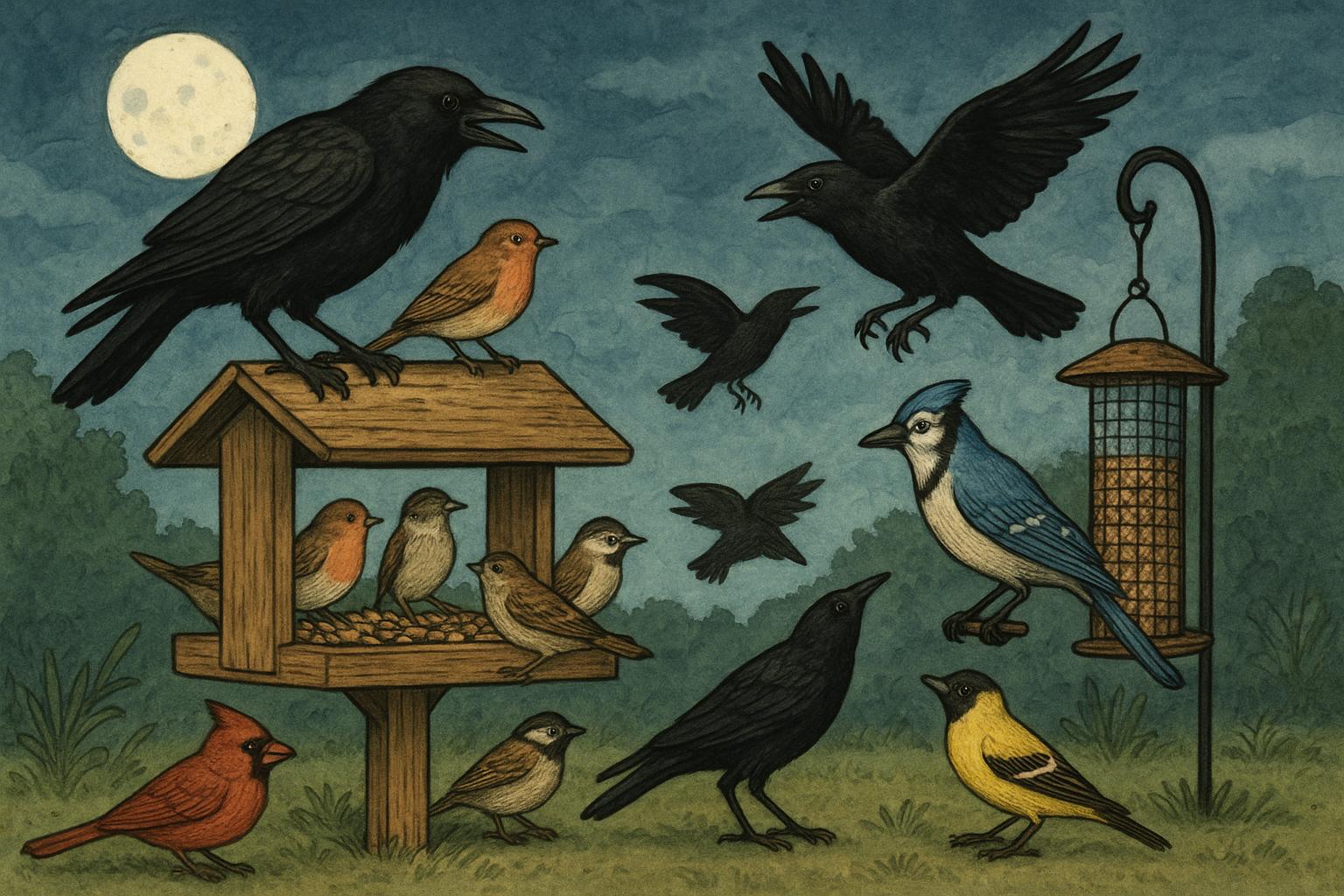
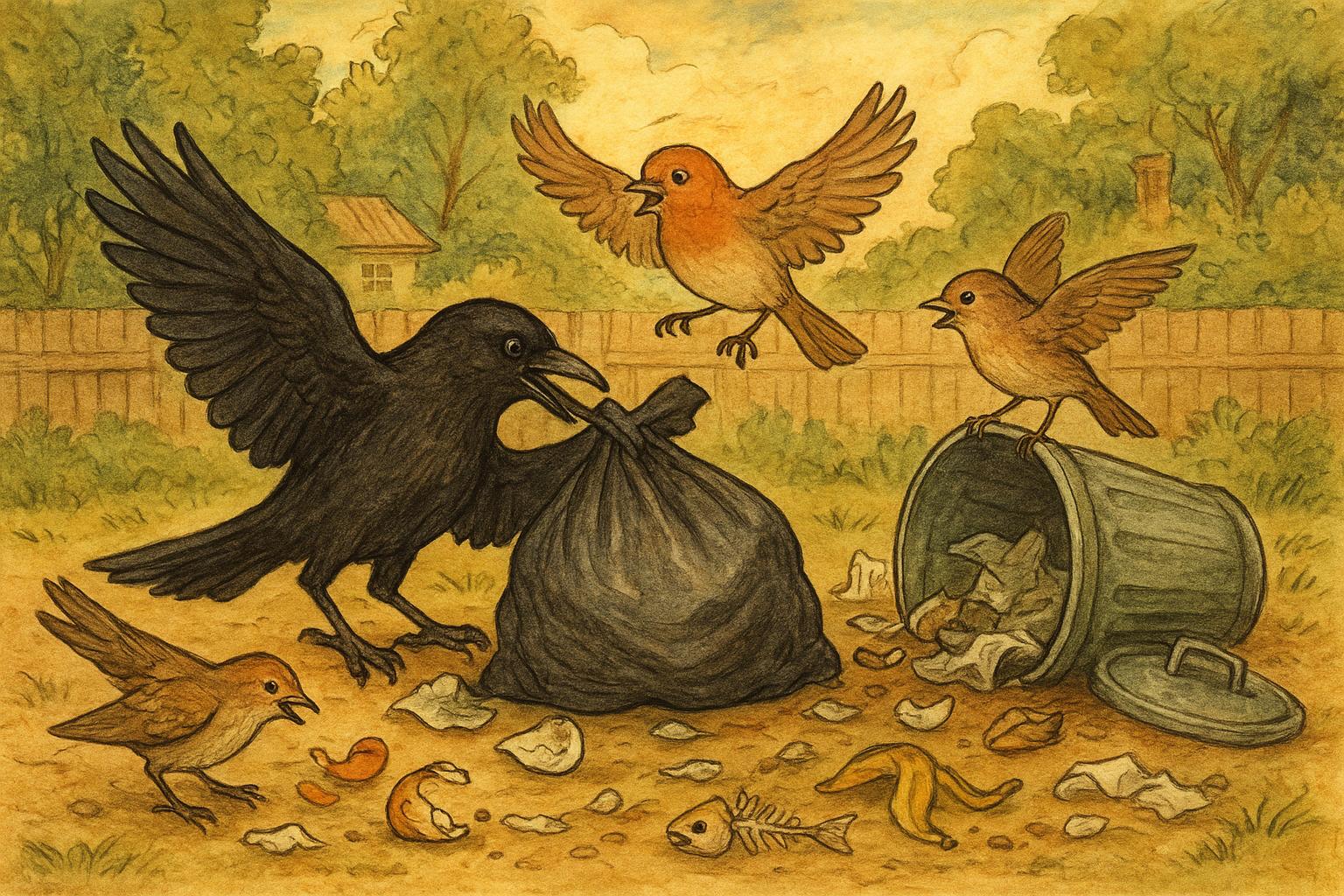
Tonight the feeders in my neighborhood turned into a battlefield of wings and noise. Backyard personalities rearranged themselves in a hurry: a pair of cardinals froze at the suet, titmice hustled sideways along the rail, and three large black shapes moved with the kind of confident, casual menace you only get from corvids.
## Corvids At Feeders Turn Quiet Yards Into Chaos
They show up like they own the place. When corvids at feeders arrive, it’s not a diplomatic visit. Crows hop onto platforms, jays dive-bomb a hopper, and magpies stand off to the side, waiting for an opening. Tonight the result was a sudden, very public eviction: smaller birds scattered, feeders emptied, and the only sound was the sharp, proud calls of the corvids.
Watching them is oddly satisfying. These birds are smart, social, and not afraid to test boundaries. One crow figured out how to stretch a thin piece of plastic across a tube feeder and tug it so sunflower seeds spilled out. Another perched right on top of a squirrel baffle and used it like a stage to intimidate a nearby goldfinch. That kind of improvisation is why so many people end up talking about corvid feeding techniques and whether to adapt or resist.
### What The Arrival Looks Like
Corvids don’t sneak. They often fly in groups, and their approach is visible from a block away: wings beating steadily, then a sweep down to the tree canopy. Within minutes, feeder activity spikes. The first clear sign is volume. You hear the high, metallic notes of jays before you see anything else. Then crows land with their bigger, heavier thump.
If you put out a sunflower tray or a mixed seed hopper, expect it to be gone fast. I’ve seen corvids at feeders empty a platform in under ten minutes. They are efficient and not fussy. If a feeder is poorly attached, they’ll use it to create more food or knock it down entirely just to access the prize.
### How Corvid Feeding Changes The Backyard
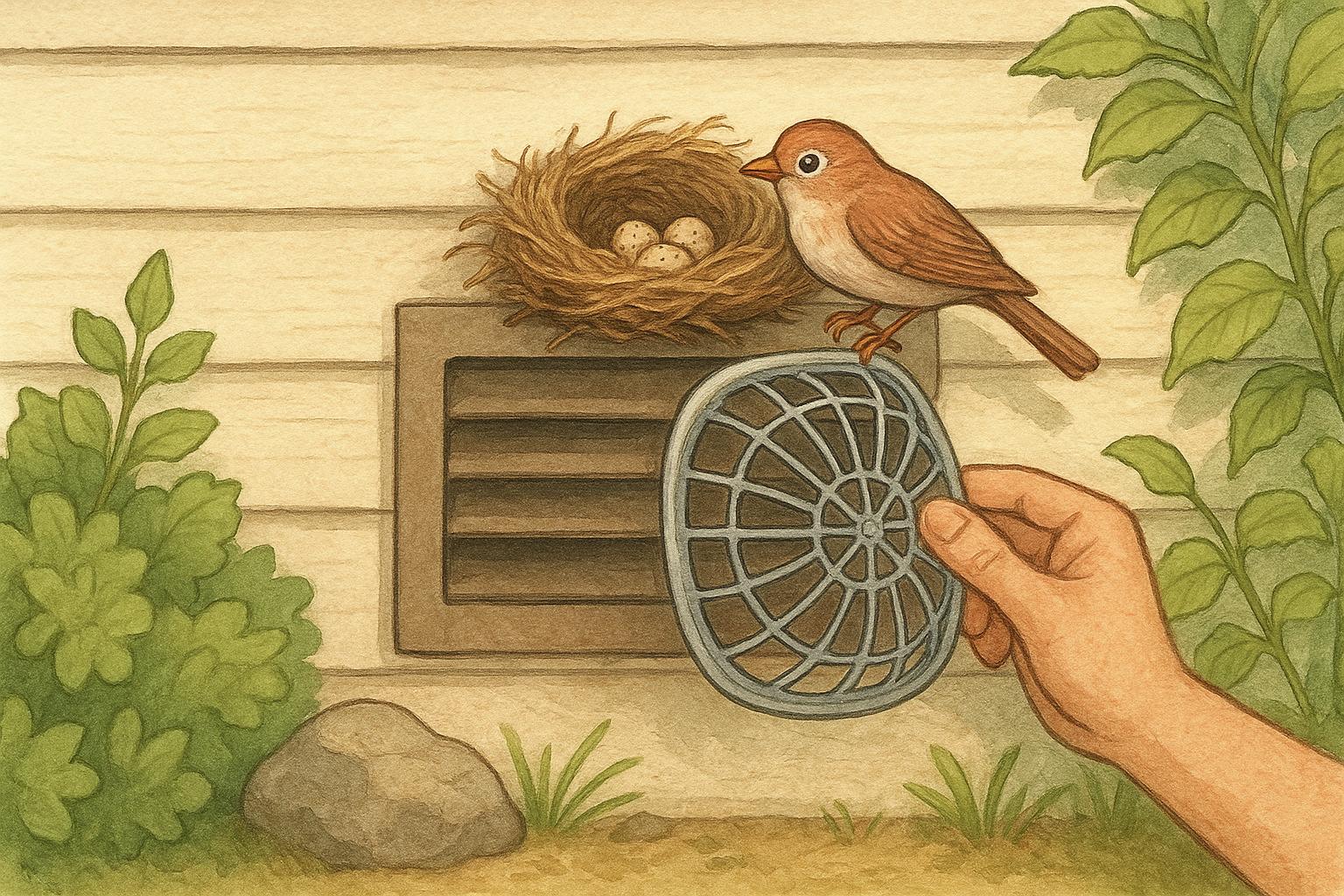
There are practical consequences. When corvids own a feeder, smaller species either adapt or disappear from that feeding station. Chickadees will look for safer, clandestine spots to feed. Finches may wait until late evening. The neighborhood tonight had a clear division: yards where owners embraced corvid feeding — larger feeders, peanuts in the shell, and broad platforms — and yards where people tried to keep corvids off with cage guards or weight-activated ports.
Corvid feeding can be deliberate. Some folks set up dedicated crow feeders stocked with peanuts, corn, or kitchen scraps. That tends to concentrate corvid activity and keeps them from raiding more delicate feeders. I know a neighbor who puts out a worn crate of cracked corn near a fence. The crows come, make a lot of noise, then mostly leave the tube feeders alone. You can design for coexistence, but it requires choices and a willingness to trade who you attract.
#### Adjustments That Work (And Some That Don’t)
If you want fewer giant beaks at your suet, you have options. Taller poles with smaller perches can reduce access. Weight-sensitive feeders that close under heavier birds help, though crows quickly learn to circumvent them if they see a way. Repositioning feeders closer to cover can also protect smaller birds, because corvids prefer open, commanding perches where they can watch for threats.
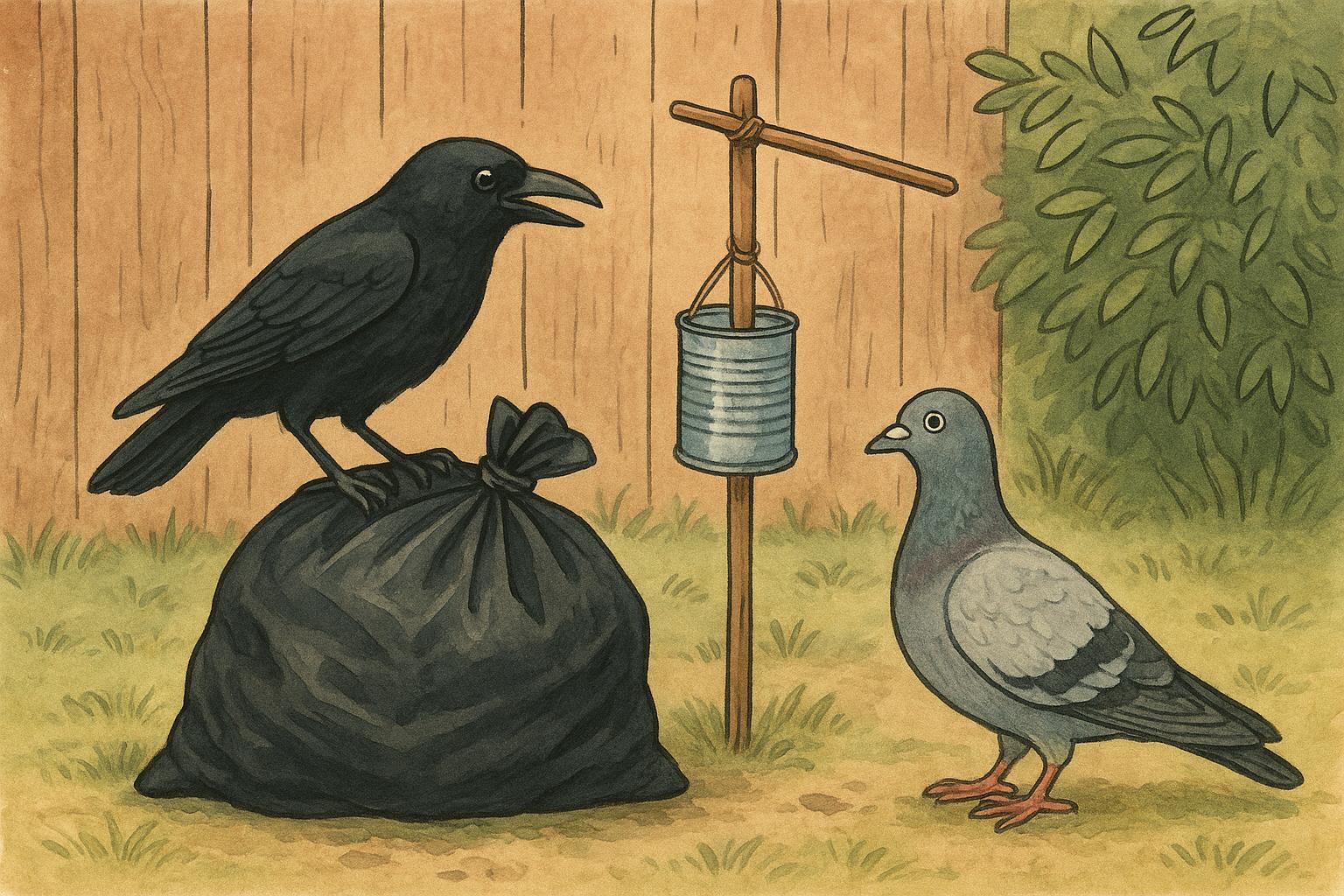
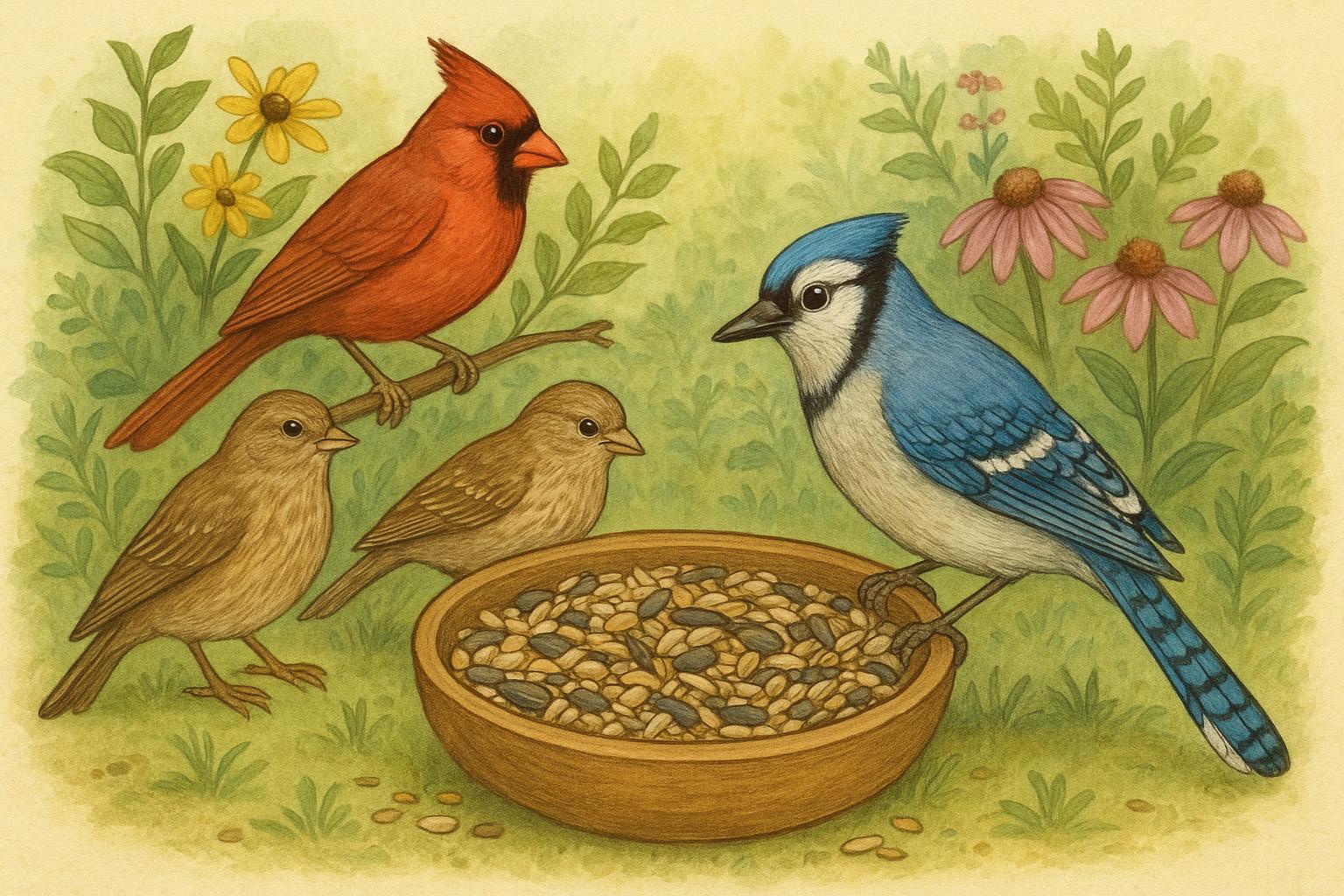
On the other hand, mechanical tricks sometimes backfire. Tonight a neighbor hung a decorative metal funnel above a hopper to stop crows; within an hour the crows had dropped a stick through the funnel to prop it open. Smart birds equal creative sabotage. If you don’t want corvids at all, removal of all easily accessible food is the only reliable method, but it’s also the mean option. Many people prefer to redirect: set up a separate station for jays and crows and protect the finch and chickadee spots.
### Reading Behavior: What They’re Telling You
Corvids are not just opportunists. They communicate. The way they move between branches, the loudness of their calls, even how they share a peanut all signal social structure. Tonight the boldest bird took the highest perch and acted like a sergeant, giving short, sharp calls that sent others into motion. It was easy to spot the dominant individual; it took approach after approach and always got the first bite.
This is where corvids at feeders become interesting for anyone who likes bird behavior. You start to notice patterns: who grooms whom, who follows up on a food find, who acts as lookout. If you enjoy the study of animal intelligence, corvid feeding offers daily lessons. They remember faces, they plan, and they sometimes work in teams. Expect drama.
## Practical Steps For Different Goals
If your goal is to minimize corvid visits, do not scatter seed on the ground or leave pet food outside overnight. Remove or change the types of feed that attract them. Corvids like peanuts, cracked corn, and shelled seeds. Switching to nyjer seed for finches or sunflower hearts in caged feeders can reduce attraction. Remember, though, that any predictable bounty will be discovered.
If you want to encourage corvids because you enjoy their presence, set up a sturdy, weatherproof station. Crow feeders should be low to the ground with open space nearby so the birds can land and take off easily. Offer whole peanuts in the shell and unsalted nuts in moderation. Keep in mind that concentrated feeding sites can draw larger numbers than your yard can comfortably handle, so colocate feeders with nearby trees and avoid putting food where it will become a nuisance to neighbors.
### Safety, Neighbors, And A Few Etiquette Notes
Feeding corvids affects more than your yard. Tonight, when a neighbor opened a bag of peanuts, crows arrived and then migrated down the street. Pets were interested, children watched, and people had to decide quickly whether they liked the outcome. If you set up crow feeders, tell neighbors. A little communication saves a lot of irritation.
Also, be mindful of disease. Crow flocks congregating at a single point can increase transmission risks. Clean your feeders regularly. Rotate feeding locations when possible. Do not leave food to rot in bad weather.
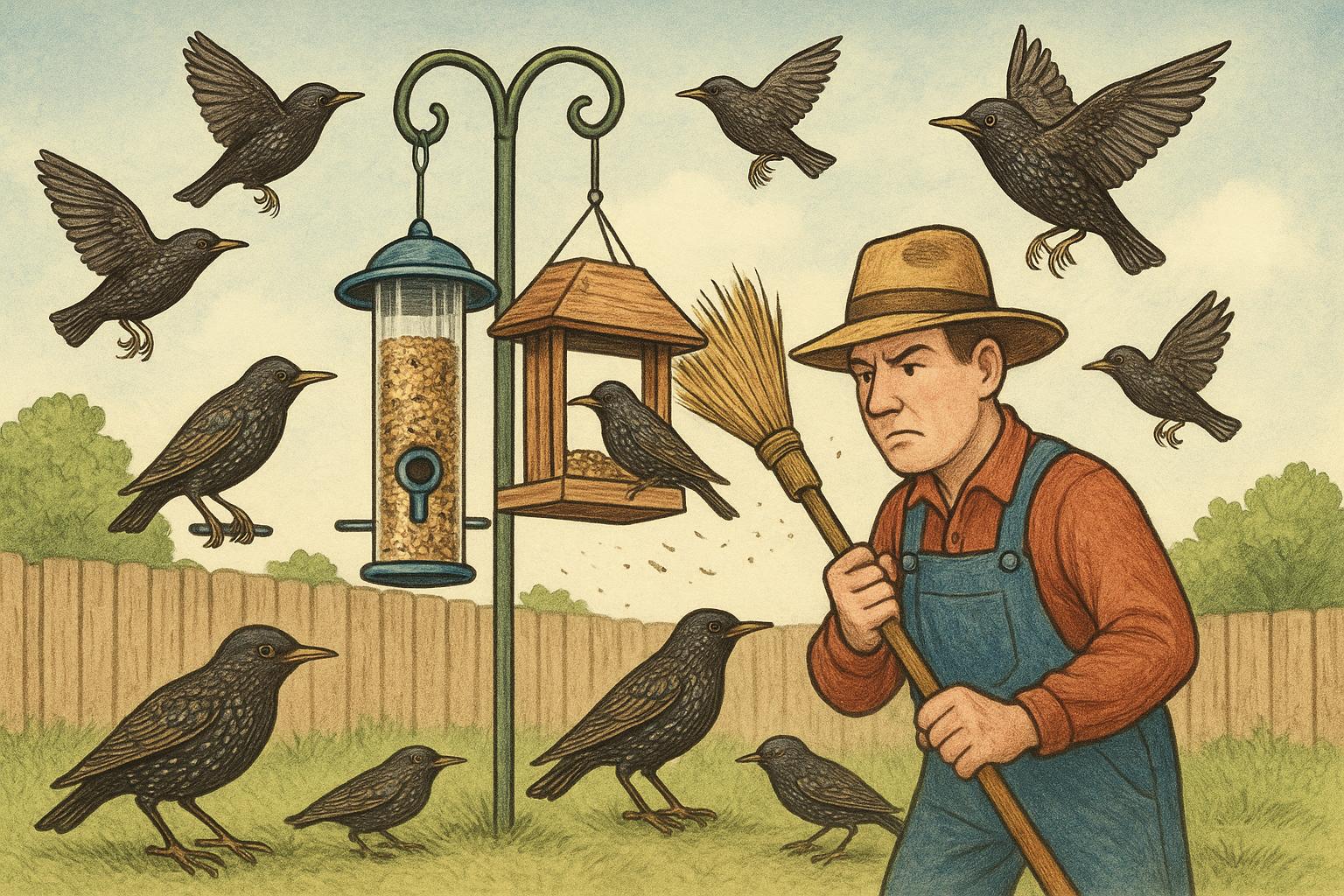
There is also a social contract. Accepting corvid feeding means accepting their mess and their noise. They drop shells, they call loudly, and they will sometimes harass smaller birds. Tonight’s frenzy illustrated that tradeoff perfectly: powerful, clever birds enlivening the yard at the cost of a quieter, more delicate avian scene.
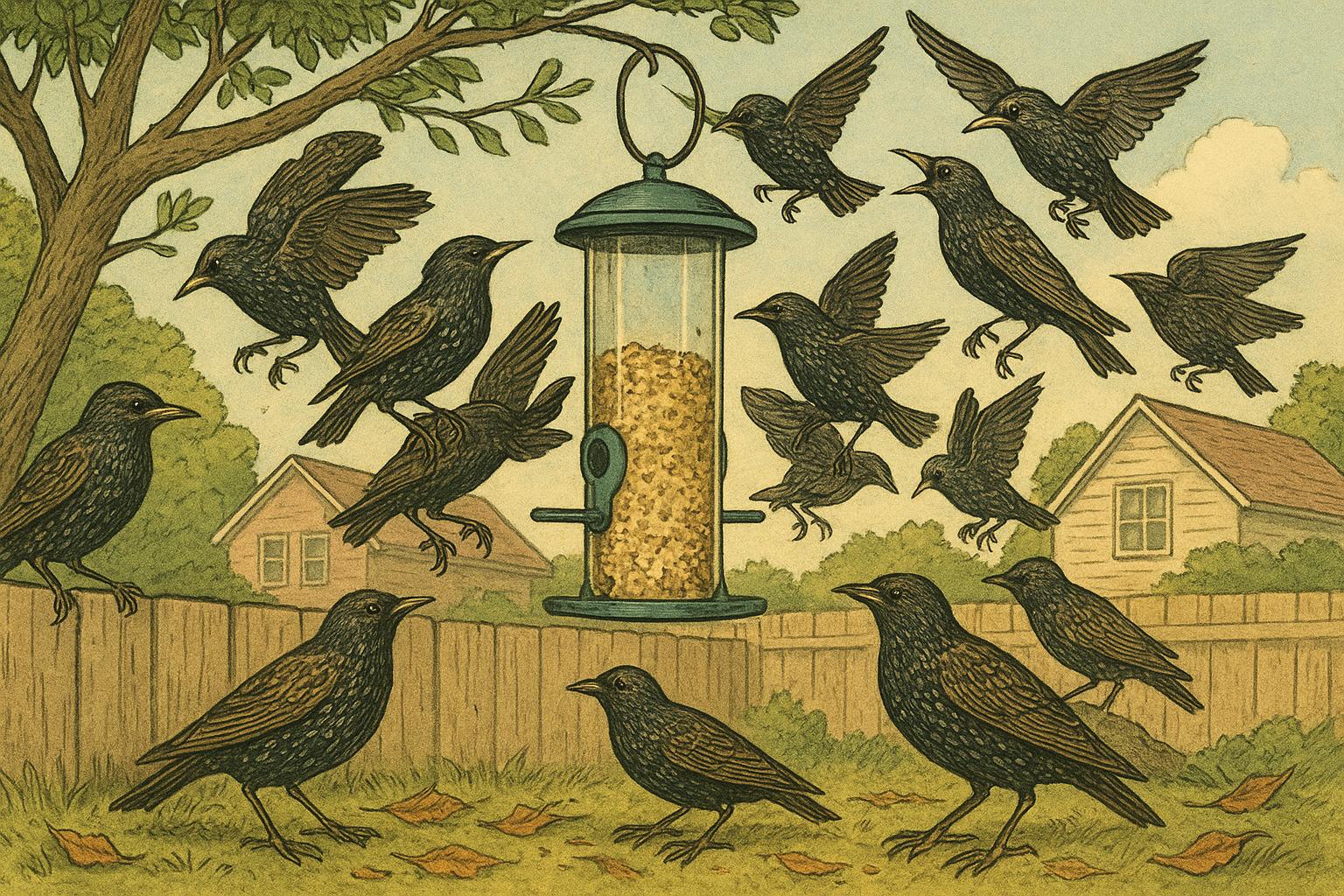
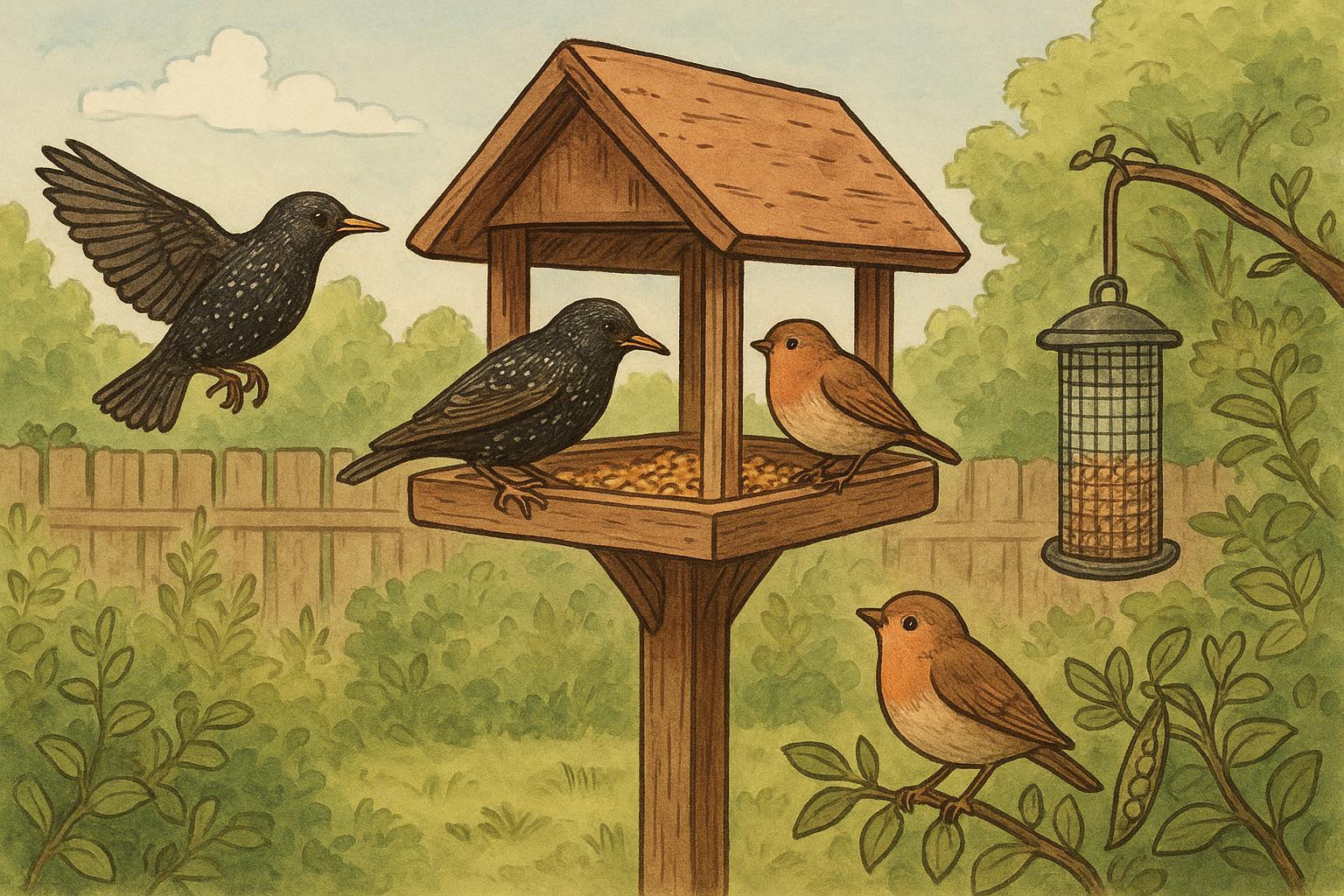
A couple of final, quick observations from the night: one magpie showed off by hanging upside down from a feeder hook; a crow used a dropped walnut to pound open a beetle-filled husk; a pair of starlings circled at a respectful distance, plotting their next move. Teh neighborhood sounded alive, even if some of us will be cleaning up shells tomorrow morning and deciding whether to recieve the next round of visitors with open arms or a steely stare.

Leave a Reply