
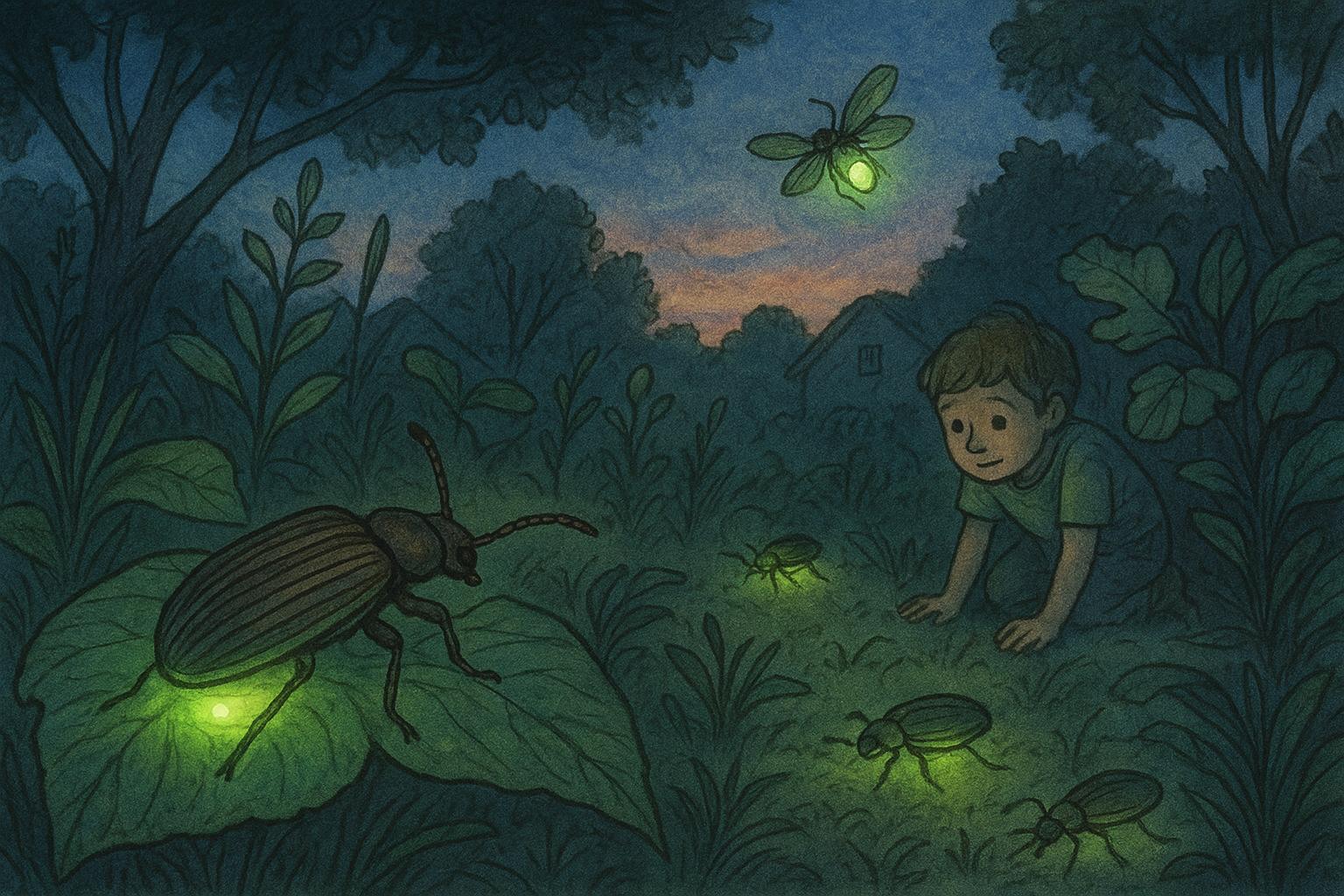
If you’ve ever noticed small, hesitant flashes near the grass line as dusk falls, you saw something a lot of people miss: insects doing light work. They don’t scream for attention. They blink, they hover, then they’re gone. That quiet show changes how you think about the backyard.
## Unveiling Bioluminescent Beetles In The Backyard Twilight
You don’t need a trip to a distant swamp to find bioluminescent beetles. They’re right where moisture and cover meet: under leaf litter, in mulched beds, at the edges of uncut lawns. These beetles produce light chemically, sending photons out of their bodies with the same economy as a candle. But unlike a candle, the glow is meant to communicate — mates, danger, or just location.
### Bioluminescent Beetles In The Backyard: Signs And Timing
Timing matters. In most temperate regions the peak window for seeing bioluminescent beetles in the backyard falls in late spring through midsummer, when nights are warm and humid. The flashes often start 20 to 40 minutes after official sunset, when the sky still holds a blue afterglow. Watch the margins of shrub beds and the undersides of dew-damp leaves.
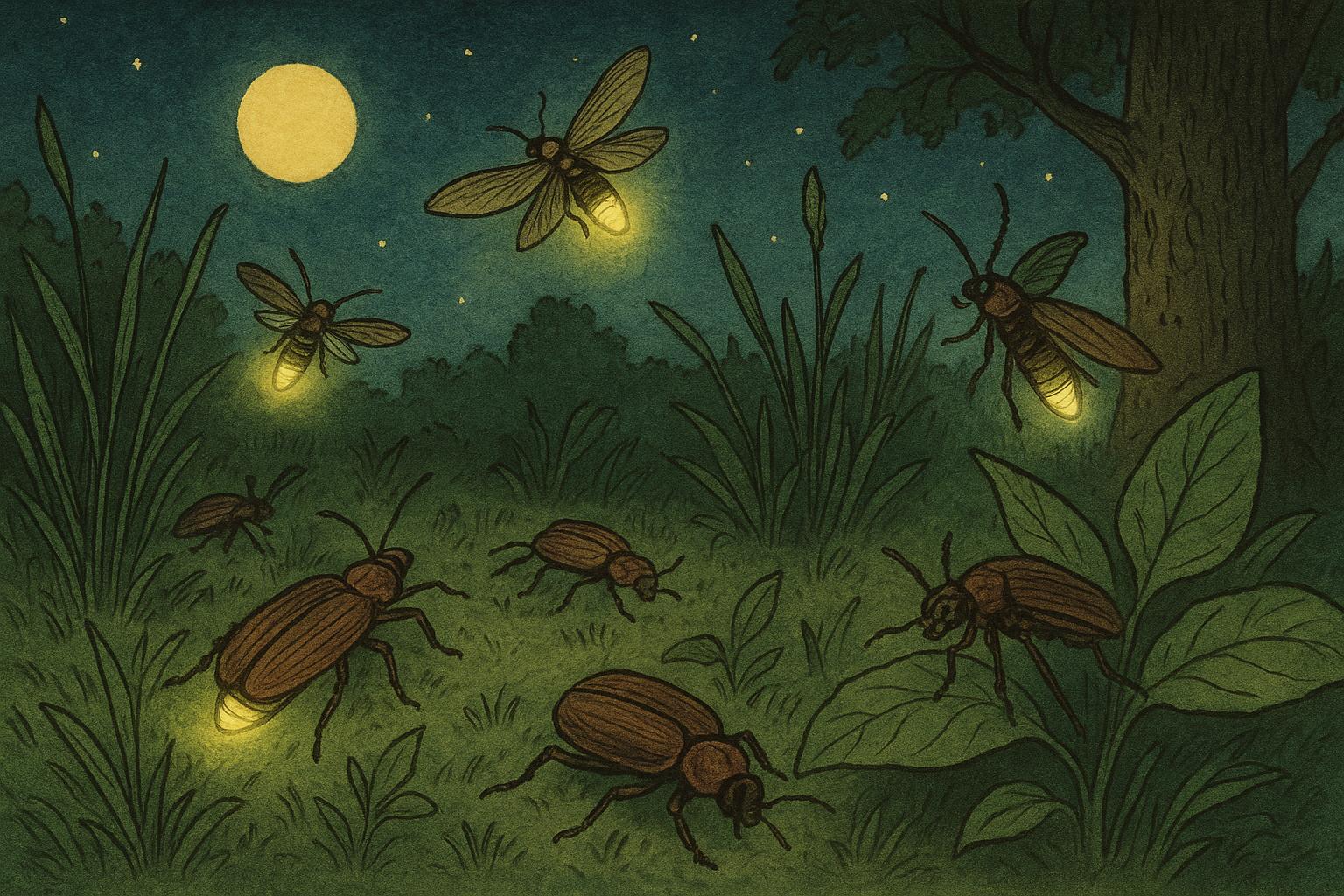
Look for two behaviors. One species will crawl and patch the leaf litter with a steady, soft glow, almost like little lanterns. Another species will make short, discrete flashes while in flight, a tap-tap rhythm that sometimes looks like a conversation between plants. If you stand quietly, you’ll begin to pick out patterns.
### Where To Find Glowing Beetles Backyard Habitats
Glowing beetles backyard sightings concentrate in three microhabitats: cool shade near water, compost piles, and untreated meadow edges. They like places that hold moisture overnight. A dense border of native plants is a magnet: the layered leaves create a humid microclimate and shelter from predators.
I’ve found the best patches along the north side of my house where a rain garden and a thick layer of leaves meet. Other people report them in old orchards or near stone walls where moss keeps things damp. They avoid freshly weeded beds and areas with bright security lights. Light pollution scrambles their signals.
#### Identifying The Common Backyard Glowers
The term “bioluminescent beetles” covers several families. Fireflies (lampyrids) are the famous ones, but glowworms and some click-beetles can also light up. Firefly species vary: some adults flash in distinctive patterns, others glow continuously. Knowing the pattern helps with ID. A steady, cylindrical glow often belongs to a female glowworm that stays put. A rhythmically flashing male is likely a flying firefly.
A practical tip: when trying to identify them, photograph at high ISO and short burst mode. You’ll capture the flash pattern without washing the image. Move slowly and keep your flashlight dim and covered; bright beams send them into hiding.
### Why They Glow And What The Light Means
The glow is chemistry made visible — luciferin plus oxygen in the presence of an enzyme, luciferase. That’s the basic reaction. But the behavior layered on top of the chemistry is what’s interesting. Flash patterns serve as mating calls more than anything else. In some cases, the glow is also a warning: the beetle is unpalatable.
This is why the timing is so precise. Predators learn when those signals mean a bad dinner. When the night is too bright, or the air too dry, the signals don’t travel right. That’s why I always tell neighbors they don’t lose the beetles overnight; they lose the conditions that let the beetles do their signaling.
### How To Encourage Glowing Beetles Without Harming Them
If you want more nightly shows, make small, specific changes. Keep a corner of the yard a little wild. Pile leaves or let native grasses stand through winter. Add a layer of mulch in one bed and leave it undisturbed. Plant native trees or shrubs that create shade and hold humidity. Avoid routine pesticide use; moths and snails — important parts of the local food web — suffer from broad sprays, and so do the beetle larvae.
One thing not to do: put out sugar baits or lights and expect a better show. Artificial lights confuse the beetles’ communication, and feeding them human sugar can change their behavior in harmful ways. Let them forage naturally.
### Photographing And Observing Glowing Beetles
A camera helps you study patterns, but you don’t need pro gear. A phone on night mode or a small mirrorless camera set to manual exposure will do. Aim for short exposures to freeze the blink. Use a tripod or rest the camera on a stable surface. Don’t use flash; it only startles them and ruins the natural rhythm.
When you document, note the time, humidity, and immediate surroundings. That contextual detail makes your observations useful for community science projects and local naturalist groups. Many sightings submitted this way have led to better understanding of local populations.
### Common Mistakes When Looking For Glowing Beetles
People often assume that any nighttime glow is a firefly. It isn’t. Reflections from dew or low-flying insects can mimic a blink. Another frequent error is over-pruning. Trimming back understory plants too aggressively destroys the microhabitats these beetles need. Finally, don’t try to catch and pin them in jars for display. Handling stresses them and can interfere with their mating.
#### Safety And Ethical Notes For Backyard Enthusiasts
If you want to share the experience, guide visitors to observe quietly and without bright phone screens. Teach children to look, not grab. If you’re mapping sightings, use nondisruptive methods: photos, notes, and slow walks. Keep pets indoors during peak activity; dogs and cats can crush tiny beetles underfoot.
Occasionally you’ll find larval forms under rotting logs. These are important predators of slugs and snails. Leave the logs be. They are small ecosystems supporting the very species that light up your evenings.
### Small Experiments You Can Try
Try a simple observation exercise over a month. Pick a spot, record the time when the first flashes appear, note humidity, and sketch the microhabitat. Over a few weeks you’ll see patterns: do they show earlier after rain? Do they prefer one corner of the yard? These quick experiments help you notice what matters most to the beetles.
Also experiment with shelter creation: place a shallow tray of leaves near a dark corner and compare sightings against an identical tray under direct light. You’ll get less activity in the lit tray. This is a hands-on way to learn how sensitive they are.
### When Sightings Become A Community Resource
Neighbors who notice these beetles can turn casual wonder into community data. Local naturalist groups and university programs often welcome backyard reports. That data helps track population trends and the effects of development. It’s a low-effort contribution with real scientific value.
The first time I reported a clustered sighting at the edge of a subdivision, researchers followed up and confirmed a pocket of rare patterns. Small sightings add up.
You can see why people get hooked. The glow feels secretive and personal. It’s not a manufactured spectacle. It’s a fragile, local theater that depends on quiet, patient people and yards that tolerate a bit of wild. If you want to keep watching, give the beetles space, and the night a little darkness. You’ll be rewarded that very same evening with a soft, pulsing show that’s not cheap to reproduce elsewhere, and will remind you that some of the brightest discoveries can fit in a palm.





















Leave a Reply