
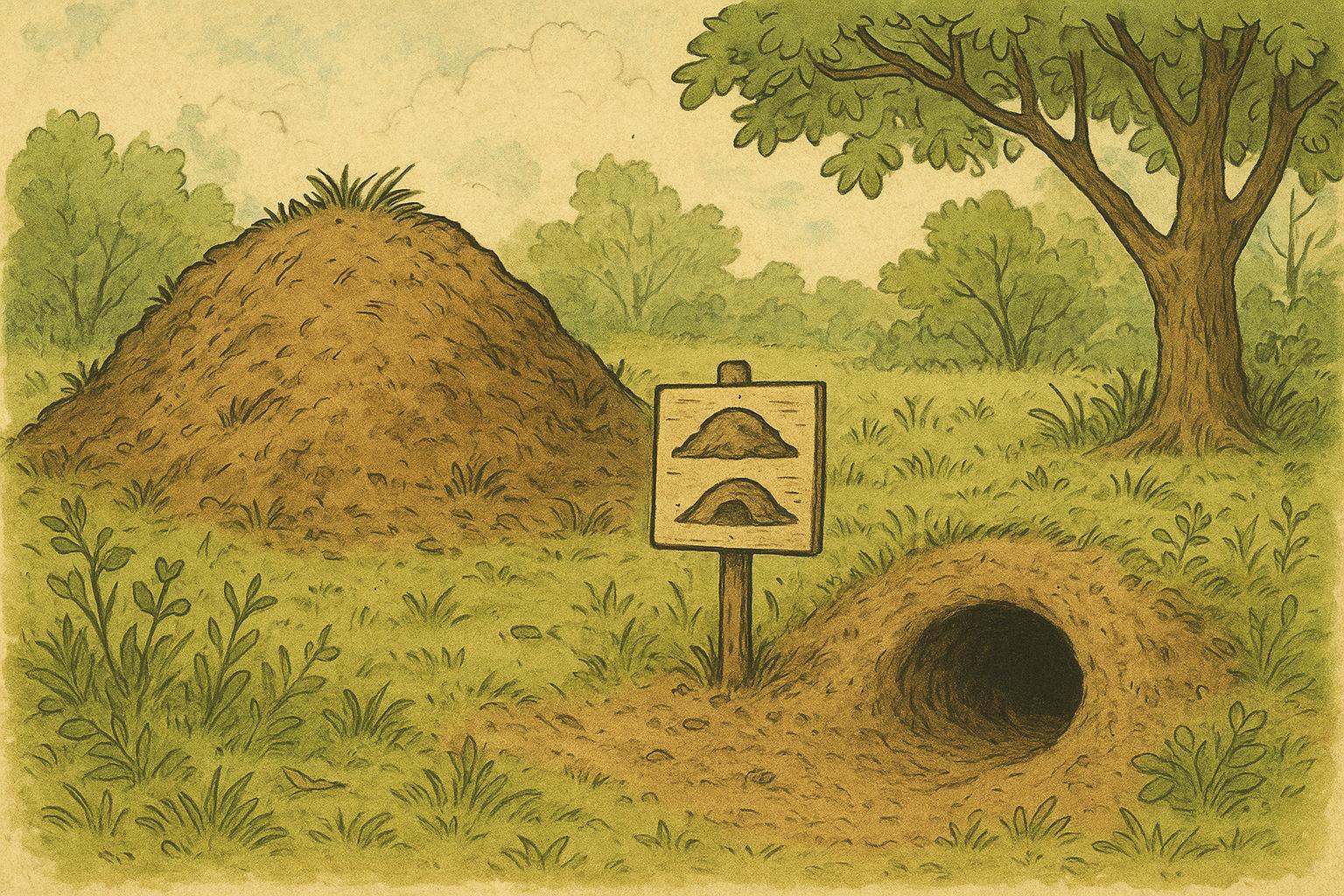
Hello there — glad you wandered in. If you’ve ever stared at a fresh dirt pile in your yard and wondered whether it’s the work of a busy bunny, a pocket gopher, or your neighbor’s ambitious landscaping cat, you’re in the right place. We’ll look at practical, field-tested cues — aka burrow signs — to help you tell a mound apart from a true burrow, and offer a couple of humane remedies if you need to manage the situation.
## Burrow Signs For Distinguishing Mounds From Burrows
Animals leave a surprising amount of information behind if you know what to read. Some of the most reliable burrow signs are physical details around the hole, the shape and composition of the mound, and activity indicators like fresh scat or tracks. Pay attention to these things and you’ll save yourself time, money, and the awkwardness of thanking a mole for “helping” your flowerbed.
### Why Mounds And Burrows Get Confused
Not all mounds are burrows. Gardeners, lawn-care folks, and homeowners often lump any pile of soil into “burrowing activity.” In reality, soil can be mounded for many reasons: frost heaves, ant nests, roots pushing soil upward, construction backfill, or animals that dig shallow nests rather than deep tunnels. The trick is to identify the burrow signs that correlate specifically to an animal living underground.
### Key Burrow Signs To Observe
Here are the top signs to check. Read them like a detective, but with fewer magnifying glasses and more sensible shoes.
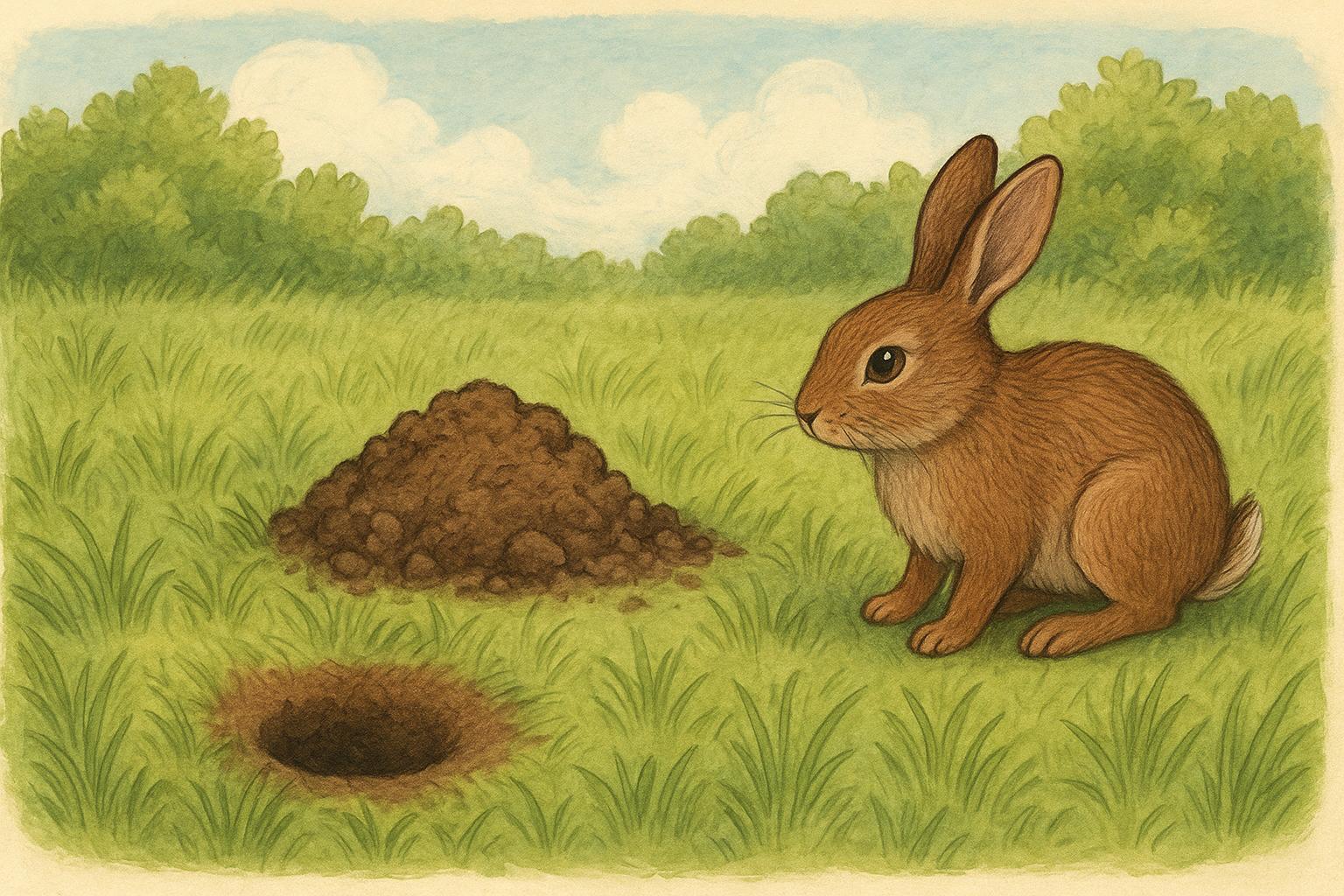
– Entrance Shape: True burrow entrances tend to be oval or round tunnels leading into the ground. Look for smoothed edges created by an animal repeatedly entering and exiting. If the hole is sharply cut or square, it’s probably not a natural burrow.
– Mound Placement: Burrow mounds are usually adjacent to the entrance, often slightly off to one side where the animal has pushed soil outward. Random loose soil spread thinly across an area is less likely to be a burrow sign.
– Soil Texture: Excavated soil in burrow mounds often appears lighter and looser than surrounding ground since it’s been brought from deeper layers. Topsoil displaced by erosion or work tends to match the surface color.
– Recent Activity Indicators: Fresh droppings, footprints, or a distinct lack of plant growth near the hole suggest ongoing use. Presence of spider webs or undisturbed leaf litter over the hole indicates disuse.
– Tunnel Size and Depth: A probe (gently and carefully) or visual inspection can reveal how deep the entrance goes. Rodents and rabbits leave relatively narrow tunnels; badger or fox digs are larger and rougher.
– Faunal Clues: Hair stuck on roots near the hole, chewed roots, or tracks in soft soil help identify the culprit. Each species leaves its own signature.
Use these burrow signs together rather than relying on one alone — patterns are more telling than a single clue.
### How To Inspect An Entrance Without Making A Mess
Approach calmly. Disturbing a burrow can stress wildlife and collapse tunnels. Wear gloves and carry a small flashlight, a probe (like a blunt stick), and a pocket camera or phone to document what you find.
– Carefully clear loose soil with gloved hands.
– Look into the entrance with a flashlight. Note tunnel direction and visible depth.
– Probe gently alongside the entrance at a shallow angle to get a sense of soil consistency — avoid sticking anything directly down the hole.
– Photograph for reference. Land managers love photos almost as much as they love maps.
These actions are low-impact and provide good observational data for identifying burrow signs.
### Common Animals And Their Typical Burrow Signs
Different animals have characteristic patterns that make identification easier once you see them:
– Moles: Fan-shaped, shallow mounds with no obvious entrance; raised ridges across lawns are tunnel systems rather than entrances.
– Pocket Gophers: Crescent or horseshoe-shaped mounds with the entrance typically covered and off to one side.
– Ground Squirrels: Round to oval entrances with cleared diggings around the opening; often in colonies.
– Rabbits: Shallow scrapes or forms lined with fur; entrances are rough and near vegetation.
– Skunks/Foxes/Badgers: Larger, rough excavations often with disturbed roots and deeper tunnels.
When assessing burrow signs, match the mound morphology to these typical patterns to narrow down the possibilities.
## 1. Humane Barrier Remedy For Managing Active Burrows
When a burrow is active and located where it endangers people, pets, or infrastructure, a humane exclusion approach is often the best first step. This remedy is formal and practical: install a physical barrier to prevent animals from reusing or expanding the burrow.
#### Materials Required
– Heavy-gauge galvanized hardware cloth or welded wire mesh (0.5-inch or smaller mesh)
– Landscape staples or U-shaped rebar fasteners
– Shovel or trenching tool
– Work gloves and safety glasses
– Optional: hand sledgehammer or mallet
#### Step-By-Step Creation And Application
1. Measure and Cut: Measure the area surrounding the active burrow entrance(s). Cut a piece of hardware cloth large enough to cover a 3–4 foot perimeter around the entrance and extend at least 12–18 inches below grade.
2. Dig a Trench: Using the shovel or trenching tool, excavate a shallow trench around the perimeter where the barrier will be placed. The trench depth should be at least 12–18 inches to prevent animals from pushing underneath.
3. Install The Mesh: Place the hardware cloth into the trench with the top edge protruding slightly above ground level. If dealing with a larger animal, angle the top edge outward at 45 degrees to deter climbing.
4. Secure And Backfill: Anchor the mesh vertically with landscape staples every 6–8 inches, and backfill the trench with the excavated soil, tamping gently to remove air pockets.
5. Monitor And Maintain: Inspect weekly for the first month to confirm the animal has vacated. Repair any displaced sections promptly.
This method is effective because it physically prevents re-entry without harming the animal. It is suitable for small to medium-sized burrowing mammals and complies with humane wildlife control practices.
## 2. Natural Repellent Mix Remedy For Temporary Deterrence
If you prefer a non-structural option for discouraging animals from returning, a natural repellent can be used as a temporary measure. This is best for lightly used burrows or as a supplement to barriers.
#### Ingredients And Tools
– Cayenne pepper powder or crushed red pepper flakes (1 cup)
– Garlic powder (1 cup)
– Castile soap or biodegradable dish soap (1 tablespoon)
– Water (1 gallon)
– Spray bottle or garden sprayer
– Protective gloves and eye protection
#### Step-By-Step Preparation And Application
1. Mix Base Ingredients: In a one-gallon container, combine the water, cayenne pepper, garlic powder, and soap. Stir or shake thoroughly until the mixture is well-dispersed.
2. Strain (Optional): For sprayers prone to clogging, strain the mixture through a fine mesh to remove coarse particles.
3. Transfer To Sprayer: Pour the solution into a spray bottle or garden sprayer, ensuring the container is clean and labeled.
4. Apply Around Entrances: Wearing gloves, spray a generous ring of the repellent around the perimeter of the burrow entrance and on the mound itself. Avoid saturating vegetation excessively.
5. Reapply Regularly: Reapply after rain or irrigation, typically every 5–7 days, and for at least 3–4 weeks to discourage return. Inspect burrow signs between applications to assess efficacy.
6. Safety And Considerations: Keep pets and beneficial wildlife away during and immediately after application; although natural, the mixture can irritate eyes and mucous membranes.
This repellent works mainly by masking scents and creating an uncomfortable sensory environment for many mammals. It is not a permanent solution but can reduce digging activity while more durable exclusion measures are put in place.
### When To Call A Professional
If burrow signs indicate a large colony, structural risk, or protected species involvement, contact a licensed wildlife control professional or your local extension service. Professionals can assess the species and legal considerations, and implement exclusion or relocation if permitted. Keep records of your observations — photos and dates — as these help professionals make informed choices.
### Legal And Ethical Notes On Handling Burrows
Many burrowing species are protected or subject to local regulations. Always verify local wildlife statutes before attempting trapping or lethal control. The remedies above are non-lethal and designed to minimize stress and habitat disruption while protecting property and safety.
Now go forth and inspect those mounds with confidence. You’ll read the burrow signs like a pro and can choose an effective, humane response when action is needed.

















Leave a Reply