
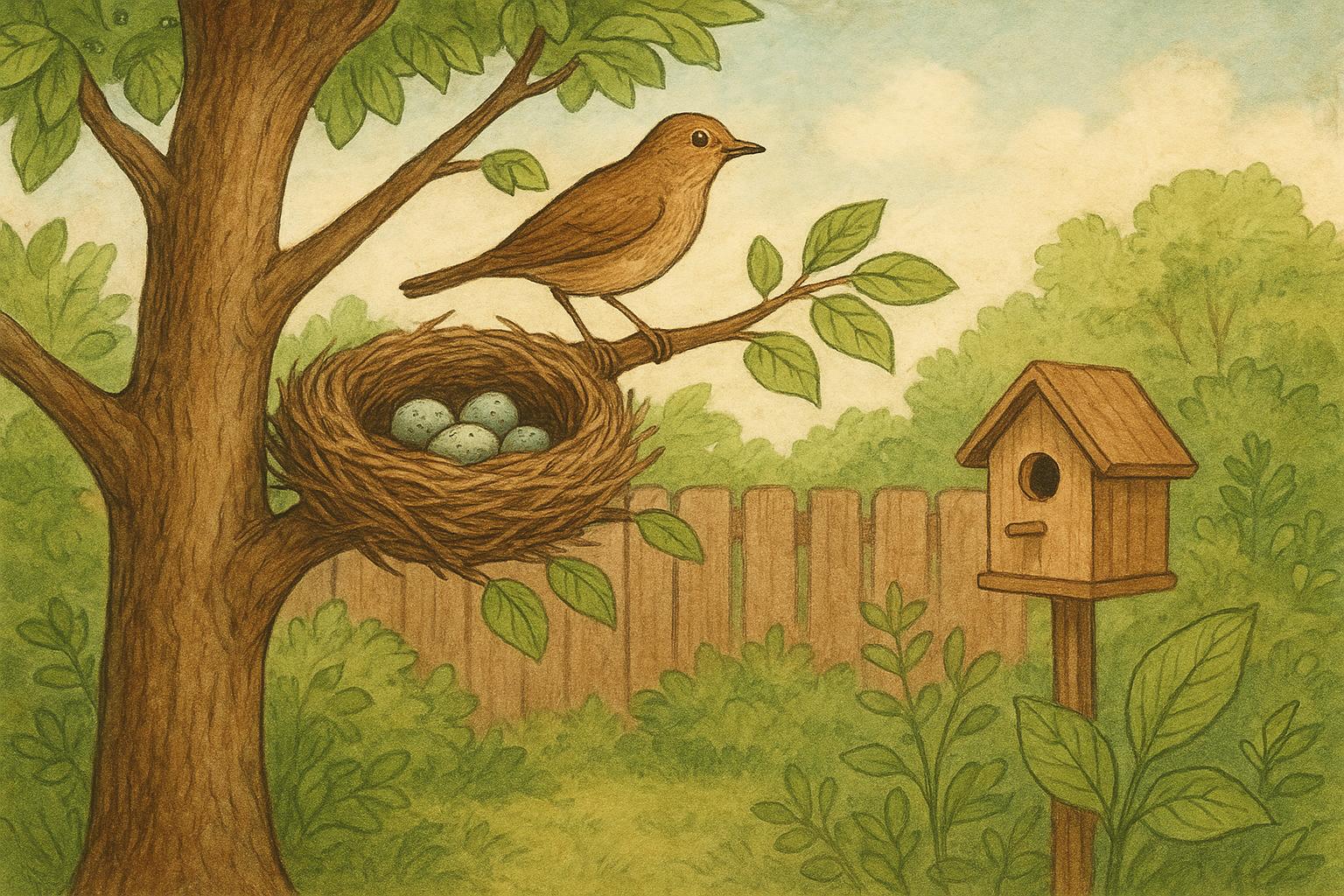
## Bird Nest Location Clues To Look For In Your Yard
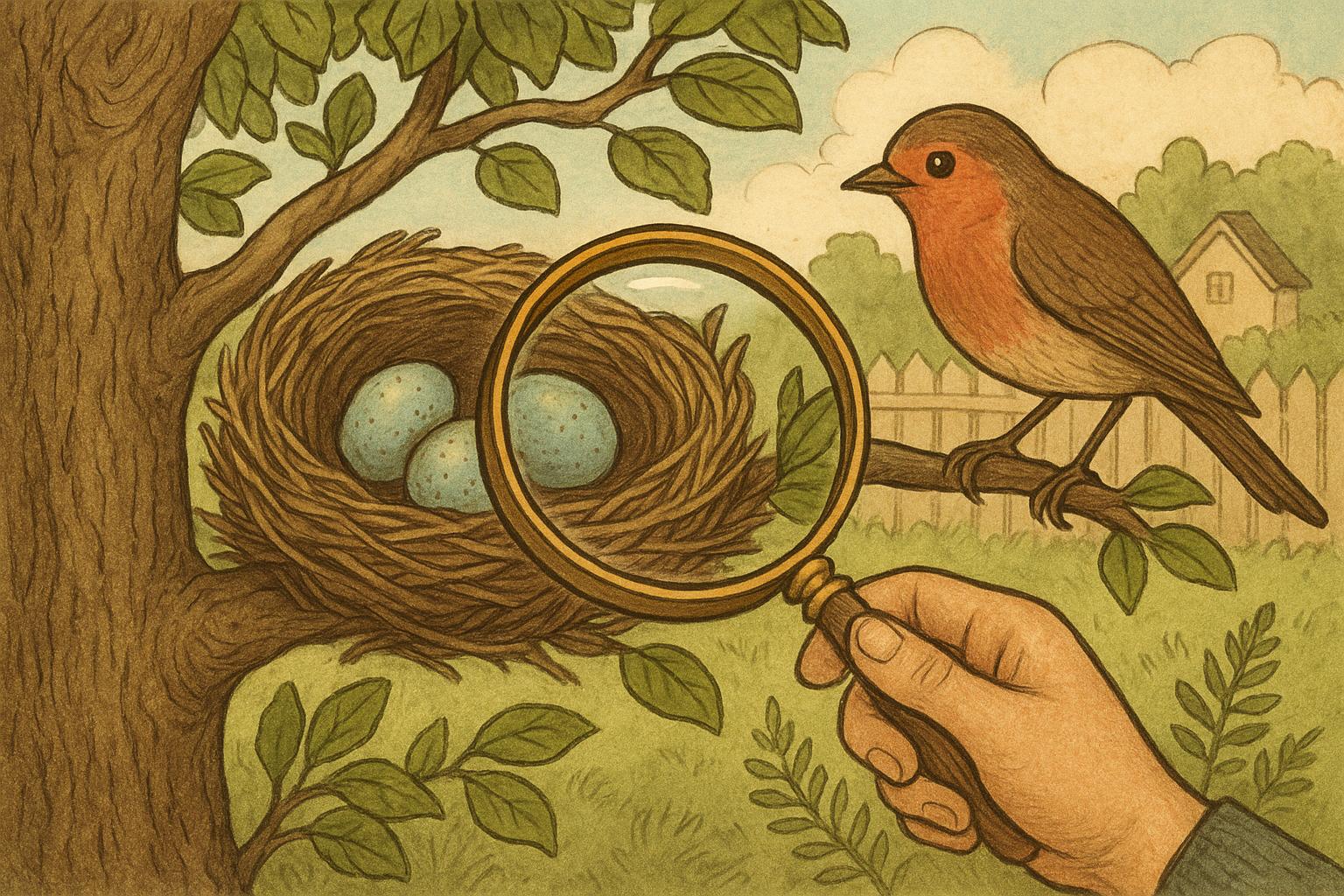
If you want to find where birds are nesting in your backyard, the fastest way is to watch behavior, not just look for a lump of twigs. The birds give away nest location clues all the time: material in their beaks, repeated trips to the same spot, and protective postures when you wander too close. Notice those things and you’ll find nests without tearing apart the garden.
### Watch What The Adults Do
The single best clue is adult activity. A parent that flies to the same eave or shrub over and over is carrying food. A bird that disappears into a dense bush and comes out empty-beaked is often incubating. Timing helps too. If you see more frequent trips in the early morning and late afternoon, that’s nesting behavior, not just foraging.
– If a bird arrives with a beak full of grass, leaves, or hair, that’s material for construction.
– If it arrives with a beak full of insects or a wrapped caterpillar, it’s bringing food to young.
– If the bird chases you or warns loudly near a spot, that is territorial guarding of a nest site.
Place yourself where you can observe without being obvious. Binoculars are useful, but you don’t always need them. A simple folding chair, quiet breathing, and a view of the trees or eaves will reveal a lot in an hour.
### How Different Movements Signal Different Nest Stages
Bird nest location clues are subtle if you don’t know what to look for. During nest building, flights are short and repetitive—material in, material out. During incubation, the adult’s visits may be longer and quieter. Feeding trips are almost always quick; the adult returns within seconds or a few minutes with food.
If you see an adult linger at the entrance to a cavity or in dense brush, assume eggs or small chicks are inside. That lingering is a protective behavior. If the adult does not show up for long stretches, the nest may be empty or abandoned.
#### Recognizing Alarm Calls And Distraction Displays
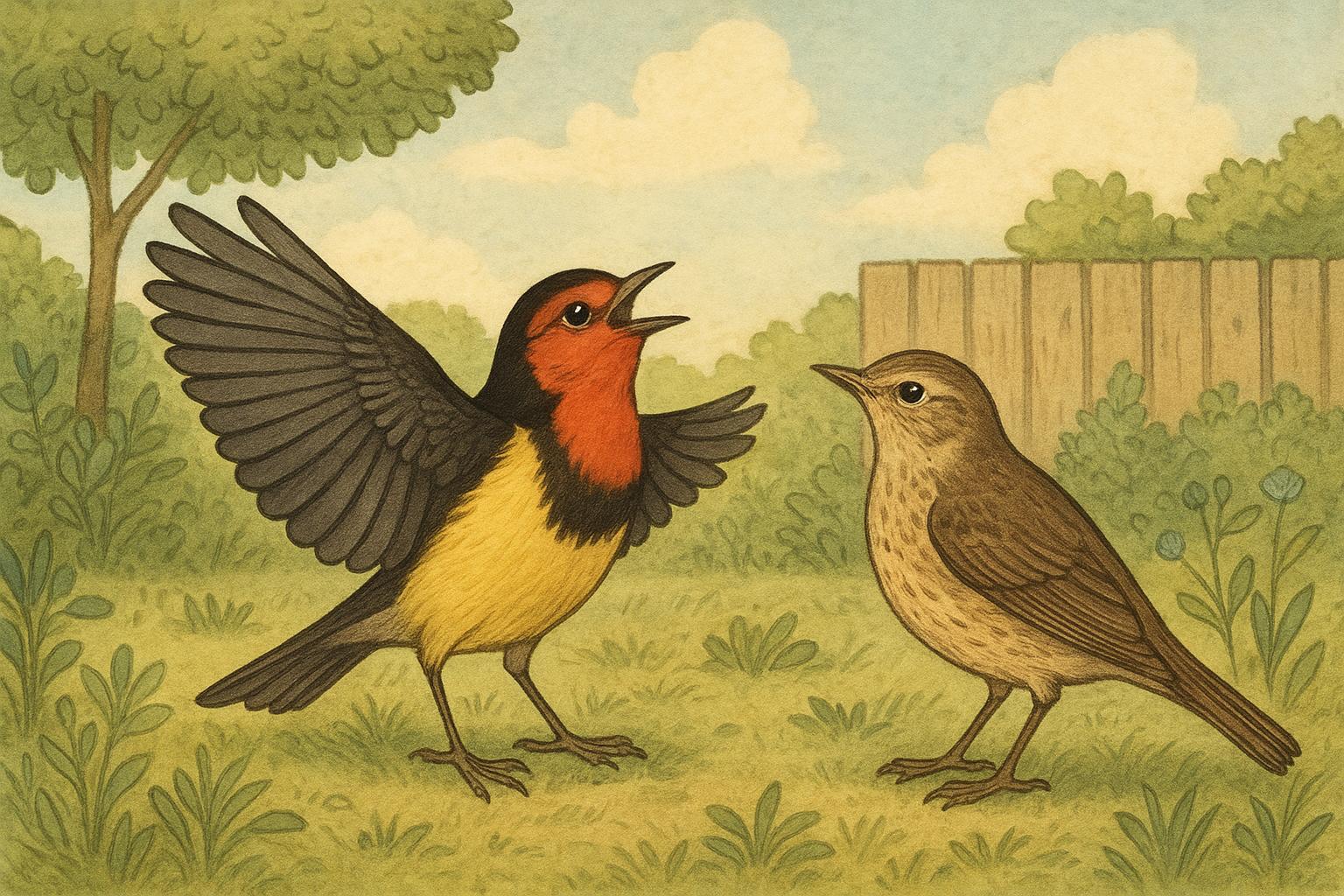
A parent making sharp alarm calls and performing distraction displays (like pretending to be injured) is a strong indicator of a nearby nest. Some species, like robins and wrens, will exhibit dramatic distraction displays. Note the direction of the display and back away slowly to avoid causing stress.
## Where Birds Commonly Build Nests In Backyards
Different species prefer different nest sites. Once you know the species visiting your yard, you can narrow where to look. Here are reliable nest sites to check and the species that favor them.
### Eaves, Rooflines, And Guttering
House sparrows, starlings, house finches, and swallows like to nest under eaves, in gutters and behind shutters. Gutter nests are often messy—twigs, feathers, and old nests visible from below. Swallows build mud cups under eaves; their nests have a distinctive mud texture and are often clustered.
When checking gutters, keep safety in mind. Use a ladder only if you’re comfortable and alone. If you can see the underside from a lower vantage point with binoculars, that’s safer and usually enough.
### Trees And Shrubs
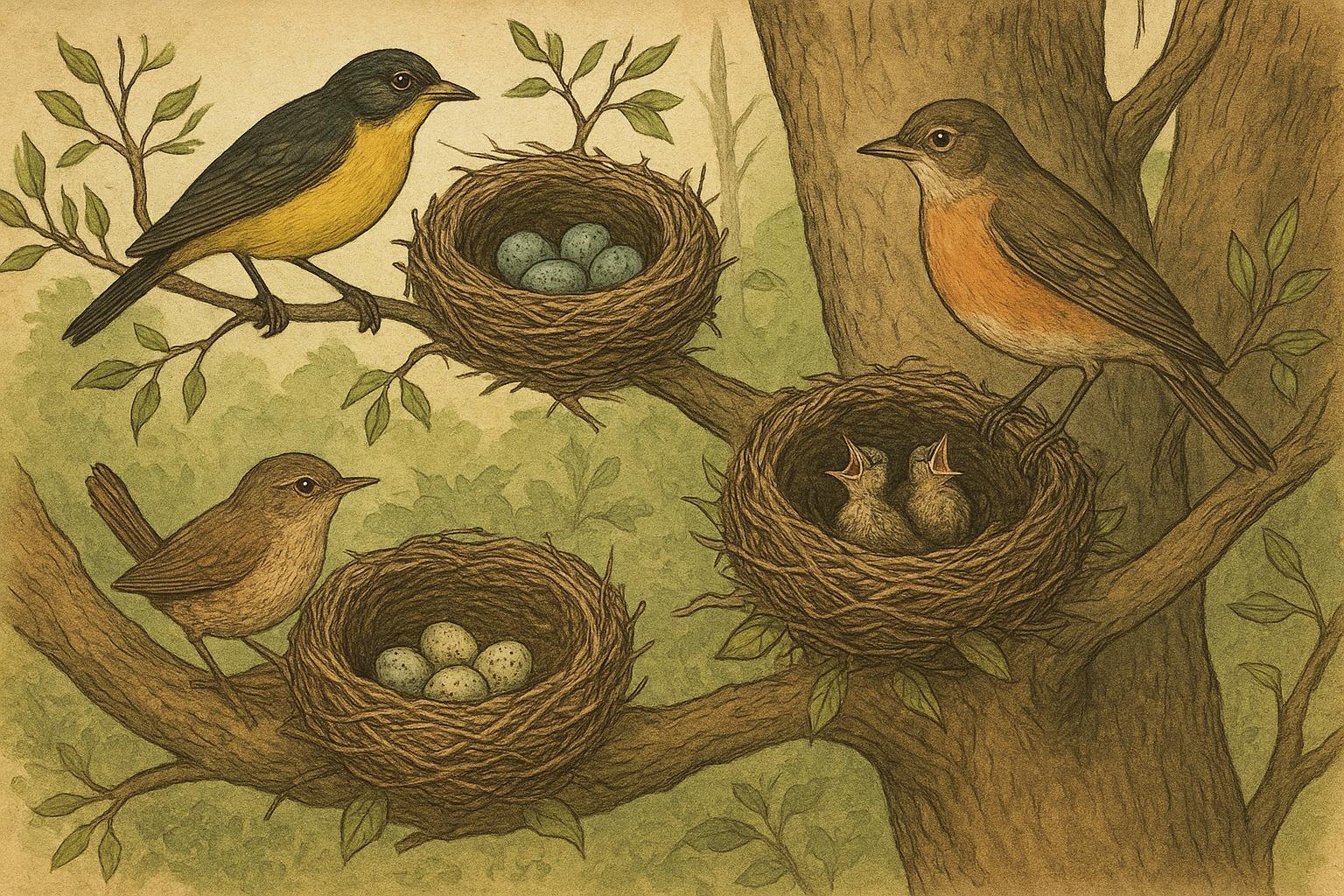
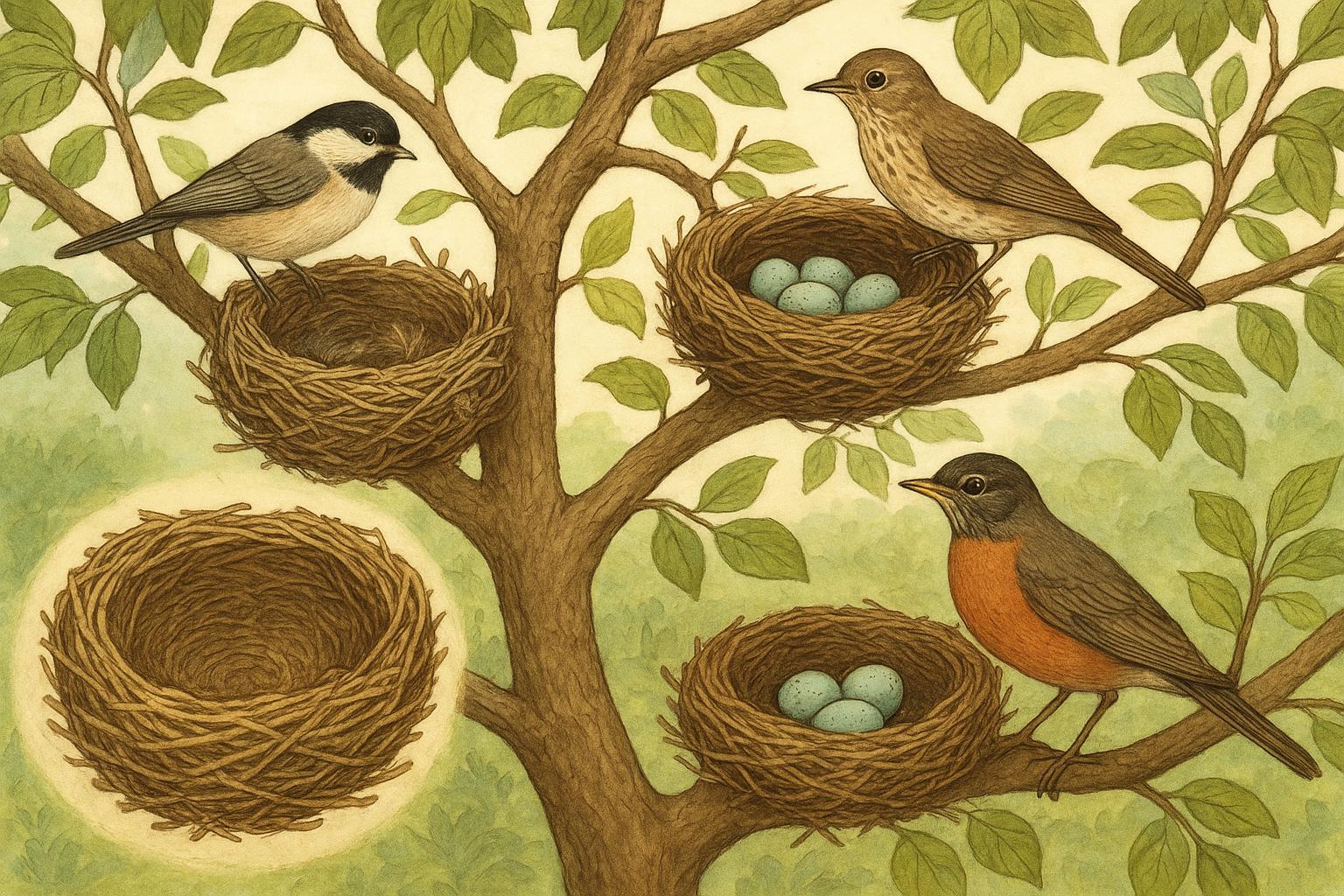
Cup nests in shrubs and small trees are some of the easiest to miss because they sit low and are tucked into dense branches. Robins, cardinals, and thrushes build these. Look for a deep, rounded structure made of grasses and lined with finer material. Also check crotches where vertical branches meet trunks; that’s a favorite spot for many species.
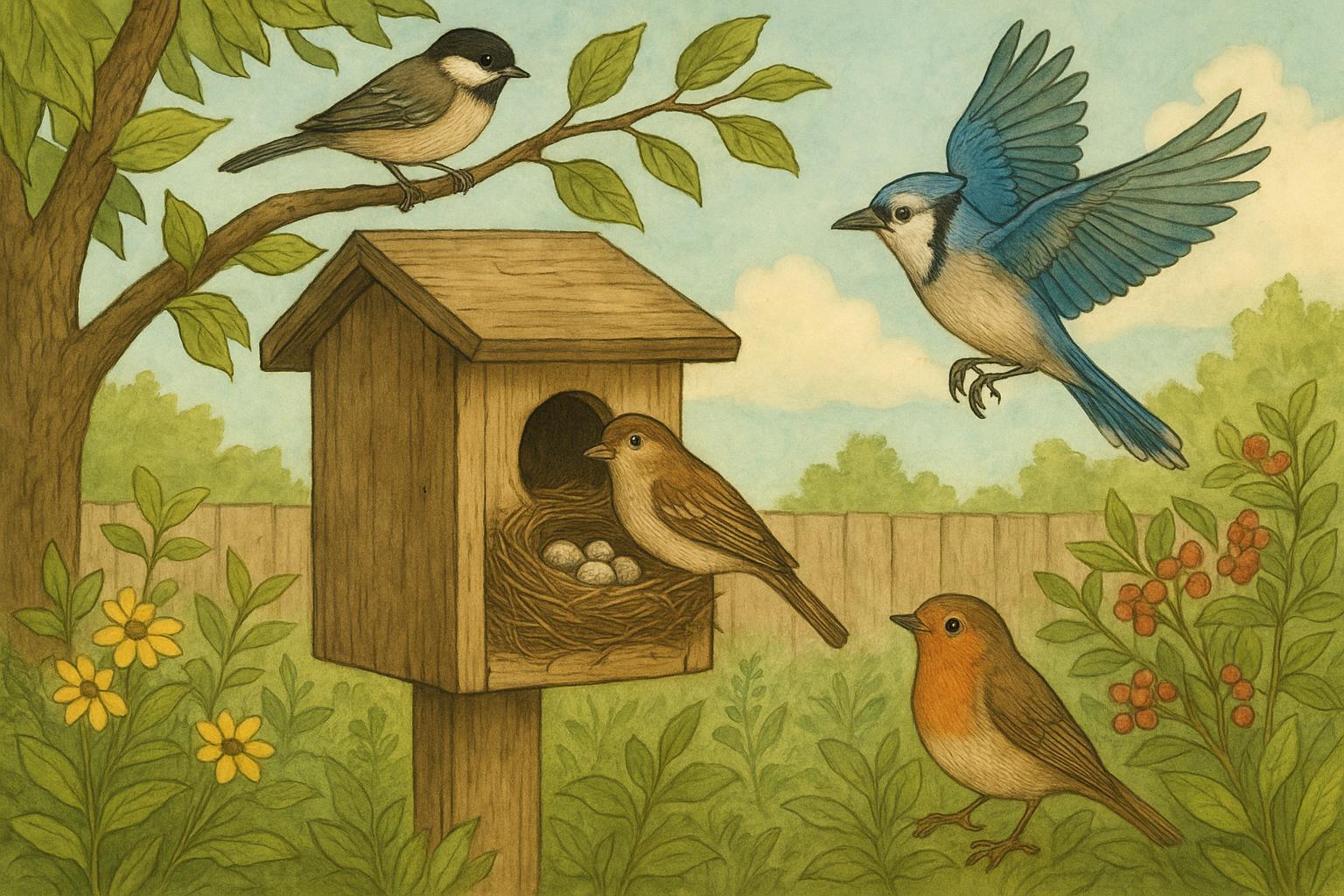
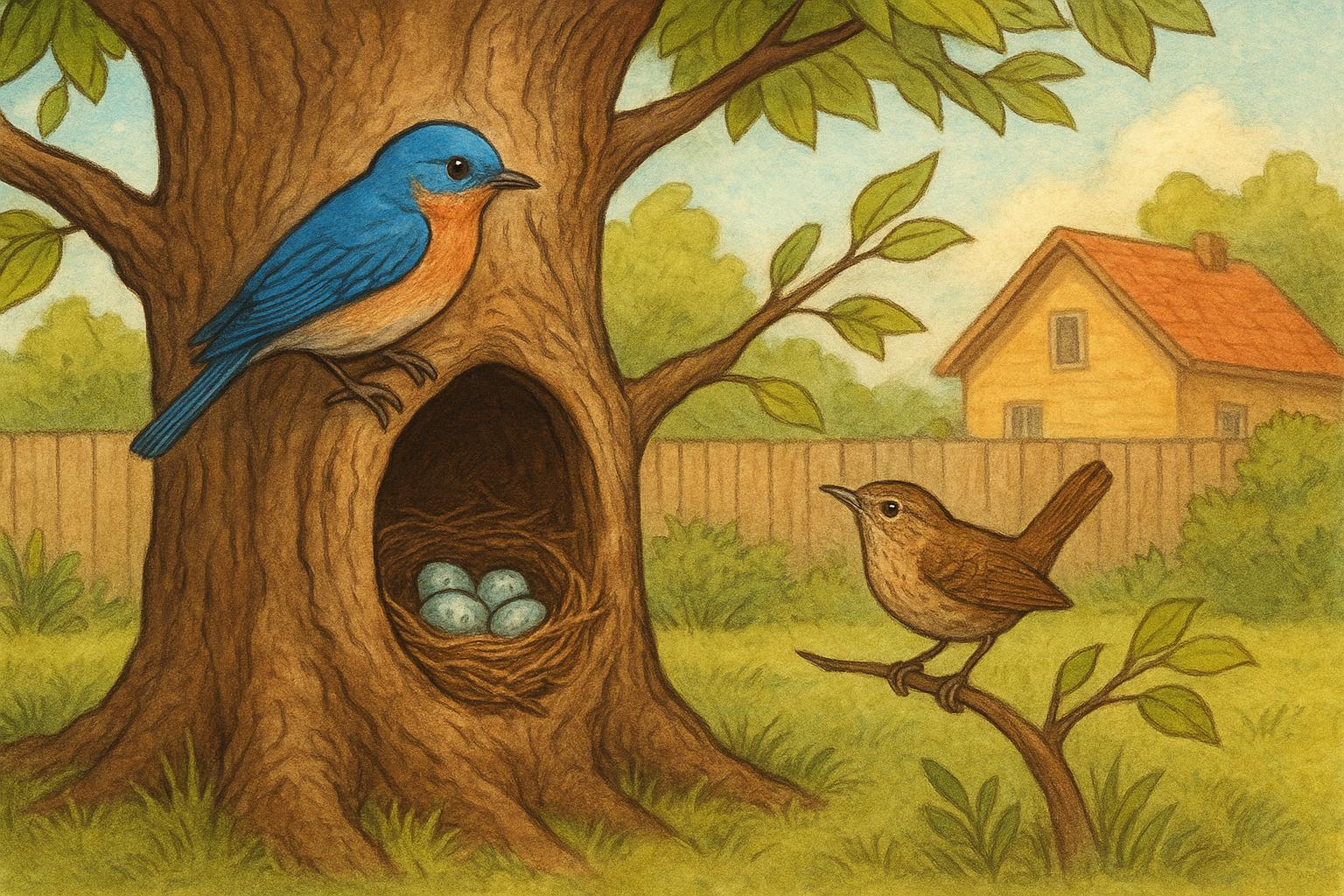
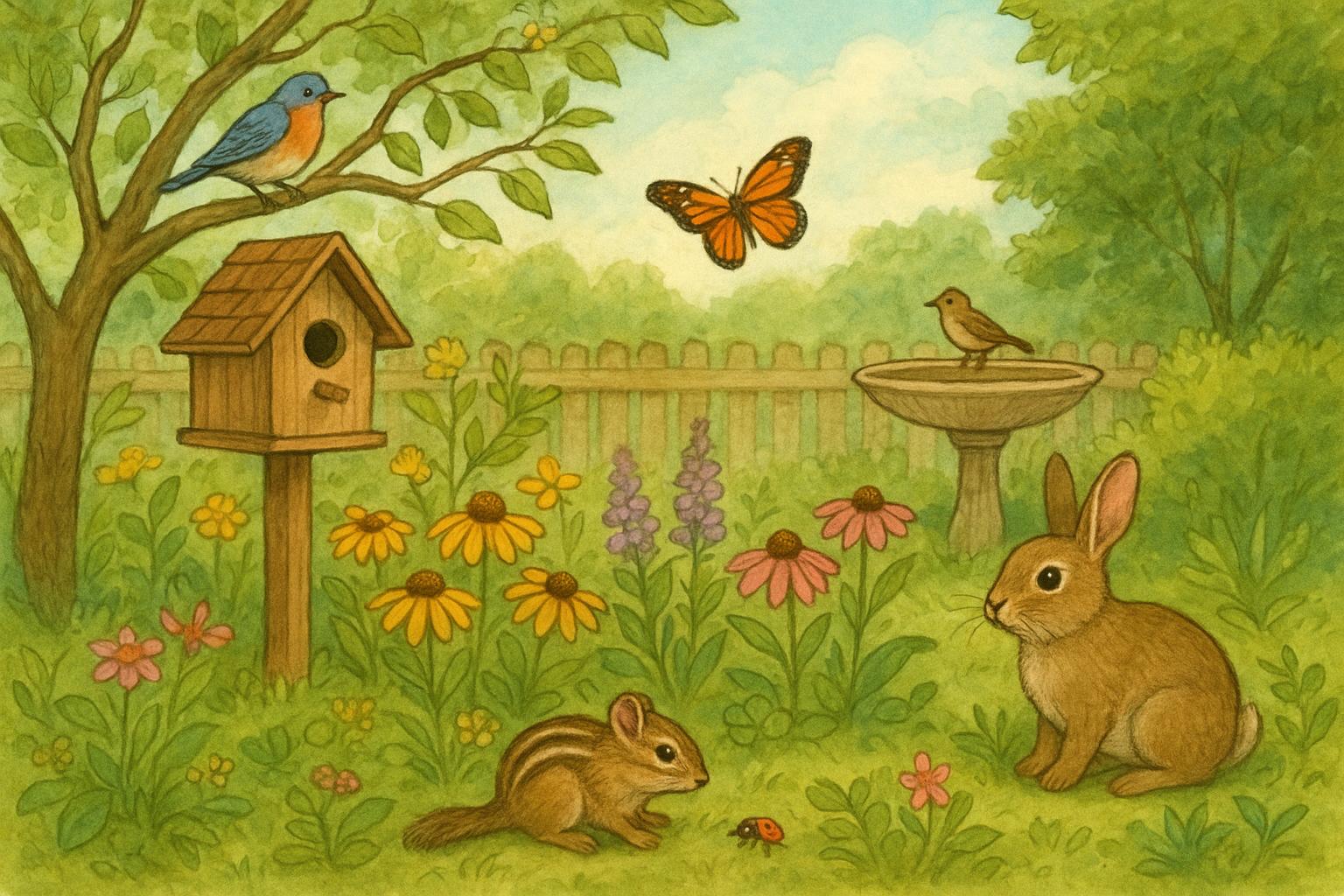
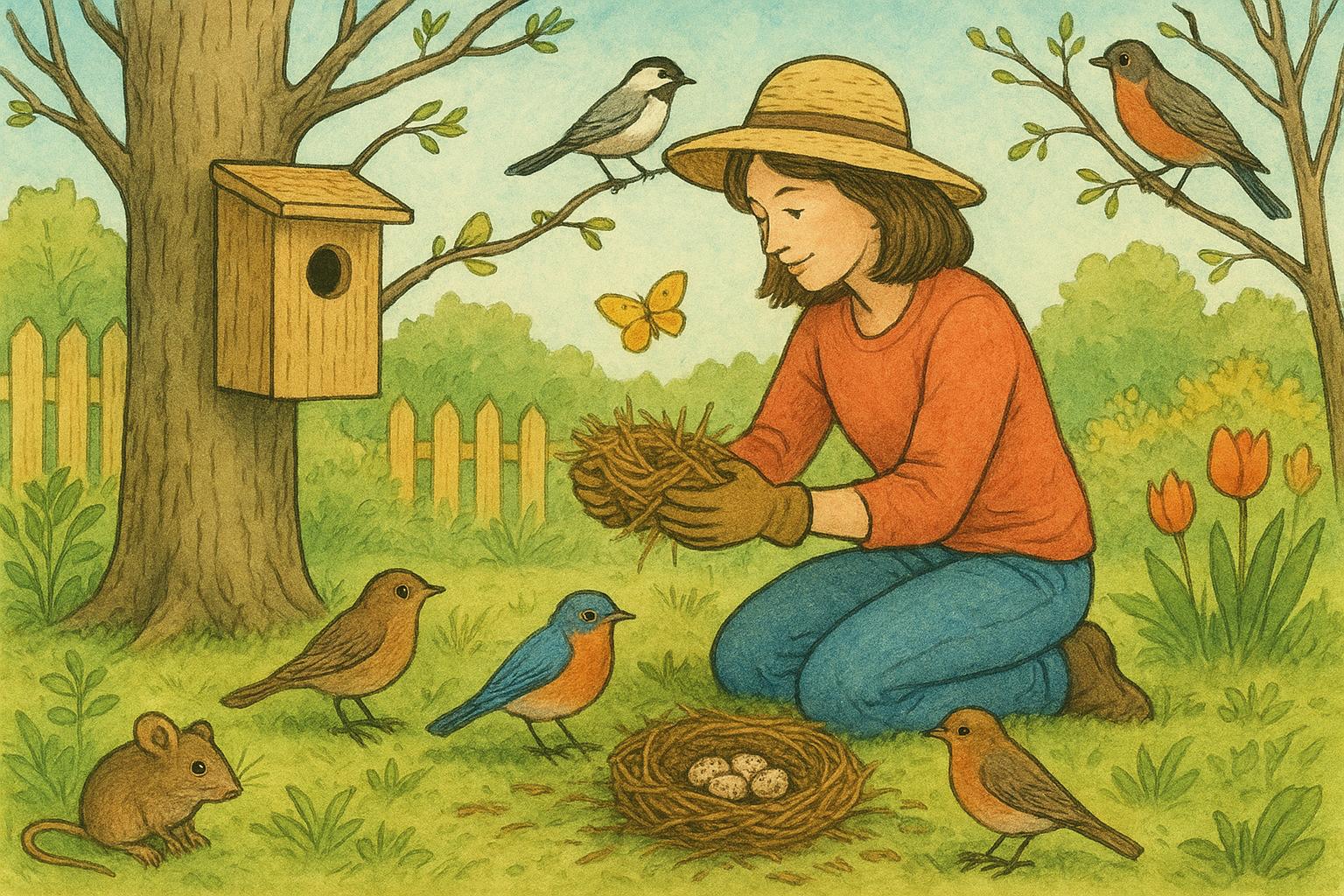
Cavity nesters like chickadees, woodpeckers, and bluebirds use holes in trees or nest boxes. If you see a bird carrying insect prey into a small hole or a nest box, you’ve found a nest site.
#### Ground-Nesting Birds
Not all birds want height. Some species like killdeer, towhees, and certain sparrows nest on the ground in grassy or gravelly patches. These nests are often simple depressions lined with a few leaves or small twigs. Look for a regular traffic lane where adults walk to the nest, or for sudden, frantic running that leads you to the nest. Ground nests can be tricky because the adults avoid drawing attention once you’re close.
### Vines, Hanging Baskets, And Potted Plants
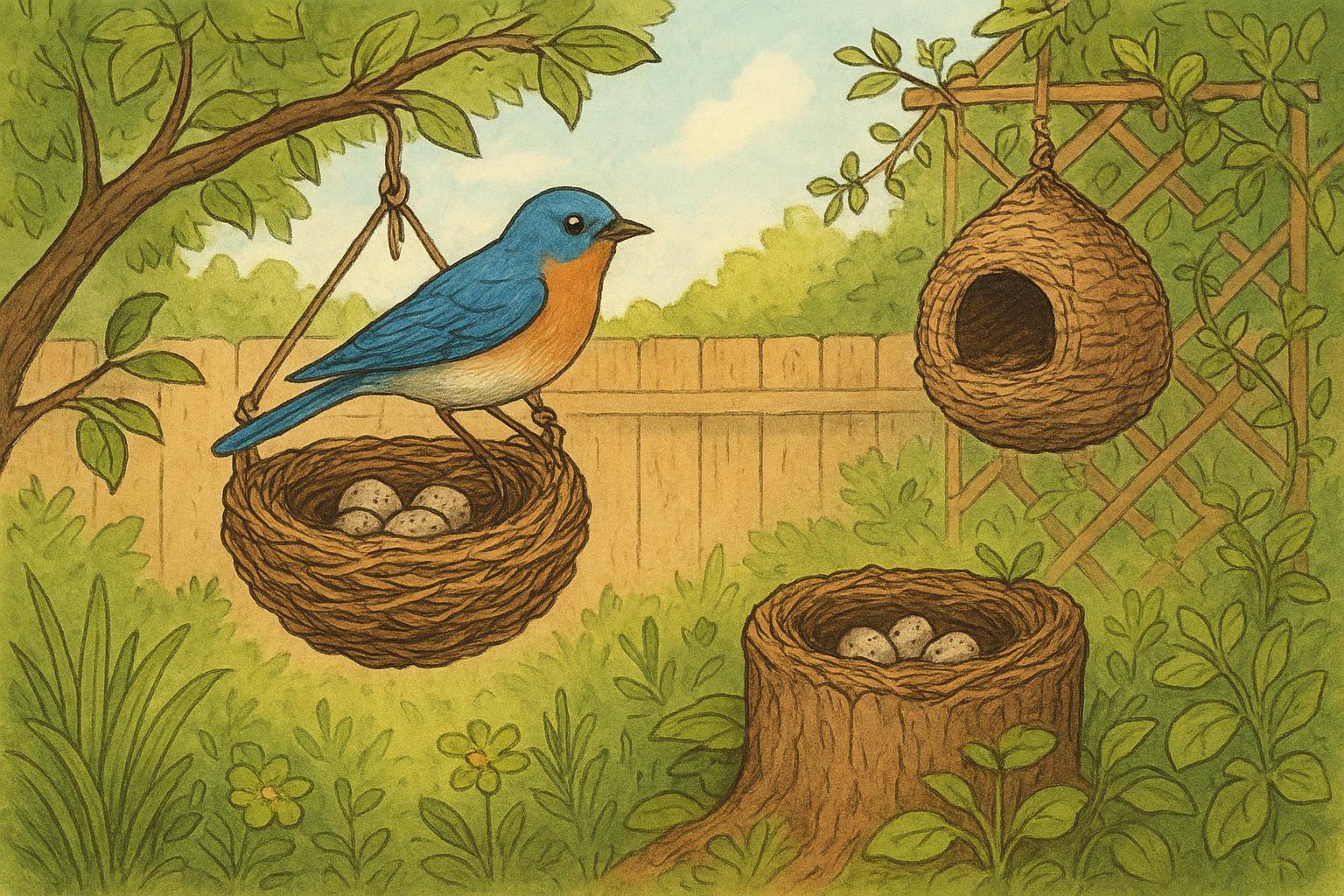
Orioles, warblers, and some wrens like to nest in hanging baskets or tangled vines. These nests can be suspended and woven into the container or vine. If you have hanging plants, check under their leaves and the basket’s rim for woven material. Birds often choose these spots because of the shelter and the vertical structure.
Flower pots can hide cup nests near the soil line, tucked against stems. Look for a small rounded structure or for feathers and droppings nearby.
## Physical Clues Around The Yard
You don’t always need to watch behavior to find nests. A few physical signs around the yard point to nest location clues.
### Droppings, Feathers, And Food Debris
Concentrations of droppings under a spot often indicate a nest above. Look under eaves, branches, or shrubs for repeated droppings. Feathers piled in one place are another clue—some species preen at the nest and drop feathers on the ground or patio below.
Chewed fruit remains, husks, or seed fragments near a shrub can also show where adults are feeding young. If you find many of the same insect husks, that suggests repeated feeding trips rather than a one-off snack.
### Mud Spots And Nesting Material
Mud splatters on siding or under eaves can indicate swallows or cliff swallows building their nests. Thin strands of hair, wool, or spider silk in a bush signal that birds are lining nests. Some species use snakeskin or shed reptile scales as deterrents; if you see something odd like that, it’s worth a closer look.
### Sound Clues
Chirping and begging calls are loud clues. Young in the nest beg loudly for food, and that noise is often more reliable than visual signs. Listen for steady, repetitive begging in the morning—especially from an otherwise quiet area of the yard. The sound usually points to a nest site even when the nest is invisible.
## Species-Specific Tips For Finding Nest Sites
Knowing a few typical behaviors of common backyard species saves time. Here are hands-on tips for some of the birds you’re most likely to encounter.
### Robins And Thrushes
Robins make cup nests on horizontal branches or on building ledges. They use mud and grass and often return to the same general area year after year. Watch for an adult repeatedly flying to a single spot with beak full of grass. Robins are bold; you can often find their nests in mid-level shrubs or low trees.
### House Sparrows And Starlings
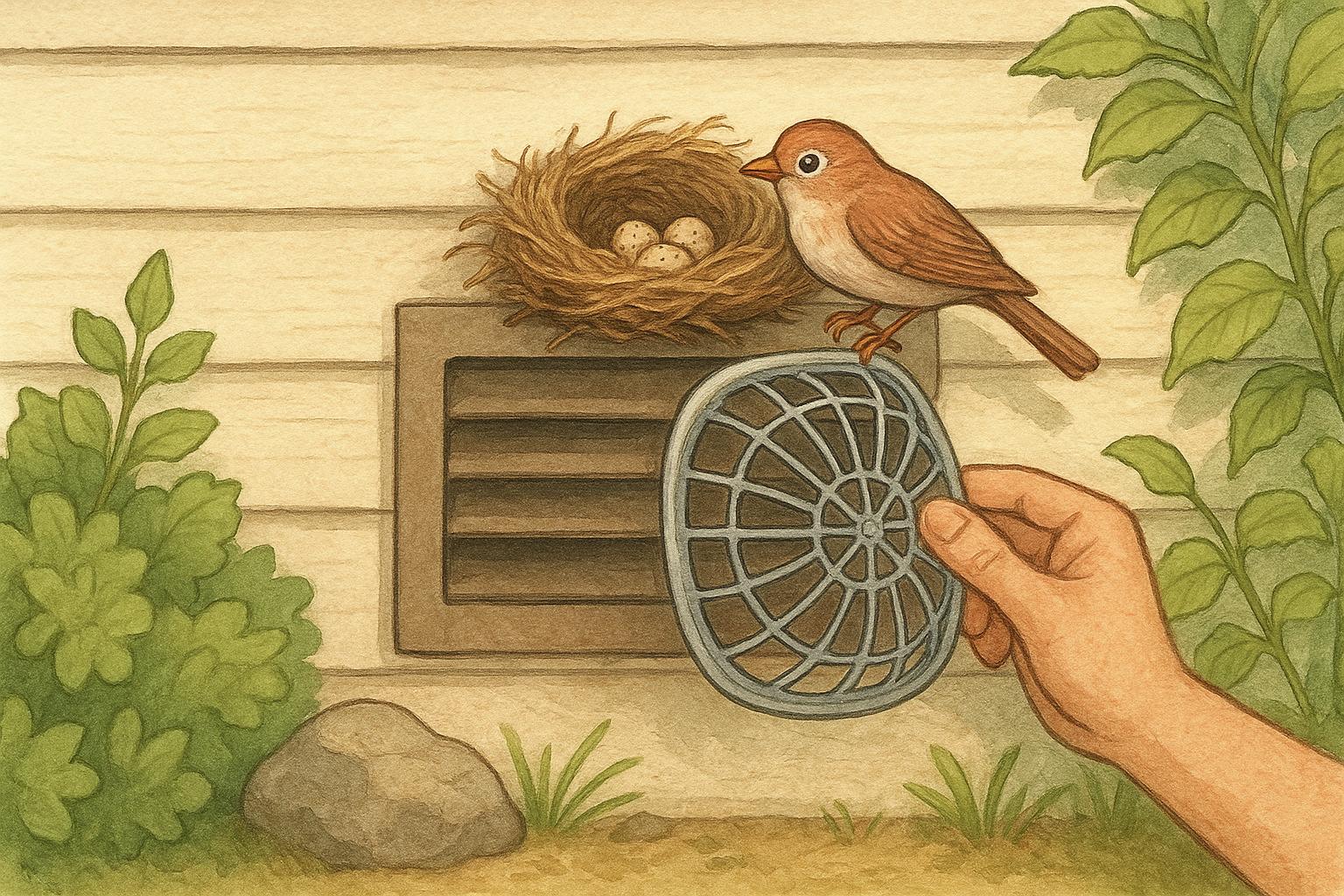
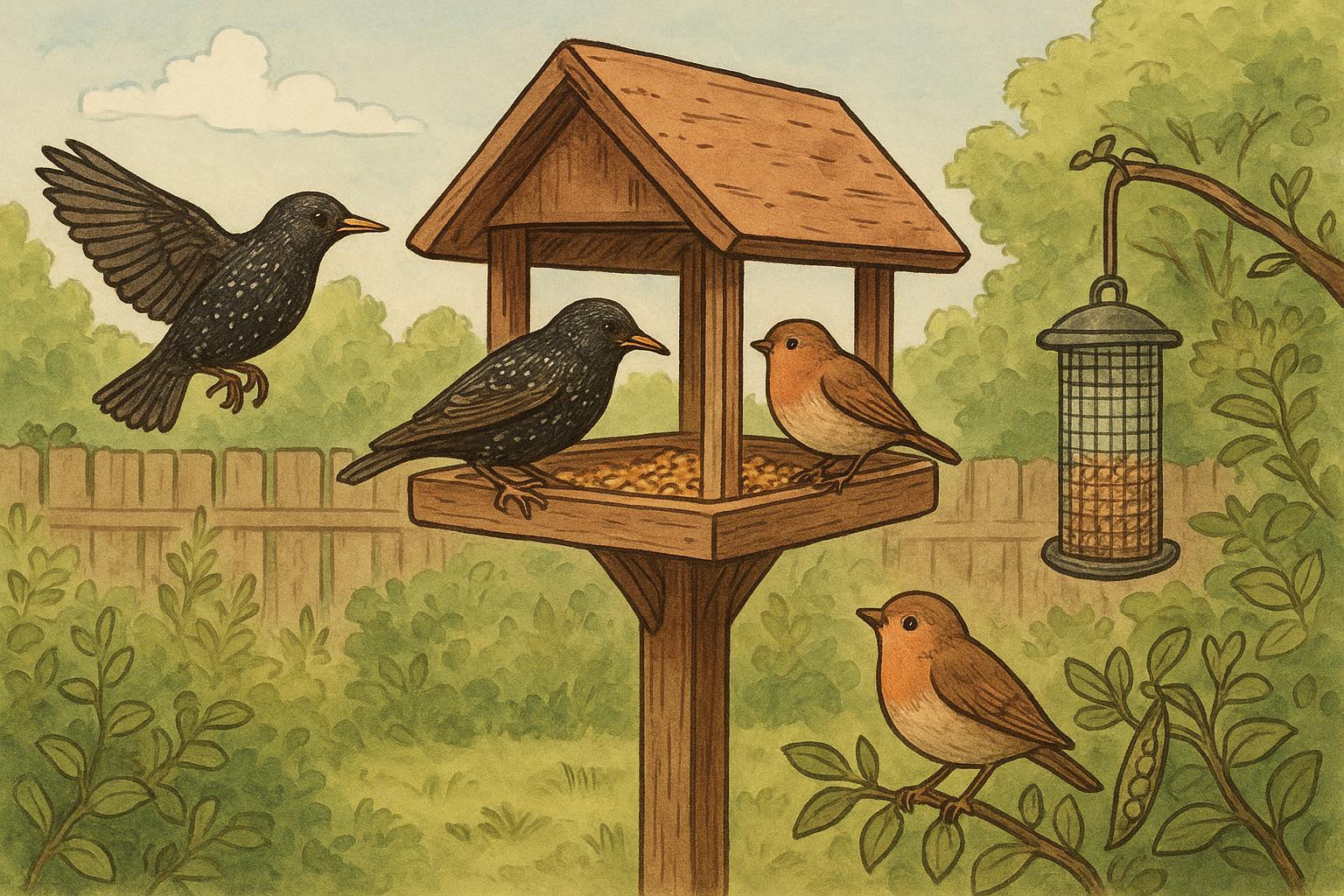
These birds nest in cavities and in human structures. Look in vents, gutters, and holes in walls. House sparrows will also nest in hanging baskets and in the undersides of roofs. Their nests are messy, packed with straw and feathers. Starlings pack nests tightly with grasses and paper.
### Bluebirds And Chickadees
Both favor cavity nest sites. Bluebirds prefer boxes or tree cavities in open fields and edges. Chickadees are smaller and use narrower cavities or nest boxes with smaller entrance holes. If you put up a bluebird box, be sure it faces open space and monitor quietly; parents will accept it quickly if the location suits them.
### Wrens And Warblers
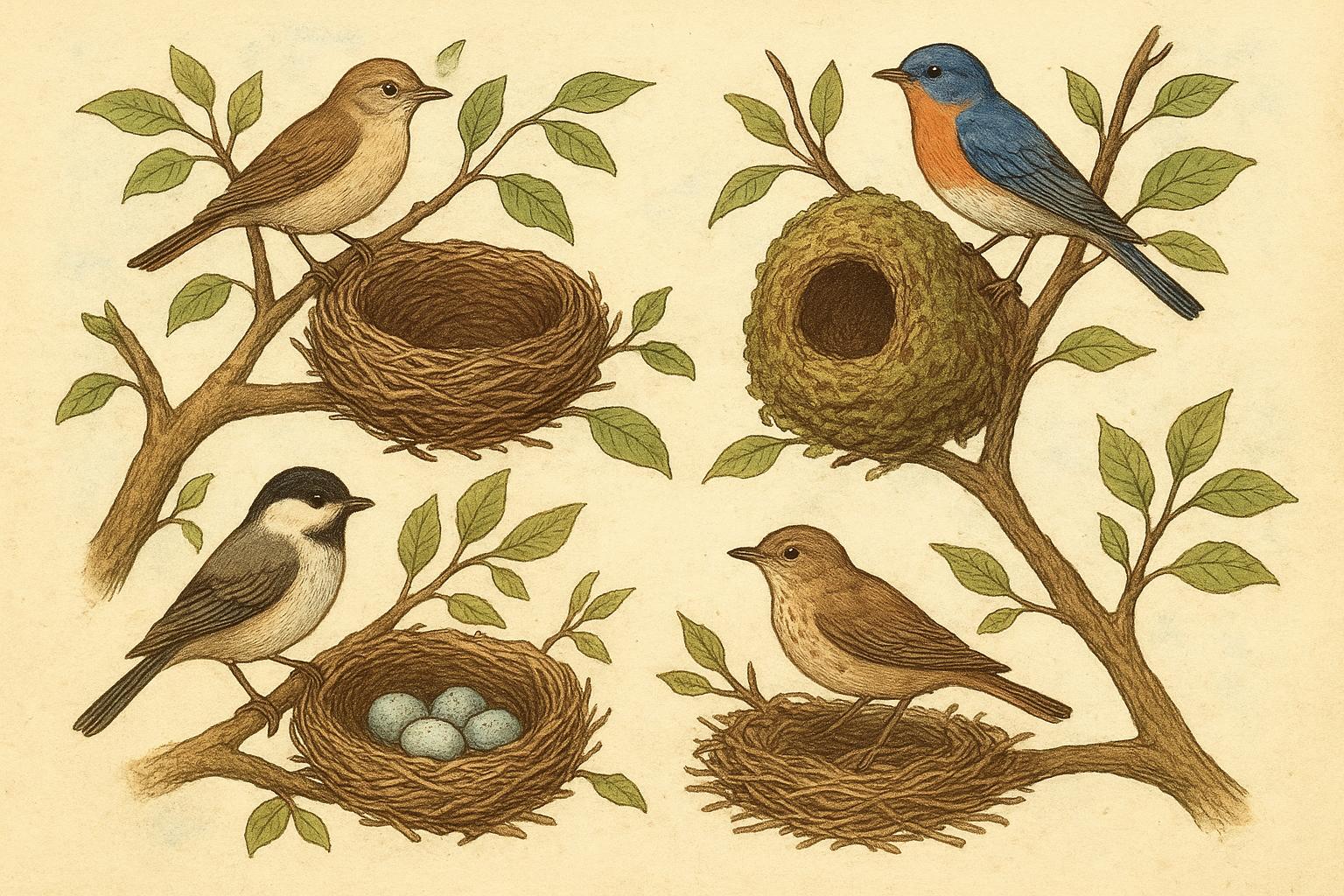
Wrens will nest in all sorts of nooks: mailboxes, crevices in walls, plant pots, and in dense brush. Their nests are often spherical or domed with a small entrance. Warblers tend to like dense foliage and often weave delicate cup nests in where branches are tangled. Follow a bird with a long tail flicking through dense shrubs and you’re likely to find a nest.
#### Swallows And Martins
These species attach nests to vertical surfaces like cliffs, barns, or under eaves. Swallows build with mud; martins use pockets or gourds in colonies. If you spot repeated mud-patterns or clusters of nest cups under a porch, you’re seeing established nest sites.
## Ethical Search Practices And Legal Considerations
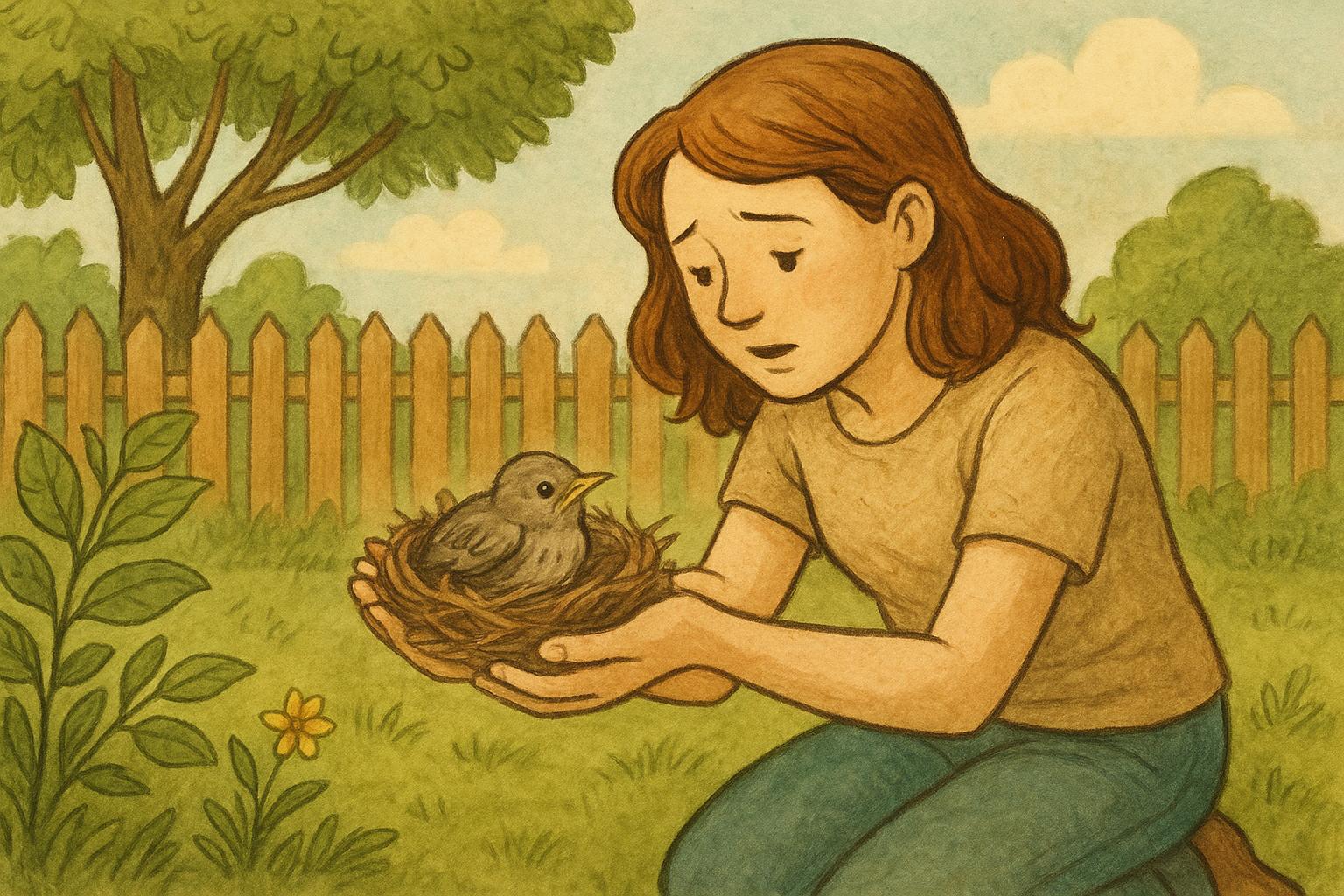
Finding a nest is exciting, but there are rules and ethics. Disturbing nests can cause abandonment and is illegal for many species.
### How To Observe Without Disturbing
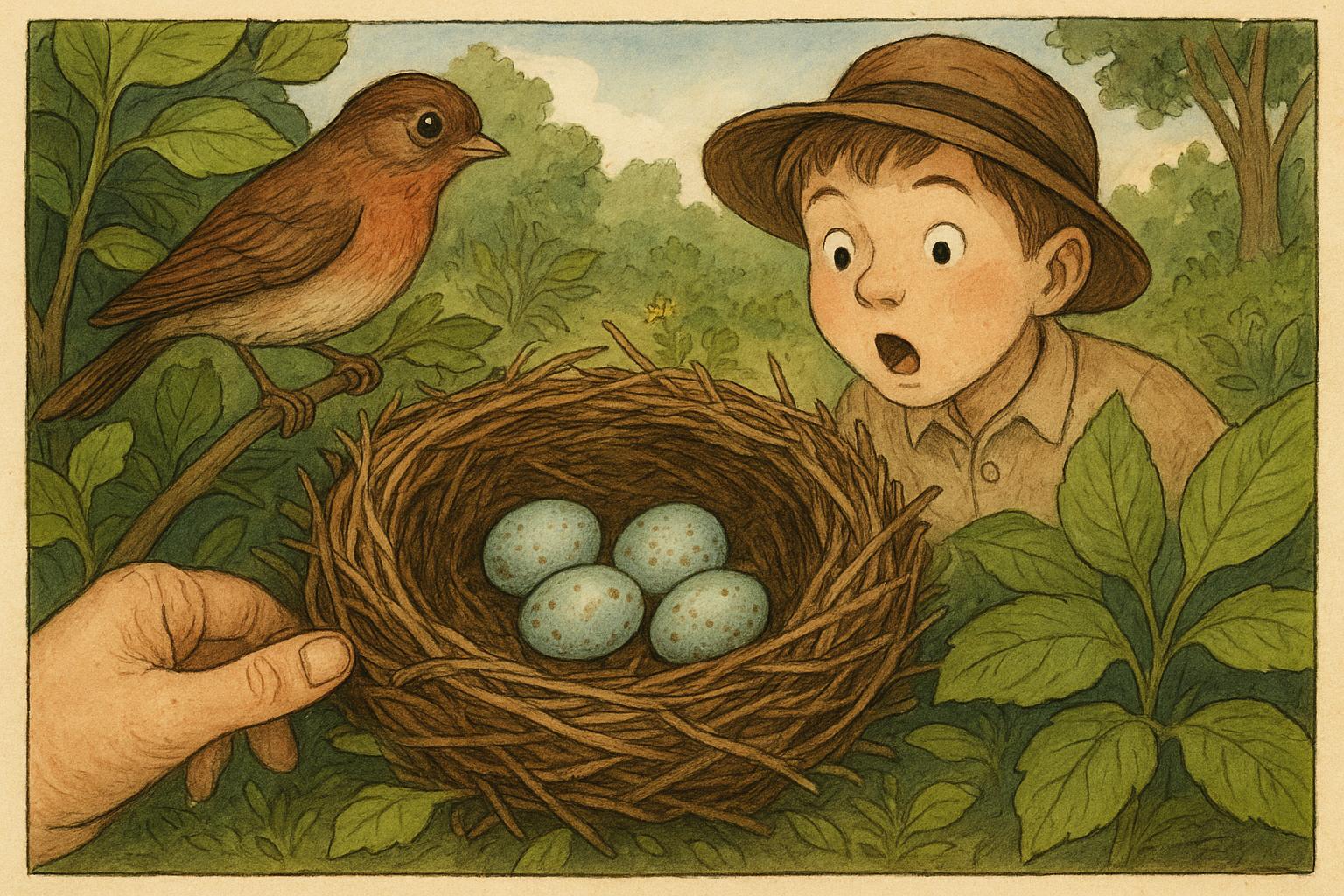
The golden rule: don’t touch or move nests. Use binoculars from a distance. If you suspect a nest but can’t see it, don’t keep peering directly into cavities or lifting nest boxes during incubation. Limit visits near the nest to necessary checks only, and avoid visits during the hottest part of the day, when eggs and nestlings risk overheating.
If you have pets, keep them away. Cats, dogs, and even curious children can stress parents and put nestlings at risk. Keep yard activities minimal near a suspected nest until the young have fledged.
### Legal Protections
In many places, birds and their nests are protected by law while eggs and young are present. This includes many common backyard species. If you find a nest that’s in danger because of construction or yard work, contact local wildlife authorities for guidance. They can advise on timing or safe relocation options when permitted.
#### When Relocation Is Allowed
Relocating a nest is rarely a good idea and often illegal. Exceptions exist only when a nest is in imminent danger and authorities approve. Even then, success rates are low. Prevention is better: plan yard work outside breeding season when possible.
## Tools And Techniques That Help You Locate Nests
You don’t need fancy gear to be successful, but a few tools increase your odds without stressing birds.
### Binoculars And Spotting Scopes
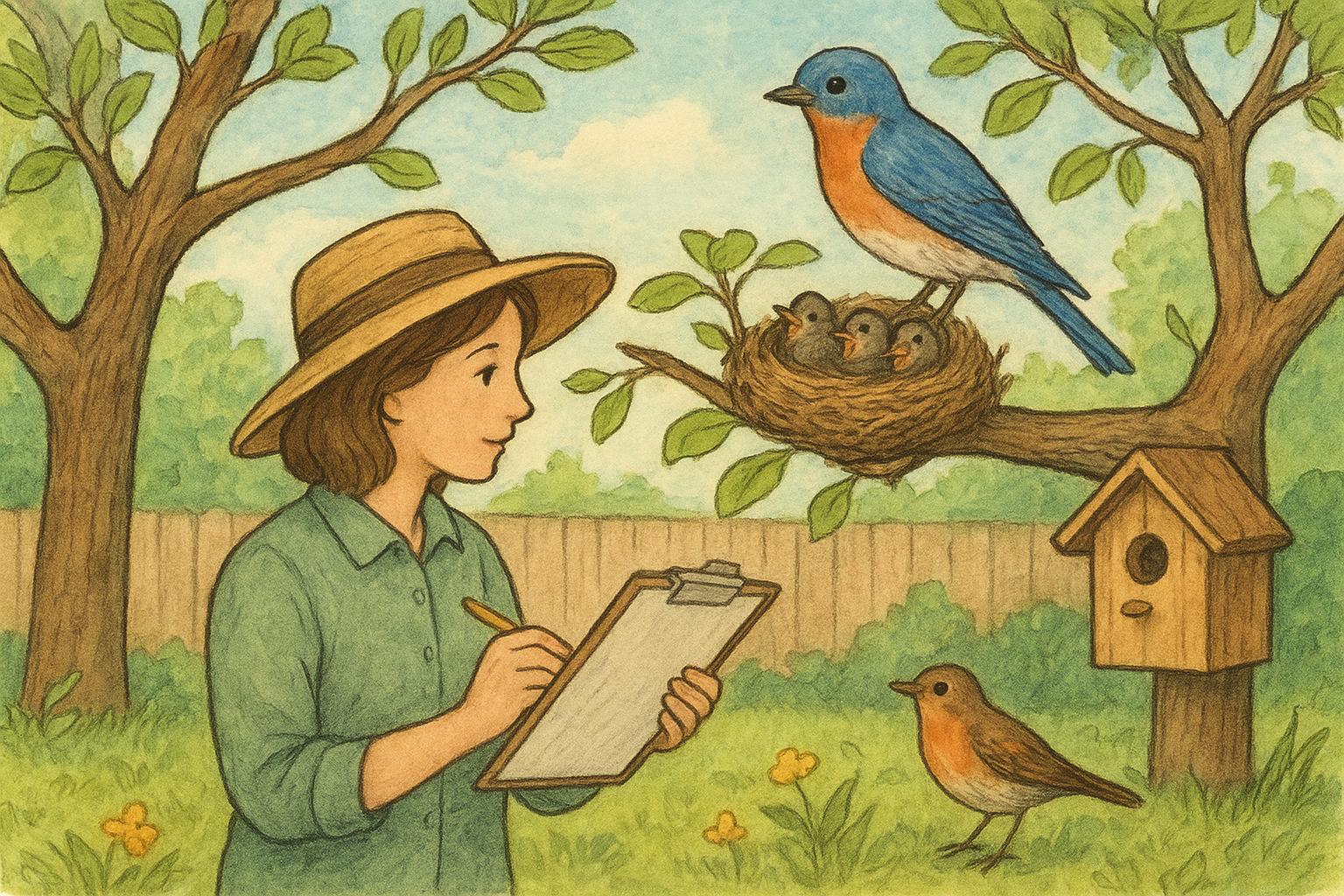
A modest pair of binoculars lets you watch behavior without approaching a nest. A spotting scope gives more detail if you’re watching from a yard edge. Look for the bird’s flight path and then follow it back to the likely nest site.
### Trail Cameras And Motion Sensors
A motion-activated camera can confirm a nest location without human presence. Set it up discretely and check images infrequently to avoid creating a pattern that disturbs the birds. Cameras are especially helpful for nocturnal species or in dense foliage where visibility is poor.
### Ladder Use And Safety
If you must use a ladder to inspect eaves, do it once and from a distance if possible. Wear gloves, and never lean into cavities or forcibly open nest boxes during active nesting. If you keep nest boxes, add a hinged side or roof so you can peek without dislodging birds.
#### Timing Your Search
Search for nests in the early breeding season before foliage grows dense, and again when you see signs of building. Late spring and early summer are prime times. Early morning is best for quiet observation; birds are active and less likely to be disturbed by human noise.
## What To Do If You Want To Encourage Nesting
If your goal is to attract specific birds, arranging suitable nest sites is practical. But placement and maintenance make all the difference.
### How To Install And Place Nest Boxes
Match box dimensions and entrance hole size to target species. Bluebird boxes need a 1.5-inch hole; chickadee boxes need a smaller opening. Place boxes at the recommended height and facing away from prevailing winds. Clean boxes in late winter to remove old nests and parasites, but wait until breeding season is over before doing any maintenance.
### Landscaping To Create Attractive Nest Sites
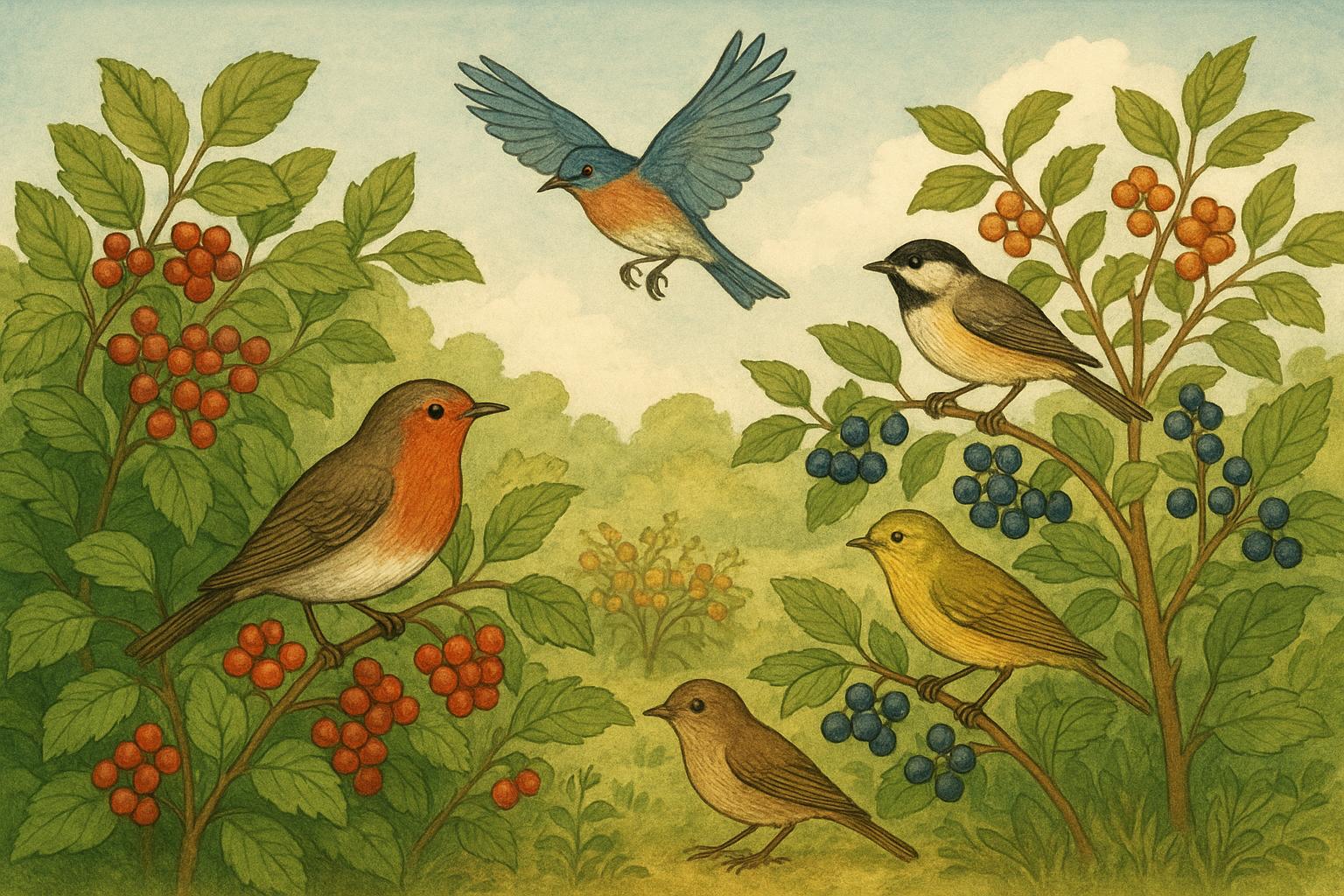
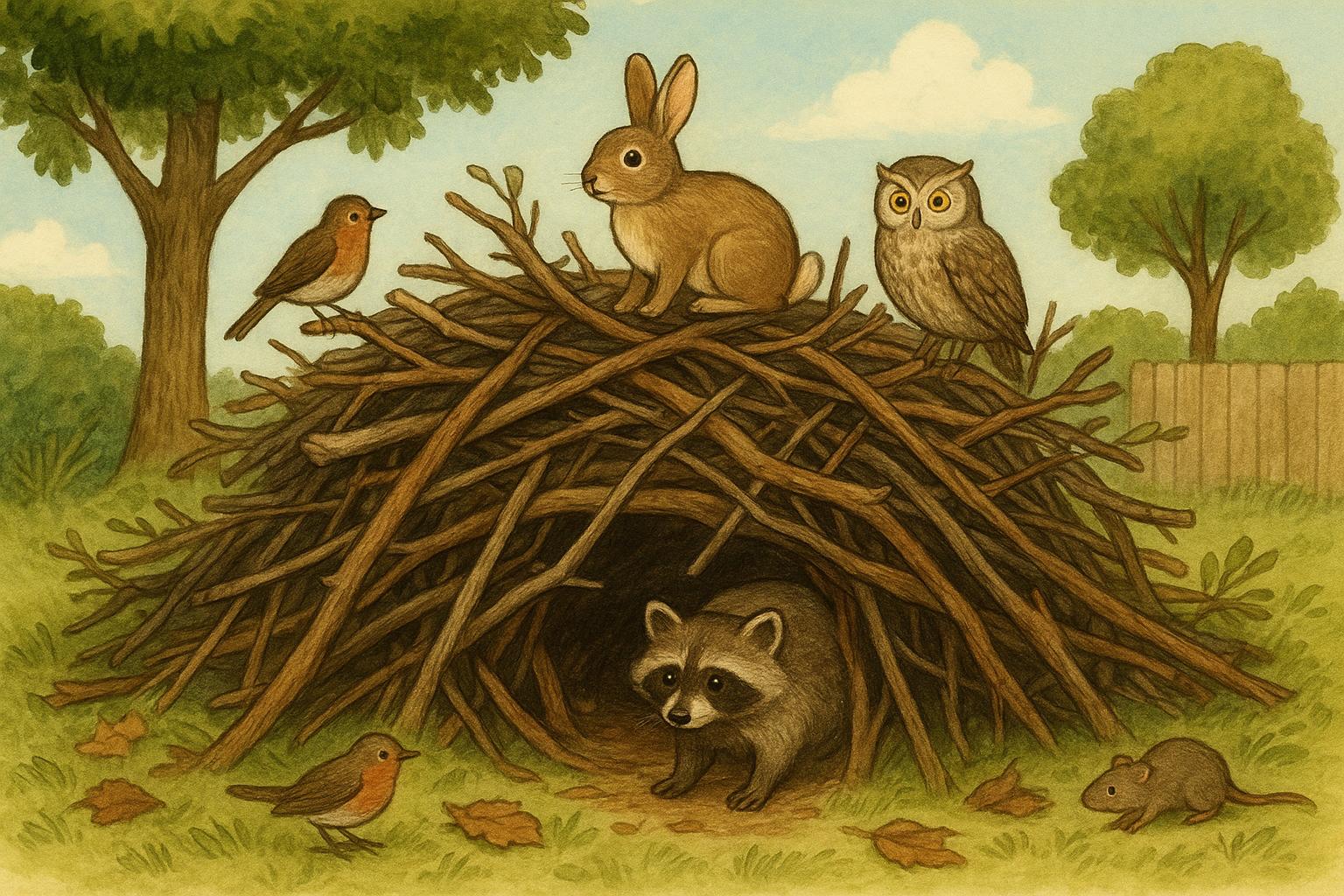
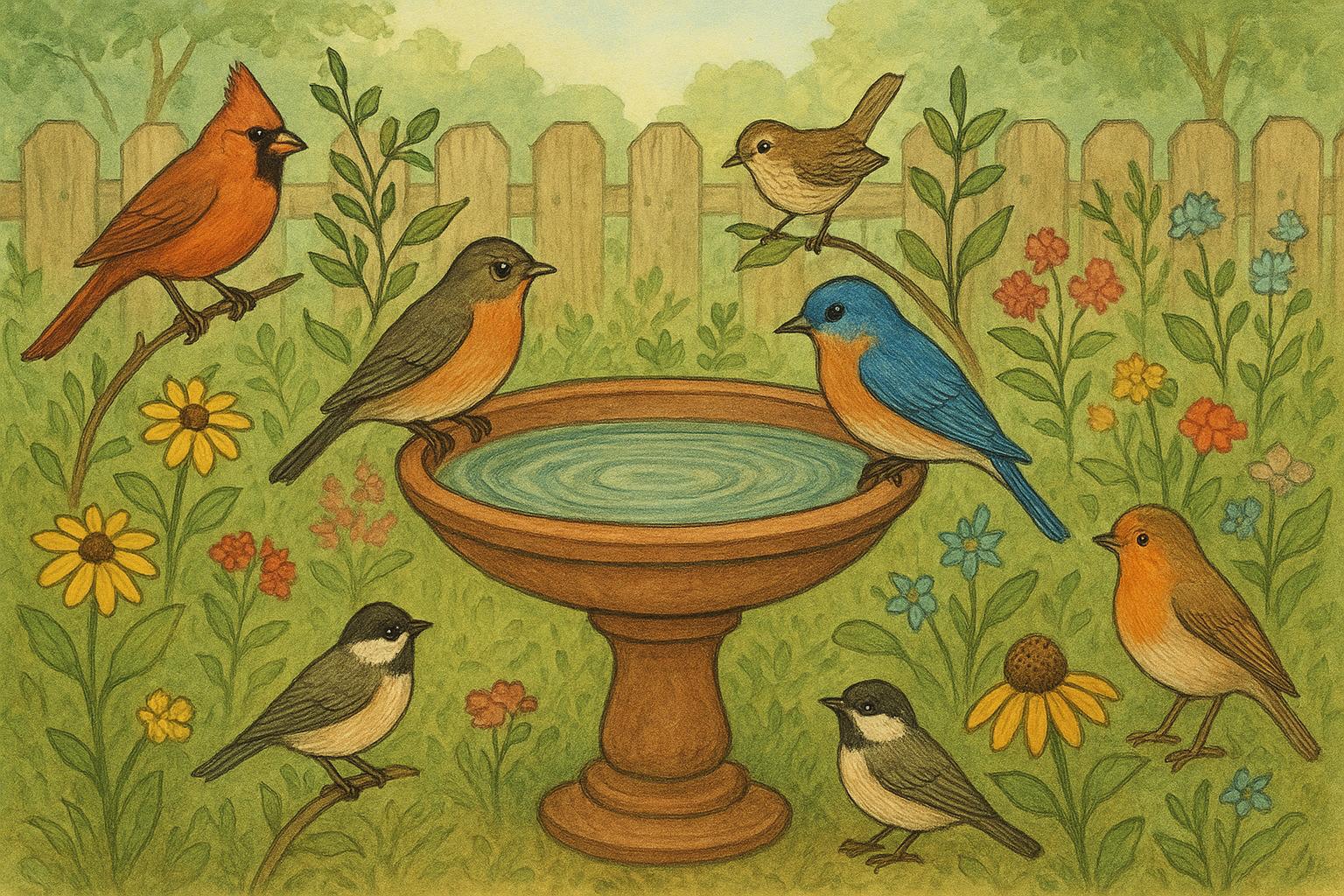
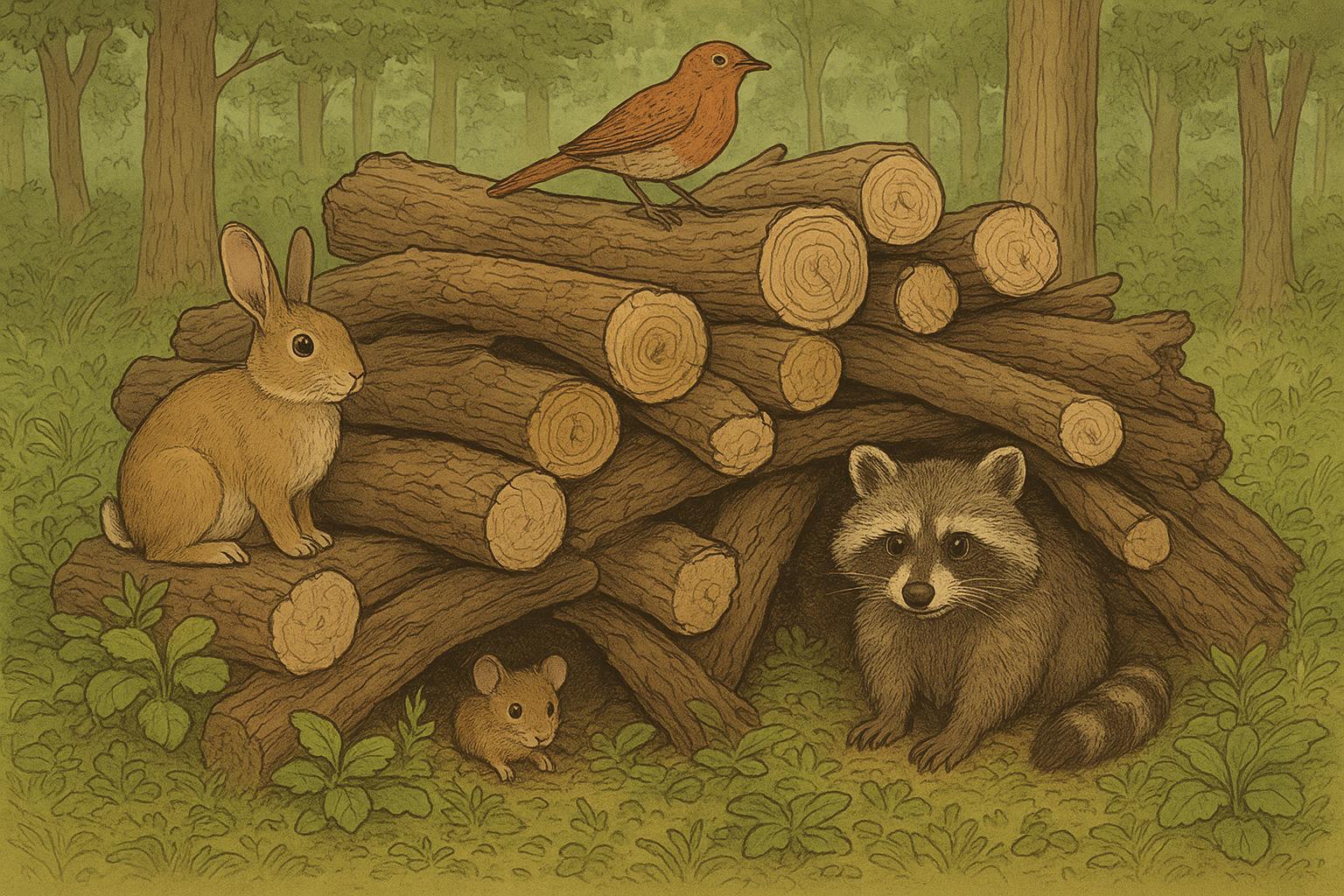
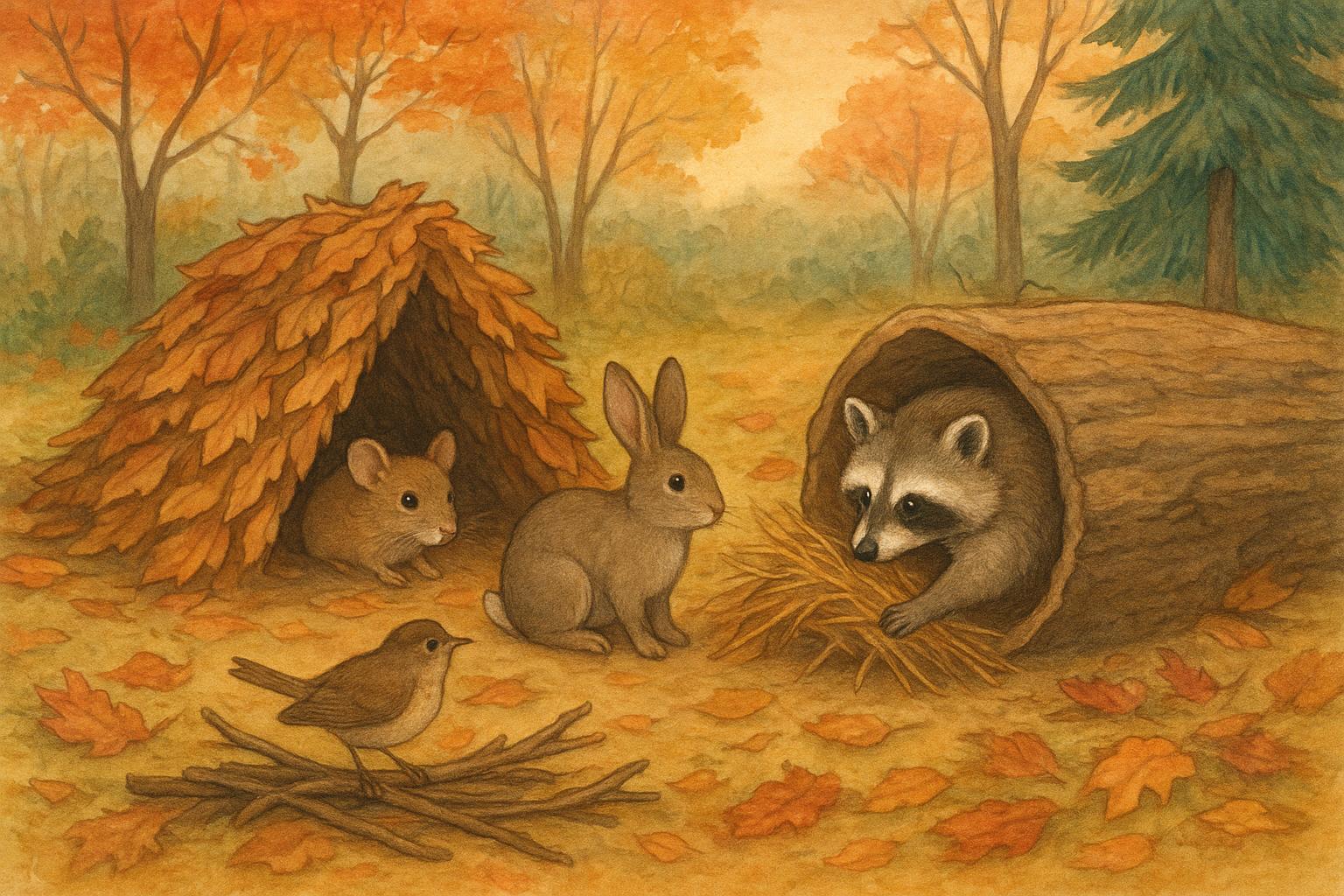
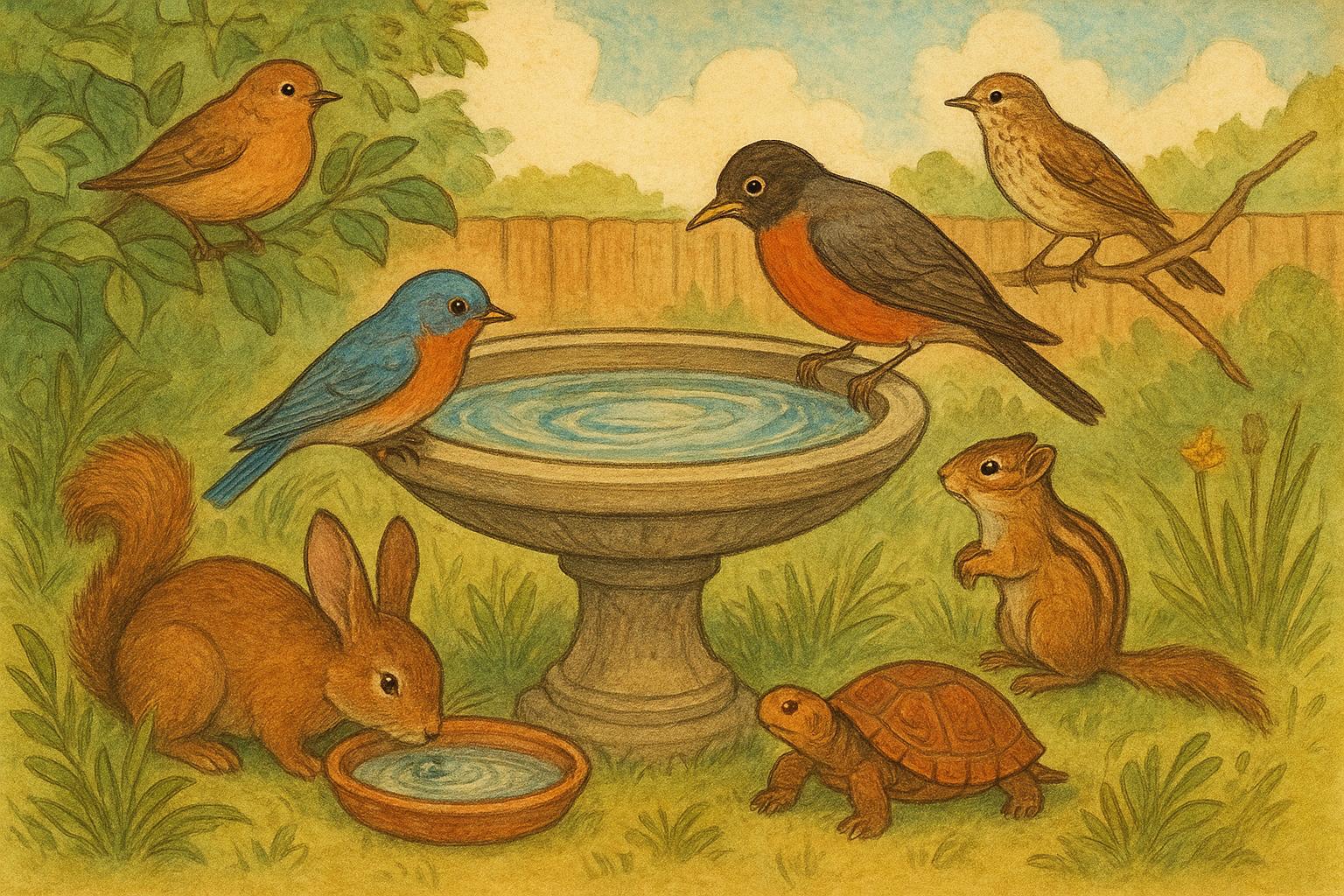
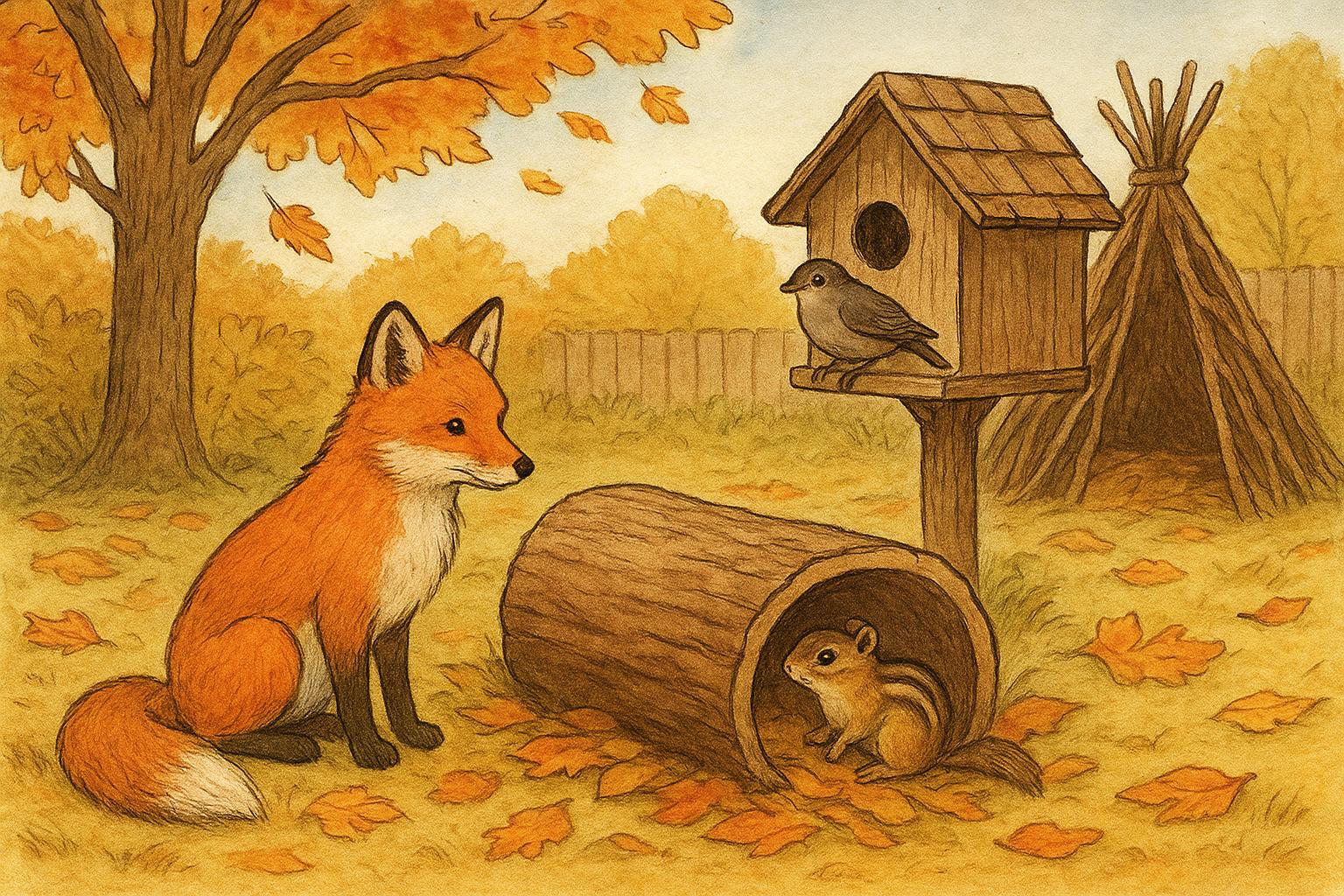
Dense shrubs, native plants, and layered vegetation provide cover and foraging. Leave some leaf litter and brush piles for ground-nesting species. Provide water sources like shallow birdbaths or small puddles for bathing and drinking. Avoid heavy pruning during nesting season; a thicket left alone is often the best nest site.
### Avoiding Common Mistakes
Don’t place nest boxes too close to feeders or high-traffic areas; birds want distance from human activity. Don’t use predator guards that are too conspicuous; they can make birds avoid a box. And resist the urge to add perches—many cavity nesters like boxes without external perches to reduce predator access.
## Reading The Landscape For Hidden Nest Sites
Sometimes nests are cleverly concealed in plain sight. Reading the yard like a map helps.
### Look For Flight Paths And Secret Lanes
Birds create subtle trails through vegetation—broken grass, repeated leaf disturbance, or a narrow lane in a hedge. Follow those lanes. They often lead to a ground nest or to the base of a shrub where a cup nest sits.
### Check For Unusual Vegetation Patterns
Plants that are flattened or slightly broken often hide nests. A pile of shredded leaves at a branch junction, or a small patch of compacted soil under a shrub, can point straight to a nest. If you see a spot that looks deliberately arranged, it often is.
### Use The Time Of Day And Season
Early season: check open branches and lower foliage. Mid-season: look for denser cover. Late season: fledglings will be moving, so watch for adult flights carrying food. Adjust your search with the season and you’ll get better results.
#### Rainy Days And Nest Discovery
After a rain, mud-based nests become more obvious because of fresh marks and damp mud. Also, adults may stay tucked in longer, making a faint trail to the entrance clearer. That makes rainy or just-after-rain days surprisingly helpful for finding certain nest sites.
## Dealing With Problematic Nests
Sometimes nests are in places that cause real problems—vents, chimneys, or inside machinery. There are humane ways to handle these situations.
### When A Nest Interferes With Human Use
If a nest blocks a vent or makes a porch unusable, contact wildlife professionals. For chimney nests, a certified chimney sweep experienced in wildlife removal can provide options. Do not remove nests with eggs or young; legal protections may apply and removal can be traumatic for the birds.
### Temporary Barriers And Alternatives
If a nest box is in a spot that becomes problematic, consider installing an alternate box nearby. Offer shelters and safe alternatives so birds move voluntarily. Cover vents and machinery with temporary guards once nesting season ends to prevent repeat occupation.
### Handling Predators And Nest Safety
Predators like raccoons, cats, and squirrels are a real threat. Place nest boxes on poles with baffles, and keep pets supervised. Avoid feeding stations that attract predators too close to known nest sites. Sometimes a simple change, like moving a feeder a few meters, reduces predator traffic.
## Unusual But Telling Clues
Some clues are quirky but reliable.
### Scent And Material Choices
Certain birds favor particular lining materials. If you find little tufts of wool or cigarette filters in a nest, that can indicate house sparrows. Some species use aromatic plants, and you might smell a faint green scent near the nest if such plants are used.
### Human Objects In Nests
Birds sometimes incorporate string, plastic, and paper into nests. A recurring human object near a tree or bush can mean the nest is assembled nearby. This is common with house finches and some sparrows. While it looks messy, it’s a practical clue if you’re trying to locate a nest.
### Patterns In Nest Placement
Many neighborhoods show patterns; if your neighbor has martins in gourds, you might attract them too if you install proper housing. Birds spread local knowledge. Observing local nest sites gives you clues about what will work in your yard.
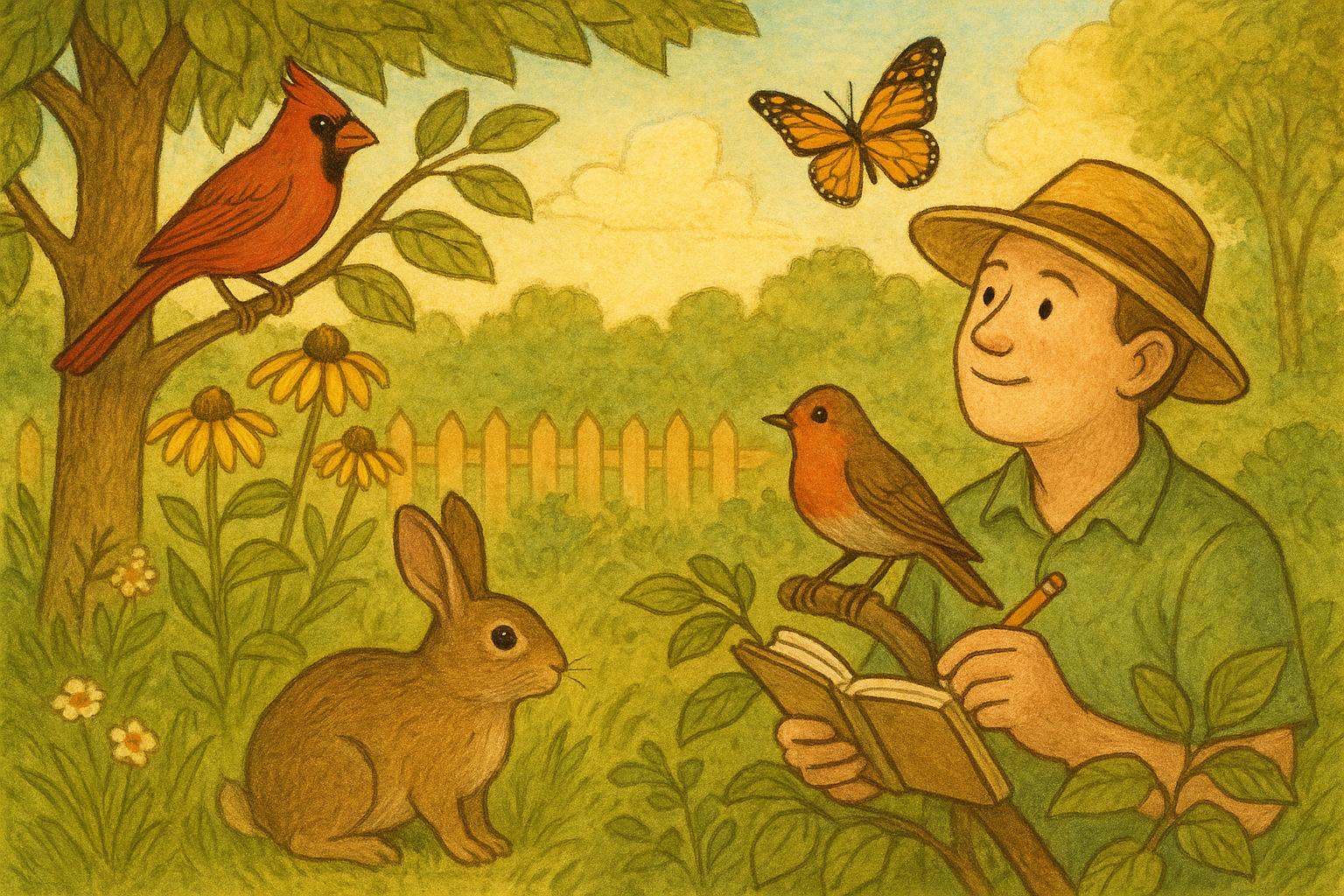
The next time you walk through your yard, slow down and watch. Small repeated actions reveal far more than a frantic search. With practice you’ll start to notice specific nest location clues that are hard to miss, from the way a bird approaches a shrub to the droppings under an eave. Keep records too, scribbled notes on a phone or a small notebook about where you saw material gathering, which plant was used most often, and when fledglings first appeared. Over time, those notes become a map of nest sites across the seasons, and you’ll know the yard almost as well as the birds do.
Be patient. Birds don’t tell all their secrets at once, but they do leave a trail of small, honest hints. Find those and you’ll find the nests. And remember—observe gently, act responsibly, and never put a nest at risk for the sake of curiosity. Surveilence done right is nearly invisible to the birds and yields the best results.


Leave a Reply