
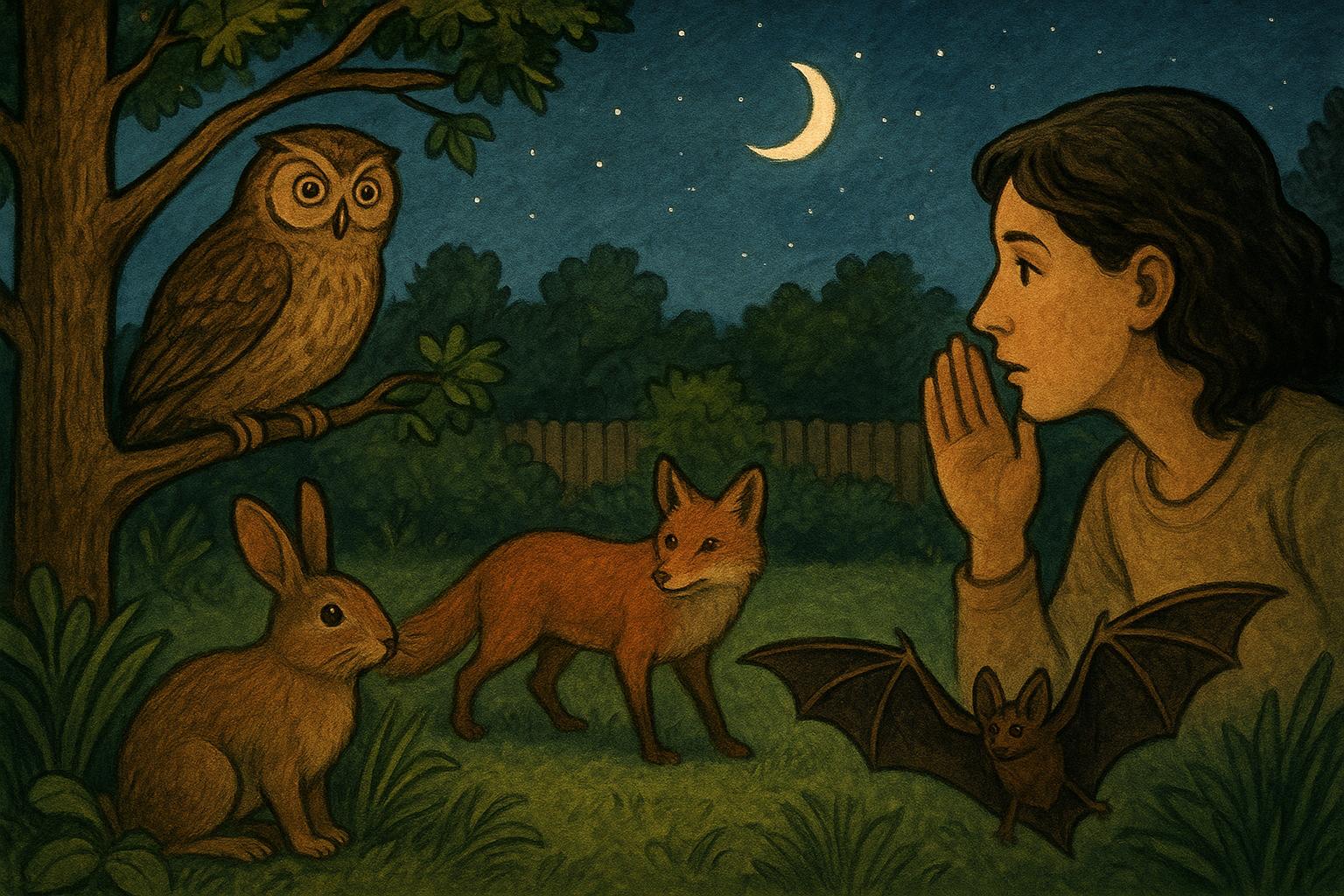
If you wake up to a racket in the hedges and wonder what’s out there, you’re not alone. Nighttime sounds tell a story if you know how to listen. That story can be a barn owl hunting over the lawn, a raccoon rifling through the compost, or a chorus of frogs from the drainage ditch. Learning to identify nocturnal visitors by sound takes a little patience and some practical listening exercises — not complicated gear or endless field guides.
## How To Identify Nocturnal Visitors By Sound
Start with a handful of familiar bookmarks: a short list of species most likely to show up where you live. In many suburbs that list includes owls, raccoons, coyotes, foxes, bats, frogs, and several moth and insect species. If you live near water, add frogs and crickets; in forested areas, expect owls and woodpeckers. Once you narrow the suspects, you can focus on the particular noises they make.
The phrase identify nocturnal visitors by sound sounds technical, but it’s really about pattern recognition. An owl’s hoot is a tonal, steady call with clear spacing — you’ll notice it even if you haven’t listened before. A raccoon isn’t melodic; it makes rasping grunts and high-pitched cries that can sound almost human. Coyotes yip, howl, and yodel in groups. Bats are mostly ultrasonic, but at dusk you’ll hear rustling and the wing whirr of fast, fluttering wings. If you can tag these basic patterns, you already know a lot.
### What Makes Sounds Distinctive At Night
Nighttime acoustics are different. Cooler air near the ground can carry sound farther. Fewer daytime noises means slight calls stand out. That’s both a benefit and a trap. A small bird’s call may travel much farther at night, making it easy to mistake distance for size. An alarmed animal might change pitch or tempo. Learn to ask three quick questions when you hear something: How loud is it? Where does it seem to come from? Does it repeat in a regular way? Those three details narrow the field fast.
#### Loudness And Distance
A loud, close sound with a stomping rhythm likely belongs to a mammal moving through underbrush. Distant, echoing calls with long pauses often mean birds — think owls. Pay attention to how the sound fades: a sound that drops abruptly was probably nearby.
#### Rhythm And Repetition
Many species have signature rhythms. Owls might give single hoots spaced evenly. Coyotes will throw a string of yips or a drawn-out howl. Insects like katydids produce rapid, repetitive ticks that feel like a metronome. When you start noticing rhythm, you’re treating sound the way a detective treats handwriting.
## Common Nighttime Sources And How To Tell Them Apart
If you want to identify nocturnal visitors by sound, it helps to group noises by source: birds, mammals, amphibians, and insects. Each group has its own acoustic fingerprint.
### Birds: Owls, Nightjars, And Roosting Species
Owls are the classic nighttime caller. Different owl species have different hoots: a great horned owl’s hoot is deep and resonant; a barred owl gives a more rolling, laughing call. Nightjars and whip-poor-wills give repeated phrases — listen for a staccato “whip-poor-will” pattern. Even roosting pigeons and rooks can make surprisingly loud rustles if they clump in trees.
#### Key Bird Clues
– Single, spaced hoots = likely an owl.
– Repeating phrases with a musical quality = nightjars.
– Loud rustling in canopy = roosting flock.
### Mammals: Raccoons, Foxes, Coyotes, And Rodents
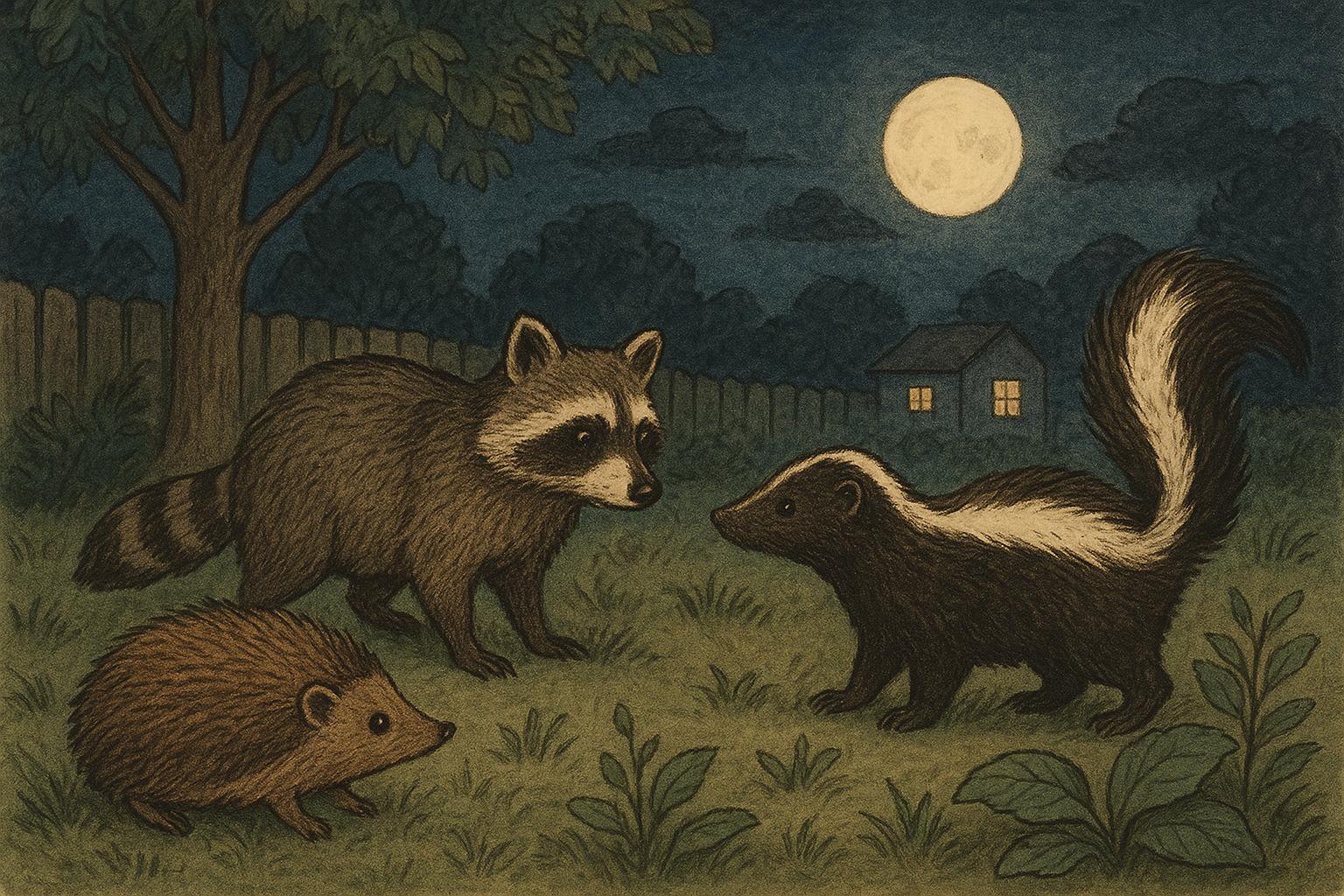
Mammal calls are less musical and more varied. Raccoons grunt, purr, hiss and can make a crying sound that’s deceptive. Foxes emit high, shrill screams in mating season — those can be spooky if you don’t expect them. Coyotes are more expressive: yips, barks, and howls, often in sequences when they’re communicating across distance. Small rodents make high-pitched squeaks and scurrying noises; if it’s soft and quick near the ground, think mice or voles.
#### How To Discern Mammals
Listen for throat-driven sounds (howls, barks) versus mechanical sounds (footsteps, leaf rustle). Vocal mammals tend to call to communicate territory or pack position. Scurrying and digging are movement cues, not vocalizations, but they tell you who’s on the ground.
### Amphibians And Reptiles: Frogs And Toads
Frogs and toads make repetitive, often rhythmic calls that can dominate a wetland chorus. Bullfrogs give a deep, slow “jug-o-rum” tone. Tree frogs are higher and more musical. The timing matters: frogs call in mating season and after rain. If your yard has standing water, those calls will usually be the loudest and most persistent night after night.
### Insects: Crickets, Katydids, And Moths
Insect calls are usually continuous soundscapes rather than distinct phrases. Crickets chirp in a steady, high tempo that changes with temperature; katydids create a ticking or rasp. Moths won’t call, but they brush plants and the antennae and wings can make a soft, fluttering sound near porch lights.
## Simple Gear That Helps You Identify Nighttime Wildlife
You don’t need a PhD or pricey equipment. Here are practical tools that actually make a difference.
### Headlamp With Red Filter
Use a headlamp with a red filter to avoid startling animals. Red light preserves your night vision and keeps creatures calmer. When you need to take a closer look, a brief white flash will do more harm than good. Keep it brief.
### Smartphone Recorder And Apps
Recordings matter. Modern phones are surprisingly capable. Use a recording app with waveform display if possible. After you record a sound, you can slow playback, loop it, or upload it to an identification app. Several apps analyze audio for bird calls and frogs. They’re not perfect, but they often give you a shortlist to check manually.
### Binoculars And A Sound Map
Binoculars help for silhouette identification during dawn/dusk. A simple sound map — a diagram of where you heard each call — will help you triangulate sources. Place a dot on the map each time a sound appears; after a few minutes you’ll have patterns emerging. This technique is low tech and underused.
## Practical Listening Exercises
If you want to identify nocturnal visitors by sound, the fastest path is practice. Real listening beats memorizing spectrograms.
### Nightly 10-Minute Sessions
Set aside ten minutes after dusk three times a week for a few weeks. Sit quietly near a window or on a porch. Close your eyes. Don’t chase the first noise. Let the chorus settle, then catalog the first three distinct sounds you hear. Write them down. Over time you’ll start to notice species returning to the same roles in the soundscape.
### Record And Replay
Record snippets and replay them at slower speed. Slowing a frog’s call or a bird’s phrase reveals structure you might miss in real time. Use headphones to isolate the sound from ambient noise. Compare your clip to online reference libraries. This step is where technology and attention meet.
### Mimicry And Call-Response
Use call-response sparingly and carefully. In some cases, playing a short, authentic call can draw an animal close for identification. But this can stress wildlife, especially during breeding season. Use it only for short, conservative checks and avoid repeated playback.
## Species Sound Profiles To Learn First
Focus on the handful of species you’re most likely to encounter. Here are concrete sonic profiles to memorize.
### Owls (Short Examples To Recognize)
Great Horned Owl: Deep, two-to-three hoots, sometimes “who’s awake?” rhythm. Barred Owl: Rolls of “who cooks for you” phrases — sounds conversational. Screech Owl: A descending, tremulous whinny rather than a hoot. If you hear a long drawn-out wail, check for foxes too.
### Raccoons And Coyotes
Raccoon: Chattering, grunting, and occasional whines that sound petulant. Coyotes: High yips, intermittent barks, and group howls. Don’t confuse a lone yelp with a dog; coyote yips tend to climb in pitch and have a nasal quality.
### Frogs And Crickets
Bullfrog: Deep, resonant calls with long spaces between each. Tree Frogs: Short, bright chirps repeated rapidly. Crickets: Rapid ticks that steady up in warm weather and slow down when cool.
### Bats And Night-Flying Insects
Most bat echolocation is outside human hearing, but you’ll hear ambient clues: insect-wing fluttering near lights, sudden darting noises, and the soft tapping of tiny feet. If you have an ultrasonic detector, you’ll start hearing bat passes — rapid, sawtooth clicks that change as bats close in on prey.
## How To Record Usefully
A bad recording is as good as no recording. A few simple rules will get you useful clips.
– Hold the recorder steady and aimed toward the sound source. Don’t wave it around.
– Record in short blocks, 20–40 seconds. Long files are harder to review.
– Note time, weather, and your location. Context is everything.
– If using an app that tags species, keep a backup copy of the raw audio. Automated guesses are fallible.
### Where Beginners Trip Up
New listeners often try to ID a sound in one exposure and give up when it’s ambiguous. That’s normal. Sounds morph with distance and emotion. A defensive raccoon may sound different from a relaxed one. Time of season matters too. Amphibian choruses are seasonal. Keep notes.
## Ethical Listening And Safety
Respect the animals and the laws. Don’t use loud playback near nests or dens. Avoid bright lights that can disorient migratory birds. Keep pets inside if you’re doing close listening; dogs and cats can change animal behavior and put wildlife at risk. If you encounter a wounded or distressed animal, call local wildlife rehabilitators rather than attempting to handle it yourself.
### Legal And Practical Limits
In some places, it’s illegal to harass wildlife. Using playback during nesting season is considered harassment in some jurisdictions. Keep your activities low-impact. Your goal is to learn, not to manipulate or stress animals.
## Making A Backyard Sound Guide
After a few weeks you can make your own backyard sound guide. Collect the best recordings, label them with date and conditions, and note the likely source. Organize by sound type: hoots, howls, trills, chirps. Add a photo or sketch if you caught a sighting. This becomes a reference you’ll use every season.
### Sharing And Community Science
Consider uploading good clips to community science platforms. Your recordings help researchers track migration, breeding, and range shifts. It’s a small step that contributes to a bigger map of nocturnal life.
If you want a quick start list to practice tonight:
– Sit outside for ten minutes after dusk with a recording device.
– Note the first three distinct sounds and whether they were constant or intermittent.
– Try to match one of them to an online clip within 24 hours.
These tiny habits compound. In a month you’ll be surprised how fast you can identify nocturnal visitors by sound with confidence. Keep listening. Keep a light hand on technology. Let your yard speak to you — and you’ll begin to answer back in ways that matter to both you and the creatures on your outskirtz.






Leave a Reply