
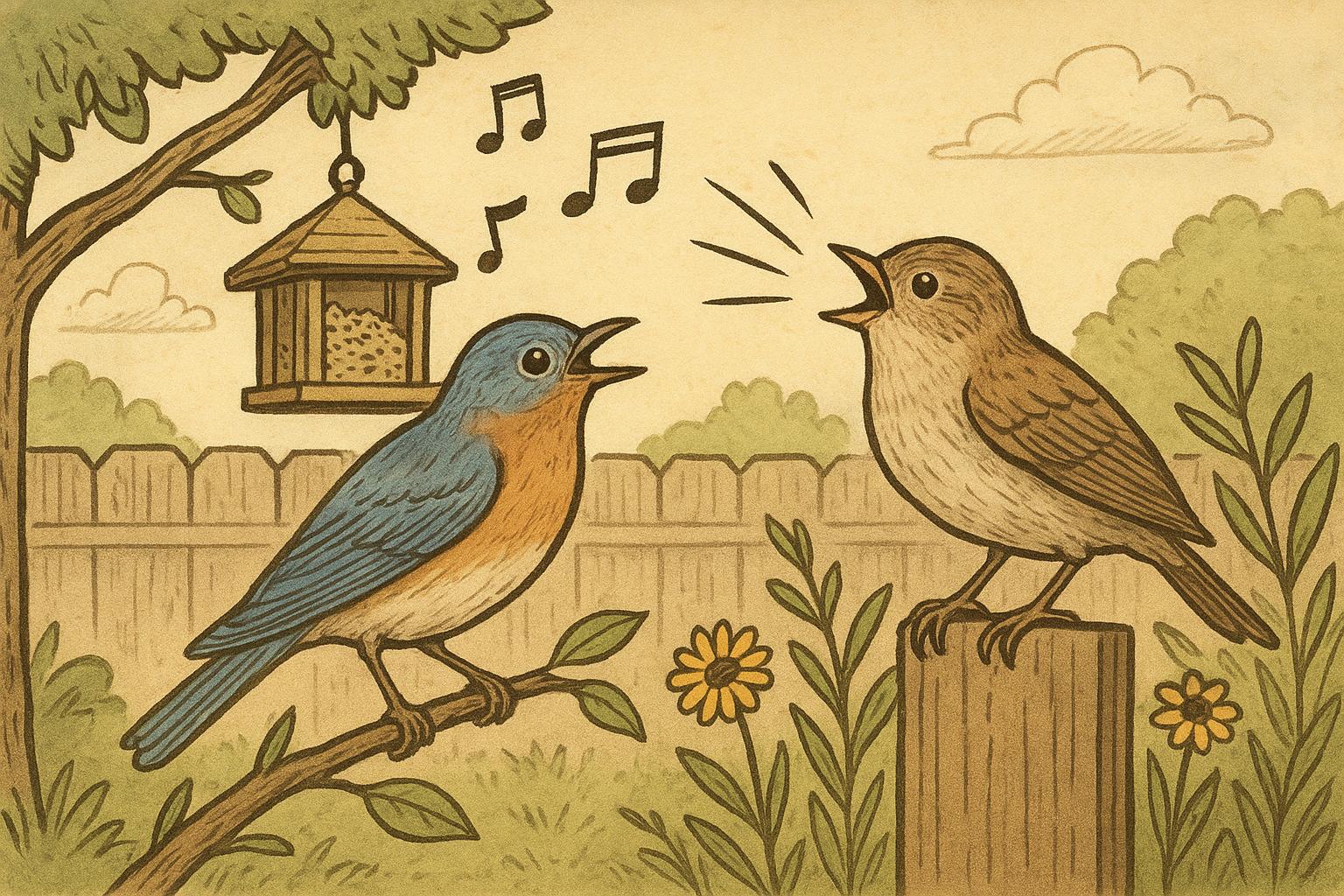
## Avian Vocalization Types: Song Vs Alert Calls Explained
Birds in the yard use a small set of sounds to do a lot of work: claim a patch of trees, keep in touch with mates, warn the flock, or trigger a mob. Getting a feel for what each sound does lets you read bird behavior without binoculars. I’ll walk through the practical differences and give clear cues you can use the next time something noisy starts up over the hedge.
### How Songs And Alerts Fit Into A Bird’s Day
A bird’s vocal toolkit is built for two big jobs: long-term signaling and immediate handling of danger. Those are the jobs behind the sounds we label as song and call. When you learn to separate them, you’ll notice patterns in timing, rhythm, and context.
– Songs usually take time. They’re often repeated, melodic, and come when the bird is stationary: perched on a high twig, displaying, or slowly cruising territory lines.
– Alert calls are short, sharp, and reactive. They happen when something sudden appears—a hawk overhead, a cat moving through the understory, or an unfamiliar human.
If you want a simple frame to remember: songs shape relationships across hours and days; alert calls manage moments.
### What Makes A Song Different From An Alert Call
Song vs alarm is not just about how pleasant something sounds. There are measurable differences.
#### Pitch, Repetition, And Length
Songs tend to have more notes, a wider pitch range, and regular repeated patterns. A male Song Sparrow’s song can run several seconds with repeated phrases. An alert call is short, sometimes a single note or a brusque series of identical notes. Chickadees, for example, change the number and tone of notes to convey danger level, but the notes themselves are brief.
#### Context And Posture
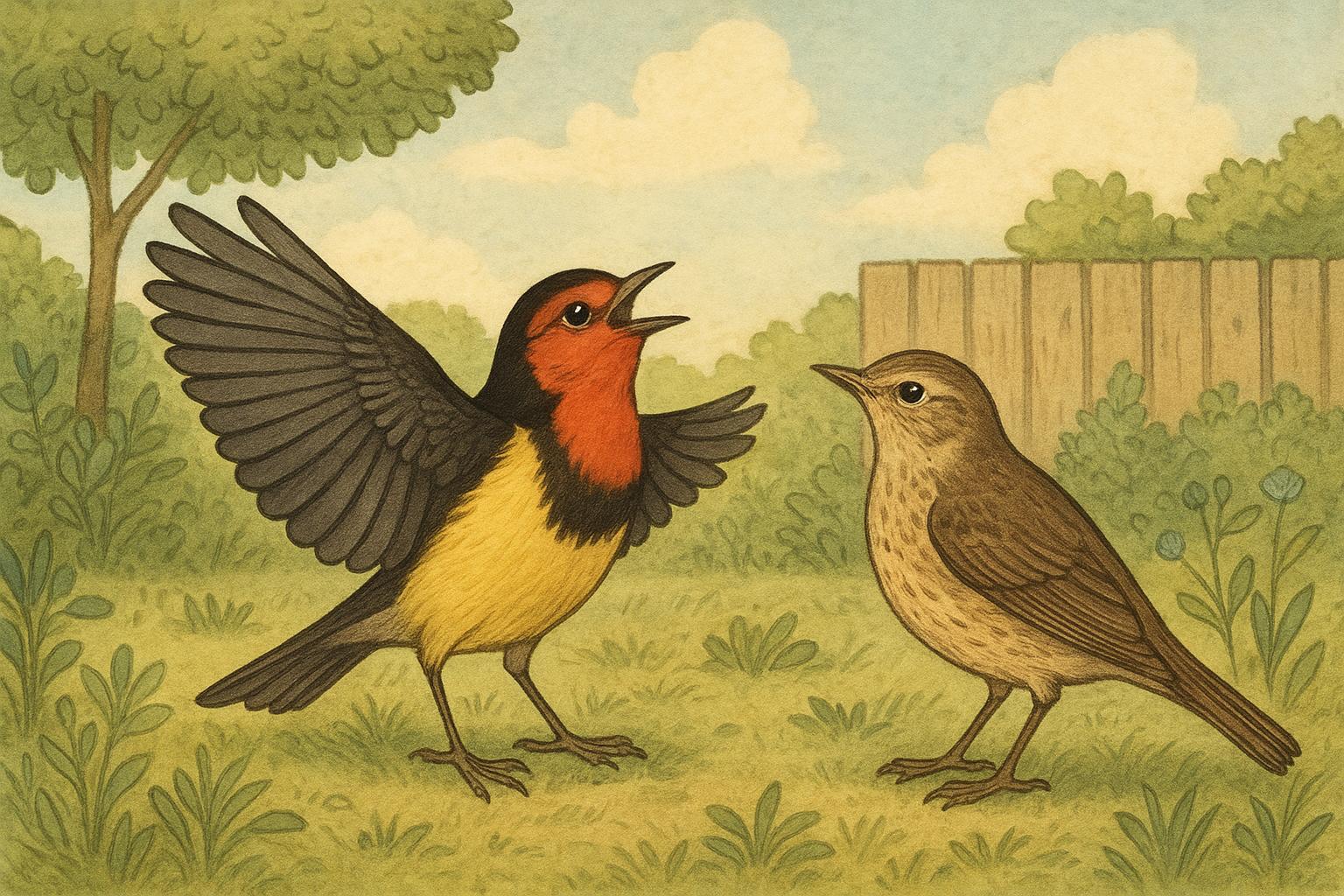
Watch the bird. A singing male often sits exposed, chest puffed, head tilted up. An alarm caller will be more alert, crouched, body low, scanning, and often shifts position quickly. If you see birds freeze and then scatter after a sound, it was probably an alert call.
#### Function And Audience
Songs target far-off listeners: rivals or potential mates. Alerts target immediate neighbors: flockmates, mates, or young. That difference explains why songs are broadcast from high perches and alerts are passed along the cover.
#### Acoustic Structure
Songs will show variety—trills, whistles, complex phrases. Alerts are simpler, louder on the onset, and optimized to travel through dense foliage without losing meaning. Because of that, alarm calls often emphasize particular frequencies that cut through noise.
### Common Backyard Examples You’ll Hear
You don’t need to know every species to use these rules. Here are familiar cases.
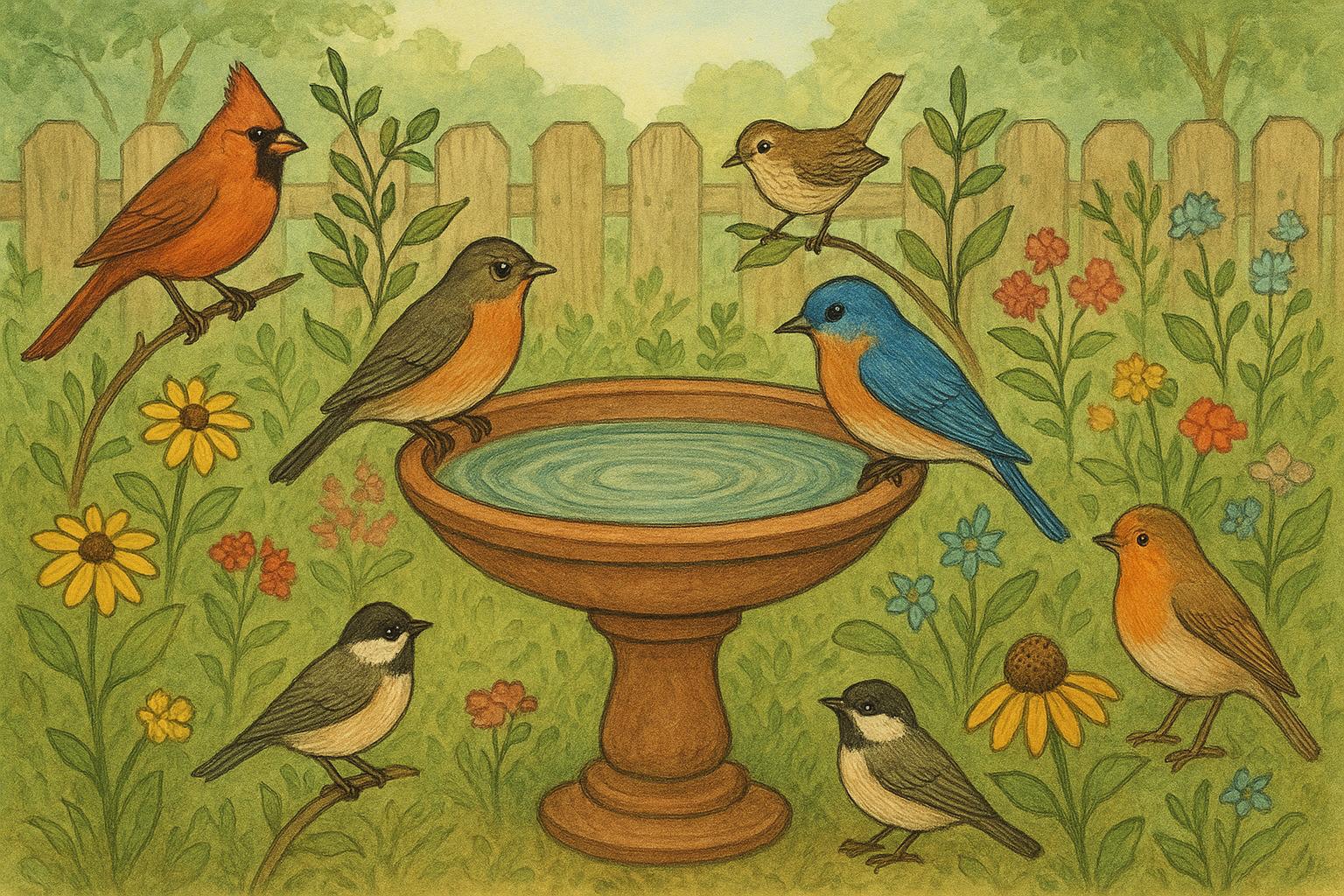
#### Robins And Their Songs
American Robins sing long, flute-like phrases in the morning. They’re territorial and use song to advertise. If a robin breaks its song and emits a sharp “tseep” while looking up, think hawk.
#### Chickadees And Information Density
Black-capped Chickadees are small, but their calls are packed with meaning. The classic “chick-a-dee” is a social call; the number of “dee” notes at the end scales with perceived threat. A thin “seet” is a flight-alert for aerial predators. Chickadees are a textbook contrast for song vs alarm because they mix social singing with graded alarm calls.
#### Cardinals And Contact Calls
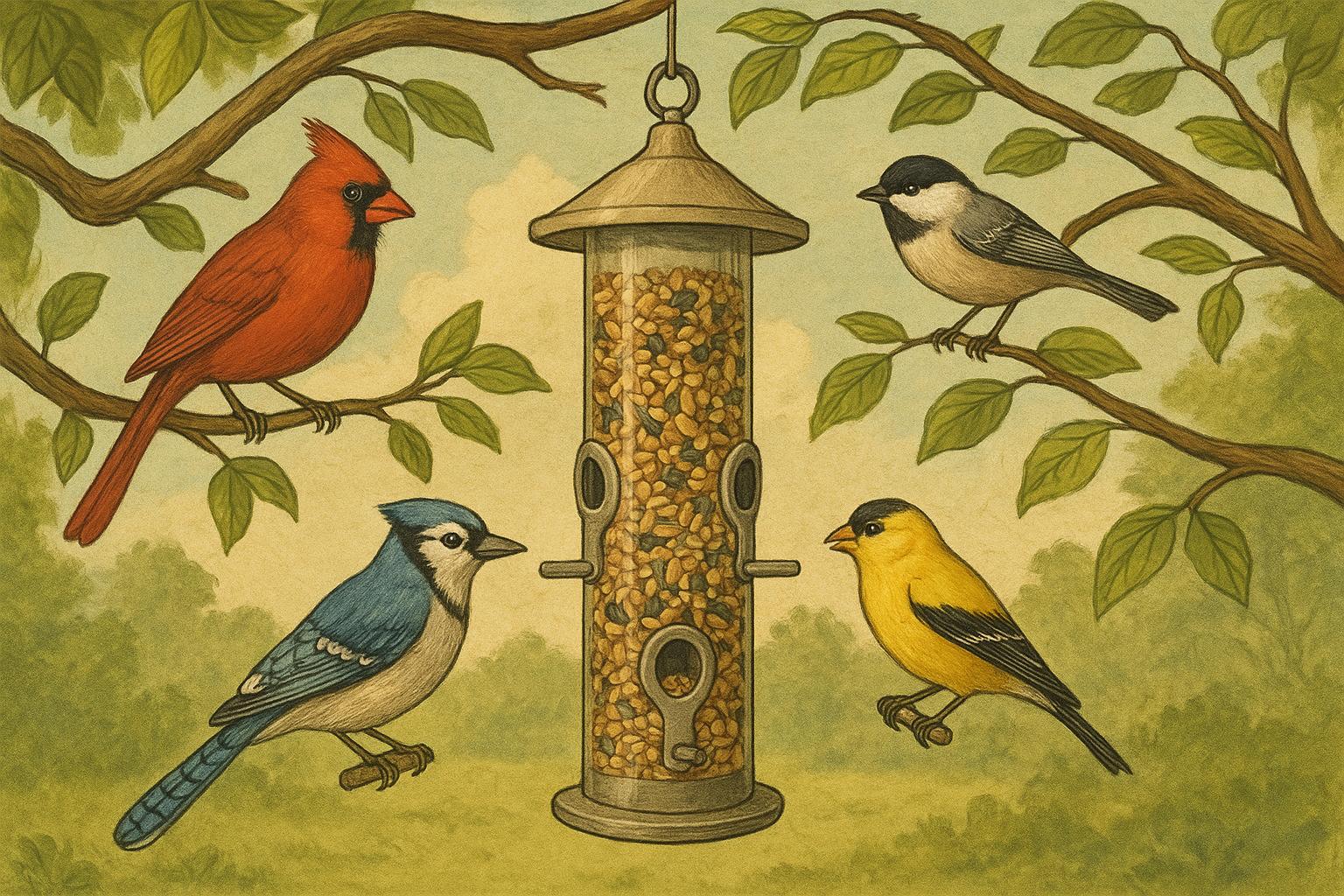
Northern Cardinals have a clear, repeated whistle that functions like a song: territorial and mate-bonding. When disturbed, they produce a metallic “chip” that rallies nearby birds. Listen for the switch from long, musical phrases to short, clipped chips.
#### Sparrows And Short Songs
Song Sparrows have a variable song that can sound messy but is still a repeated pattern used for territory. Their alarm calls are quick chips or buzzes and often prompt the birds to slip into cover.
## avian vocalization types: song vs alert calls In Practice
If you want to use the exact phrase people search for, saying avian vocalization types: song vs alert calls when you describe the difference helps you stay focused on the two categories. Try using this in field notes. Write down the sound, the context, and whether it was song or alert. Doing this consistently builds reliable pattern recognition.
avian vocalization types: song vs alert calls is not an academic split; it’s practical. Listen for whether the sound repeats over minutes (song) or spikes in response to events (alert). Keep the words in your head and they’ll guide your observations.
### How To Train Your Ear In The Yard
You don’t need recording equipment. A few targeted listening sessions will change everything.
#### Morning Sitting Session
Spend 20 minutes near a window at dawn. Most territorial songs happen then. Note who sings and where they perch.
#### Afternoon Snapshot
Spend another 20 minutes mid-afternoon. You’ll hear more soft contact calls and, often, more alert calls because predators hunt when light warms prey. When a sharp call pops up, check for movement or overhead hawks.
#### Keep Notes, Short And Specific
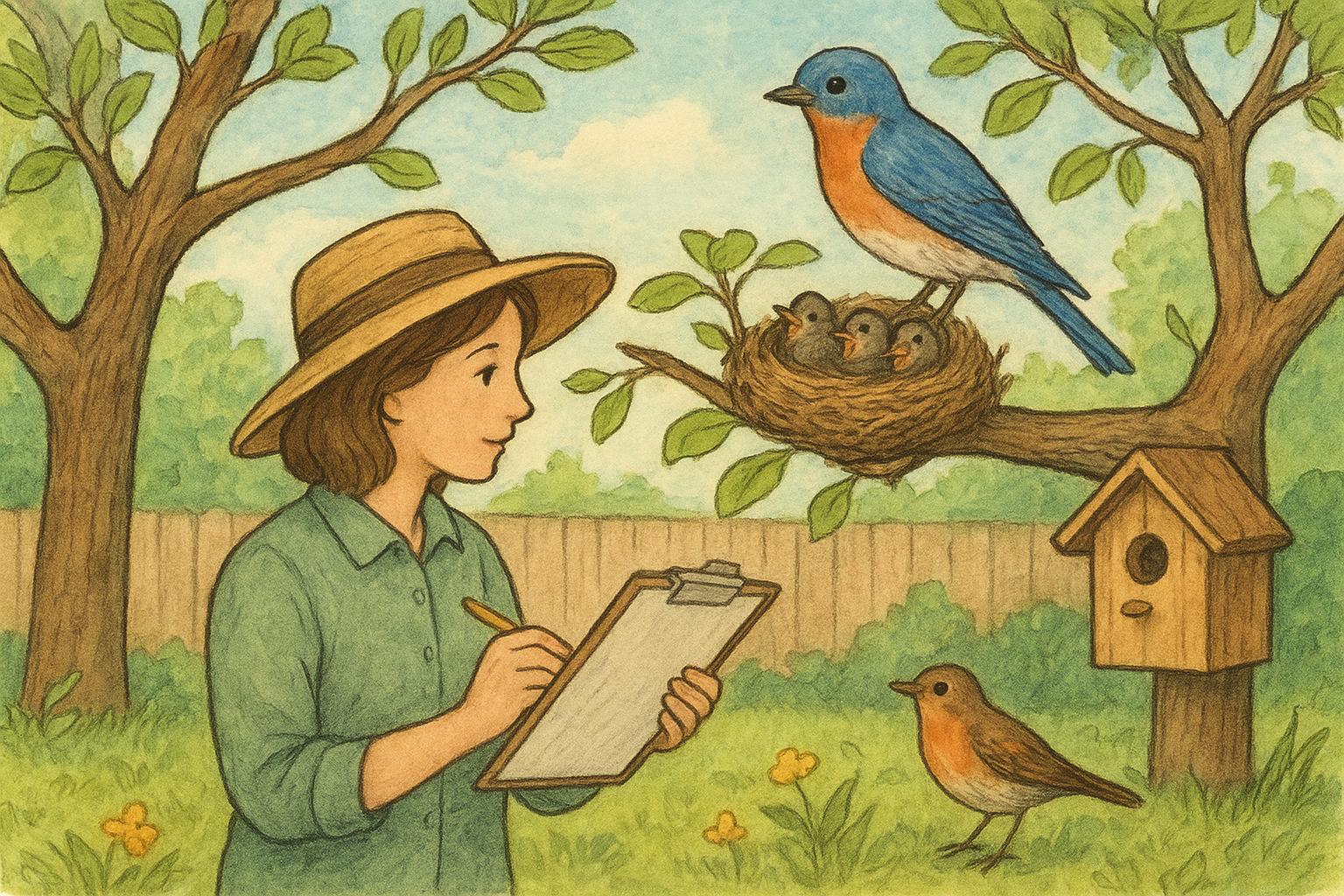
Record the species (if you can), time, description: “short, single chip, birds froze at 14:37.” Over a week you’ll start to see which species favor which call types. That’s the heart of learning avian song types and alarms.
### The Role Of Learning And Variation
Not all songs are fixed. Young birds go through subsong and plastic song before settling on an adult pattern. Males may improvise or borrow phrases. That makes avian song types interesting and messy. A male Cardinal may sing a slightly different version each day; that variability is part of signaling skill.
On the other hand, alarm calls often conserve their structure. A mobbing call from a titmouse is highly recognizable across ages and populations. The balance is practical: you want songs to carry personality; you want alarms to be instantly understandable.
### When Calls Blur: Contact Calls, Begging Calls, And Mixed Signals
Not every vocalization fits neatly into “song” or “alert.” Contact calls are about maintaining flock cohesion and can sound like short notes but they’re not alarm-specific. Begging calls from young birds are urgent but not an alarm to others.
This matters when you’re trying to decide whether to respond—say, to move away from a feeding station. A repeated high-pitched single note might be a contact call rather than distress. Learn your local birds’ contact notes, because misreading them can lead you to overreact or ignore real danger.
### Using Behavior As Confirmation
You should always pair sound with behavior. If you hear a long, patterned trill and the singer is displaying, that’s song. If the group flushes and flies, it was an alarm. If a parent feeds nestlings after a short call, that call likely signaled location or identity, not threat.
Here’s a short checklist you can use in the field:
– Was the sound repeated over several minutes? Likely song.
– Did the sound cause immediate movement or freeze behavior? Likely an alert.
– Where was the bird when it vocalized—high and exposed or down in cover? The higher, the more likely song.
### Why Alarm Calls Matter Ecologically
Alert calls do more than warn. They coordinate mobbing, draw predators’ attention away from nests, and even influence community structure. In mixed-species flocks, a reliable alarm caller like a titmouse or chickadee acts as a sentinel for many species. That tiny alarm can ripple into feeding patterns, predator avoidance, and survival rates for nestlings.
### When Humans Mistake Song For Alarm
People sometimes worry when morning songs are loud. Remember: territorial songs are normal—loudness is a feature, not a problem. A persistent, repeated whistle from a territory-holder is not a sign of distress. If you hear a call cascade and then birds dart away, now that’s worth watching.
The phrase song vs alarm captures that difference cleanly. You can say to a friend: “That loud whistling is song, but the sudden chips are alarm.” It’s a quick shorthand that improves focus.
### How Weather And Environment Shift Vocal Behavior
Sound carries differently through different conditions. Fog and humidity can dampen higher frequencies; wind masks soft notes. Birds adjust. In windy weather you might hear fewer long songs and more short calls. Dense hedges favor lower-frequency calls that travel better. Spotting these adjustments helps you set expectations and interpret sounds appropriately.
### Recording And Identifying Calls At Home
If you use a phone to record, get close but not too close. Capture a few seconds of the context before and after a sound. When you play it back, compare the structure. Songs will show variation and patterns; alarms will be short and repeated only when provoked.
There are many apps and online resources that let you match recordings. Start with a few species in your yard and build a small reference library. Over time you’ll recognize not just species but the specific function of calls — which is the real skill.
### Teaching Kids To Hear The Difference
Kids learn fast if you make it a game. Ask them to listen for “long song” vs “short warning.” Give points for spotting whether the birds stay put or scatter. Keep it playful. They’ll start to pick up on rhythm and context faster than grown-ups.
### Mistakes To Avoid
Don’t assume every sharp call means a hawk. Small mammals, cats, and even branches can trigger alarms. Also, don’t confuse seasonal changes: dawn chorus intensity peaks in spring during breeding. If you hear lots of singing in March–May, that’s normal. Birds are advertising. If you’d like a handy phrase while you learn, use avian vocalization types: song vs alert calls to frame your notes.
Throw in some patient listening and your yard becomes a classroom. Make notes. Try to identify a few avian song types and the common alarm calls you hear locally. Over a month, you’ll have a map of who sings when and who sounds alarms to change the neighborhood’s behavior.
### Quick Field Tips For Clearer Listening
– Face away from the road. Human noise masks bird sounds.
– Pause after a sound—birds often respond and you’ll get a follow-up that clarifies intent.
– Learn one species at a time: focus on the sparrows for a week, then the cardinals.
– Record short clips and label them with date, time, and what you saw.
Teh last tip is to be patient. Birds don’t always perform on schedule, but repeat exposure builds pattern recognition. Keep the listening simple and steady.
### Resources To Deepen Your Ear
Use local field guides and region-specific sound libraries. Many universities and bird organizations have curated call sets. Focus on the most common species in your patch; that gives the biggest return on listening time. Saying the phrase avian vocalization types: song vs alert calls as a reminder can keep your practice focused. You’ll find that the yard’s soundtrack slowly clarifies into meaningful events rather than random noise.










Leave a Reply