
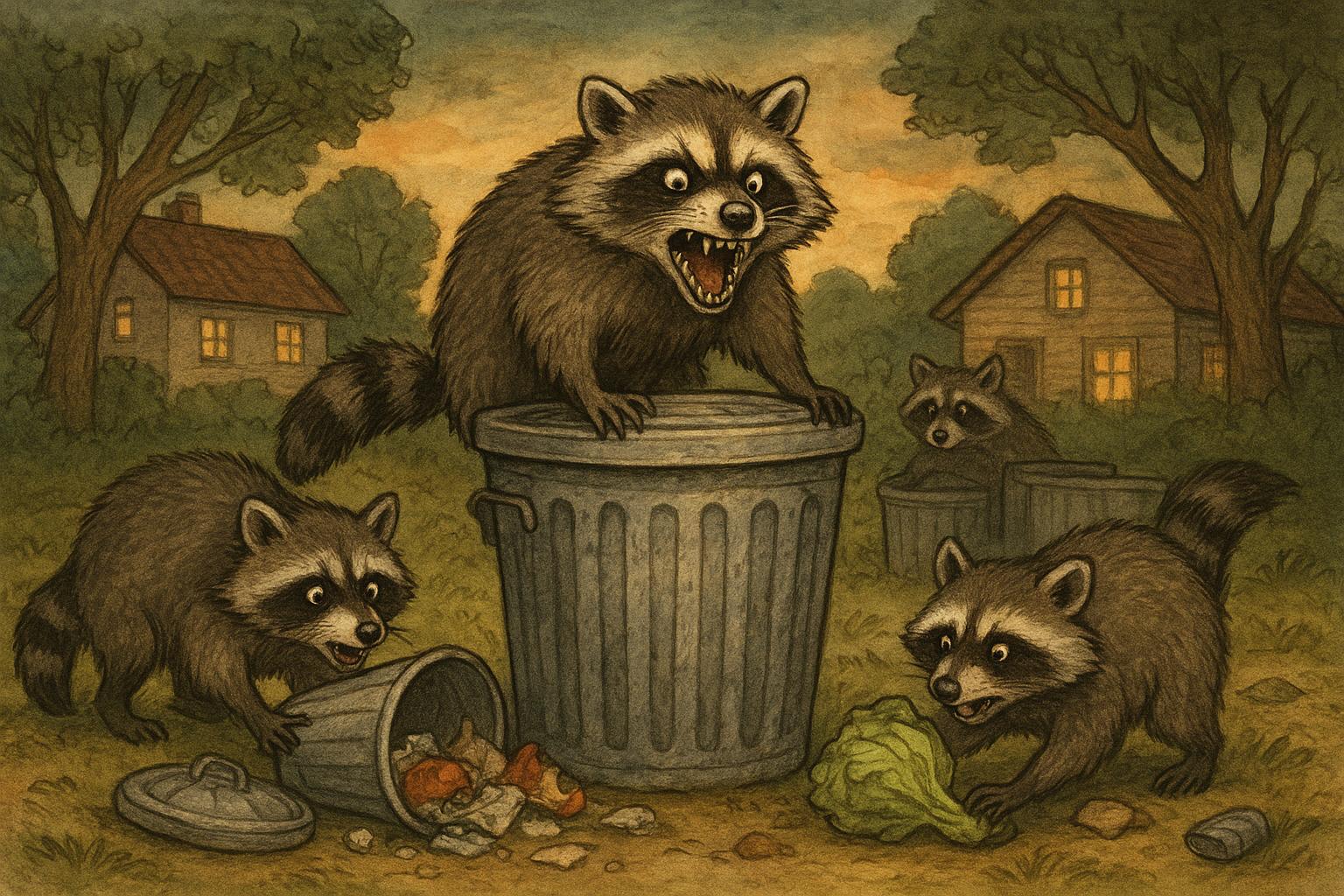
A raccoon halfway inside a neighbor’s bin is not cute. It’s a problem you can hear before you see it: the metallic clank of a lid, the rustle of a grocery bag, the sound of someone else’s dinner being unwrapped. Once one critter figures out your trash, the whole block learns fast.
## Raccoons Raiding Trash: Why Suburbs Are Targets
Local yards offer exactly what raccoons want: reliable food, shelter, and predictable human behavior. Suburban neighborhoods produce the same kinds of waste every week. Rotting produce, pizza boxes, pet food, unsecured compost—those are easy pickings. Add a fence, a stray shed, and a sheltered corner behind a garage, and you’ve built a small buffet with cover.
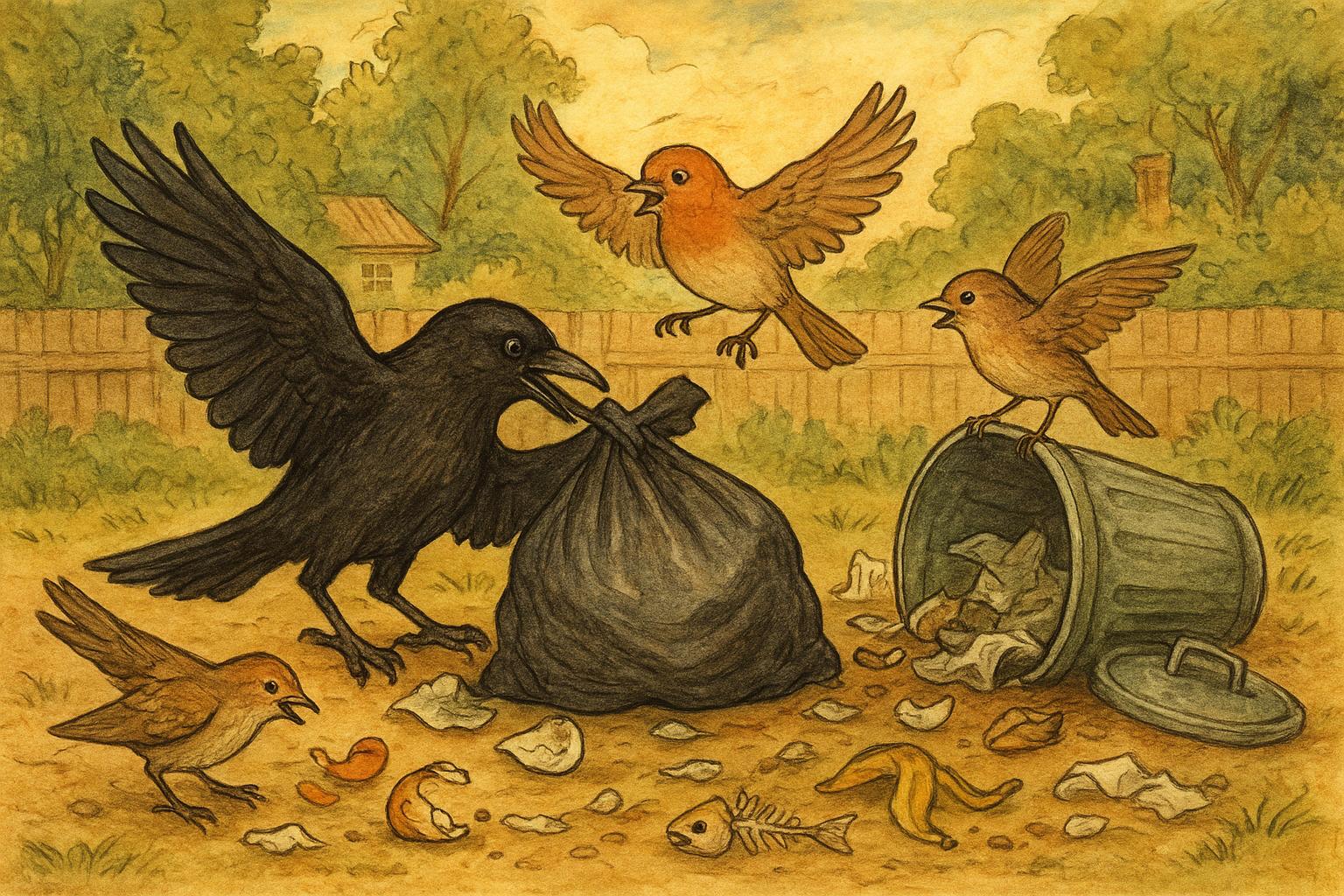
Raccoons are opportunists. They don’t care about municipal zoning or HOA rules. They care about calories. That’s why raccoons raiding trash in neat neighborhoods is so common. And they’re not subtle about it. You’ll see tipped cans, shredded bags, and a grease-slick trail that leads straight to a hole in the fence. If you’ve ever stepped in something suspect on your way to the car, you’ve met the aftermath. Yard raccoons learn where good food is and they come back nightly until that food source changes.
### How They Learn The Routes
Raccoons are smart. They remember where things are, they teach their kits, and they adapt quickly. A single successful forage gets communicated to the rest of the family. That’s how a one-off curiosity turns into a nightly procession. I watched this once in a neighbor’s alley: one adult would open a latch, then a small one would slip through and help. These animals are like small, masked burglars with short memories for danger and long memories for dinner.
They pick routes that avoid bright lights and open sightlines. Over time, they learn the best approach to a particular bin, the weak spot in a lid, or the way a bungee cord snaps back. That’s why watching a raccoon raid more than once is instructive. You’ll notice the same moves each time. It’s not random. It’s practiced.
### When A Raccoon Raid Starts
A raid usually begins late. Raccoons are crepuscular and nocturnal, peaking around dusk to the wee hours. The sounds that wake people are simple: a lid, a scramble, the tearing of paper. If you catch a pattern—bins disturbed every Thursday night—you can bet the animal is staking out your schedule.
Look for footprints in mud or soft soil. Check for smear marks on lids where greasy paws have left prints. Chewed plastic is a common sign. Once a raccoon has learned a particular can, it will return again and again. That repetition is what turns one messy night into a neighborhood problem. If you want to stop the cycle, you need to change the target, or make the target impossible to access.
#### Simple Bin Upgrades
Fixing the weak points often beats fancy deterrents. A heavy lid with a locking clamp works better than a lightweight plastic top. Replace flimsy cans with metal or thick-walled models. Adding a carabiner and a short bungee cord to secure the lid is cheap and effective. You can also use a trash can with a recessed handle that makes it harder for raccoons to get a grip.
Make food less attractive. Double-bag greasy items. Empty food containers and rinse them when you can. Don’t leave pet bowls outside overnight. Compost with care; if you keep meat or dairy scraps in your pile, move them to a secured tumbler. These are small habit changes that make a big difference. Yard raccoons are patient; if you remove the easy options, they move on.
#### Yard And Lighting Fixes
Light is not a cure, but it helps. Motion-activated lights can interrupt a forage and encourage animals to move on. Position lights so they shine on can storage areas, not into bedrooms. A light combined with a clumsy sound—like a neighbor slamming a lid—can teach an animal that the dinner table is unreliable.
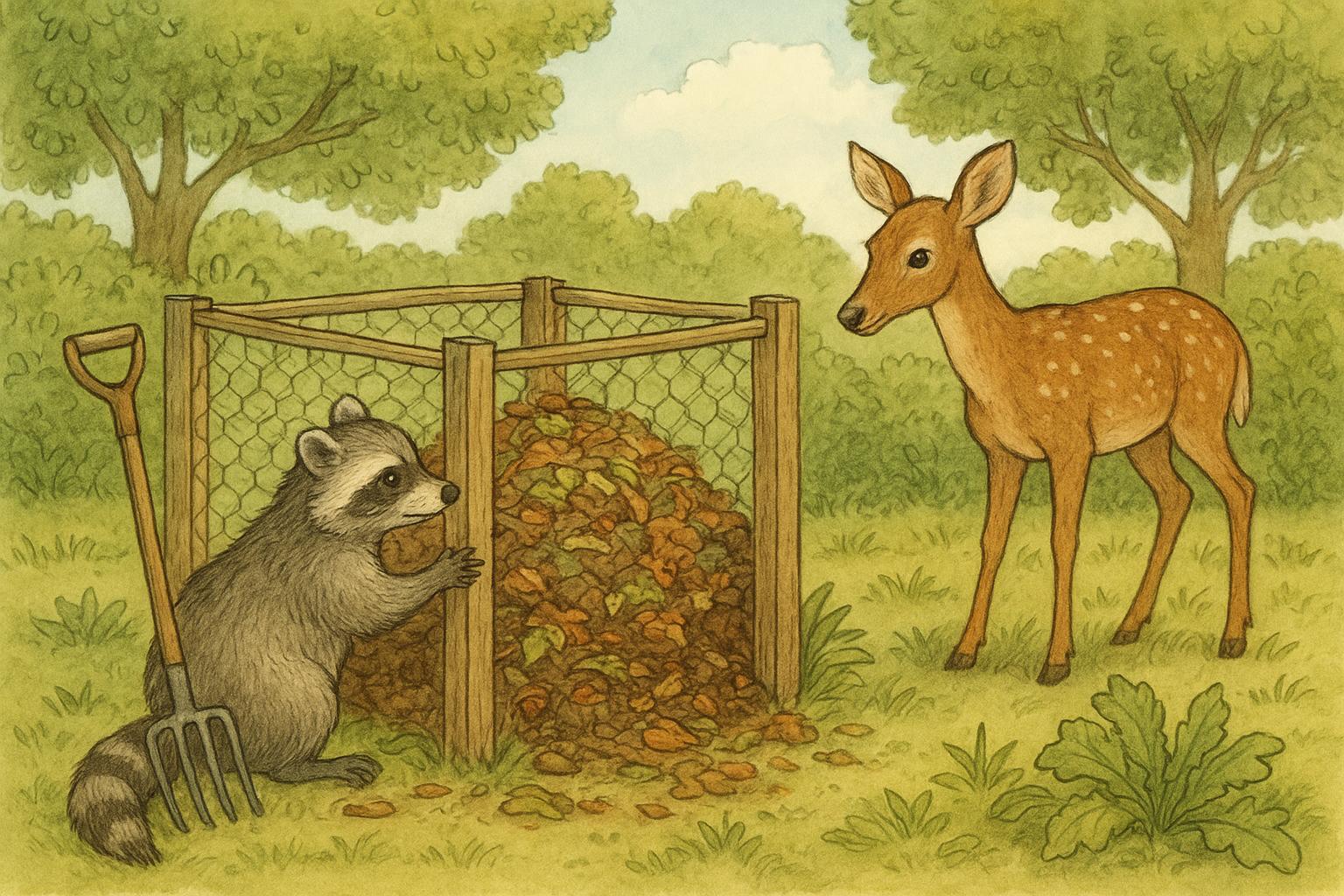
Trim shrubs and remove low branches that create cover. Clean up fallen fruit and seal compost bins. If your cans sit by the back door under a deck, consider moving them to a locked shed or a chain-link enclosure with a top. Even a simple wire cage secured with a padlock does the trick for many people. These are practical changes, not dramatic ones, and they work because they change the environment raccoons have learned to exploit.
### Neighborhood Strategies That Work
Talk to your neighbors. A single property can undo the effort of an entire block. If one house leaves full bags out, raccoons will be a shared problem. Coordinate trash nights so bins go out just before pickup. Post a note on a neighborhood message board explaining how to secure cans. People respond to a concrete ask more than a vague warning.
There are also municipal options. Some towns sell or loan raccoon-proof carts. Others have ordinances about how long trash can sit at the curb. Look into whether your city has options. If multiple households report frequent raids, public works might adjust pickup timing or recommend specific containers.
### What Not To Do
Don’t try to handle animals yourself. Don’t trap and relocate wildlife unless you have a permit and know the local rules. Relocation can spread disease and often results in a slow death for the animal. Don’t use poisons; they’re inhumane and illegal in many places. Avoid loud, reactive measures like setting off fireworks. Those can cause unintended harm and rarely solve the problem long term.
If you find an injured raccoon, call animal control or a wildlife rehabilitator. Rabies and other diseases can occur in wildlife, so do not approach a raccoon that seems unsteady, aggressive, or unusually calm. If a pet interacts with a raccoon, call your vet immediately. A bite is not something to wait on.
### Humane Deterrents And Professional Help
Live trapping is a gray area. In some places licensed trappers can move an animal. In others it’s illegal. Even when legal, trapping and relocating just shifts the problem. A better approach is exclusion and prevention. If you do choose to trap, use a reputable wildlife control pro who understands local rules and follows humane practices.
Other humane deterrents include ammonia-soaked rags placed in the can or motion-activated sprinklers that startle but do not injure. Some people report success with predator scents, though those can wear off and need renewing. The most reliable route remains making the resource unavailable. That’s the only strategy that discourages raccoons permanently.
#### Timing And Patience
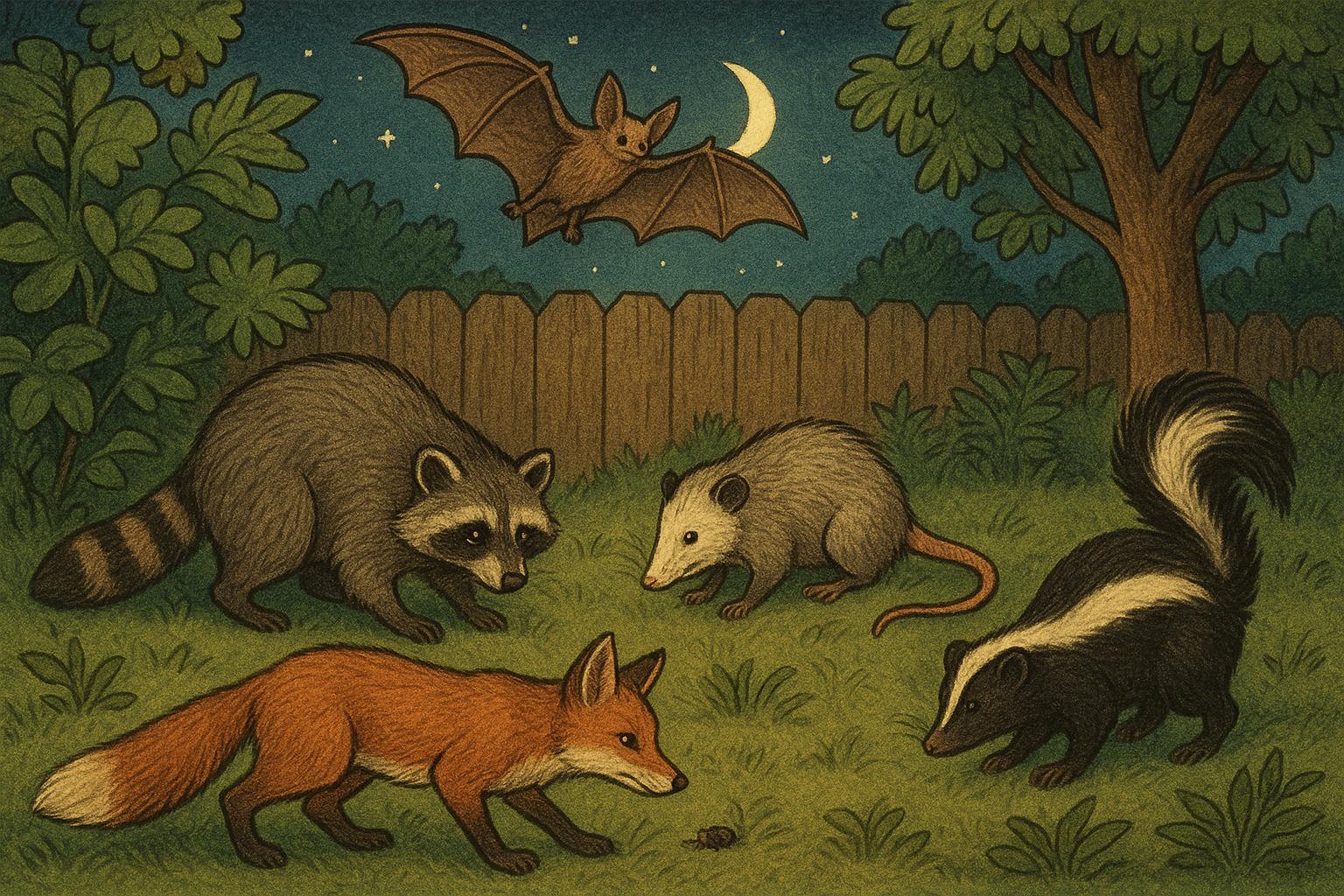
Change habits and it may take time. A raccoon that’s been visiting for months will not give up after one week of new lids and lights. Expect several weeks of no activity before you can say the problem is shrinking. Watch for new patterns: sometimes squirrels or opossums take over if you only solve the raccoon issue. It’s biology, not malice.
This work is practical. It’s not dramatic. Replace a lid. Move the cans. Talk to the neighbors. Small steps add up. In one street I worked with, two families bought metal cans with locking lids and a third family stopped leaving dog food outside. The visits dropped from nightly to one or two tentative visits a month. The masked night foragers moved on to the next easier block. Things were quieter, and the kids stopped complaining about surprise messes before taking out the recycling.
### When To Call The Pros
If you see repeated close encounters, or if an animal seems aggressive, call animal control. If kits are present and a den is on your property, you’ll want a professional to advise. Professionals can also help identify whether the same animal is returning or whether multiple groups are involved.
Sometimes a raccoon raid escalates in ways homeowners don’t anticipate. A raccoon that learns to enter under a deck or into a garage becomes a different challenge. At that point, board up the entry points and call a wildlife control service. They’ll suggest exclusion measures rather than lethal options. That’s the smarter play for safety and for keeping legal headaches away.
### The Small Things That Make A Big Difference
A single habit change can flip the situation. Start by removing obvious attractants. Bring bins into a garage or secured area the morning of pickup. Rinse out containers when you can. Consider a weekly schedule change. Keep lids locked. If you have a habit of feeding feral cats, move the feeding time to the morning. These adjustments are not dramatic, but they interrupt the learning loop that makes raccoons confident.
When these measures fail there are still humane, legal paths to explore. But most of the time, homeowners who tidy up, swap to sturdier cans, and speak to their neighbors find the problem diminishes. The key is not to outsmart one animal. It’s to make the whole environment less predictable and less profitable for the whole family of nocturnal visitors. The raccoon raid will stop when it stops paying off.
A quick note: sometimes the loudest nights come after a storm or a holiday when pick-up was delayed. That’s when a pile of bags looks extra attractive. If you notice a spike after a disruption, expect a few nights of activity and double down on the simple fixes. They work. They always have. And yes, one of my neighbors once swore the mess had been caused by a raccoon wearing gloves. It wasn’t true, but the story made everyone more diligent. Small wins add up. Humans and raccoons can coexist, but only if we stop making it easy. If you’re already dealing with frequent visits, get the help you need before the problem spread and more damage occured.








Leave a Reply