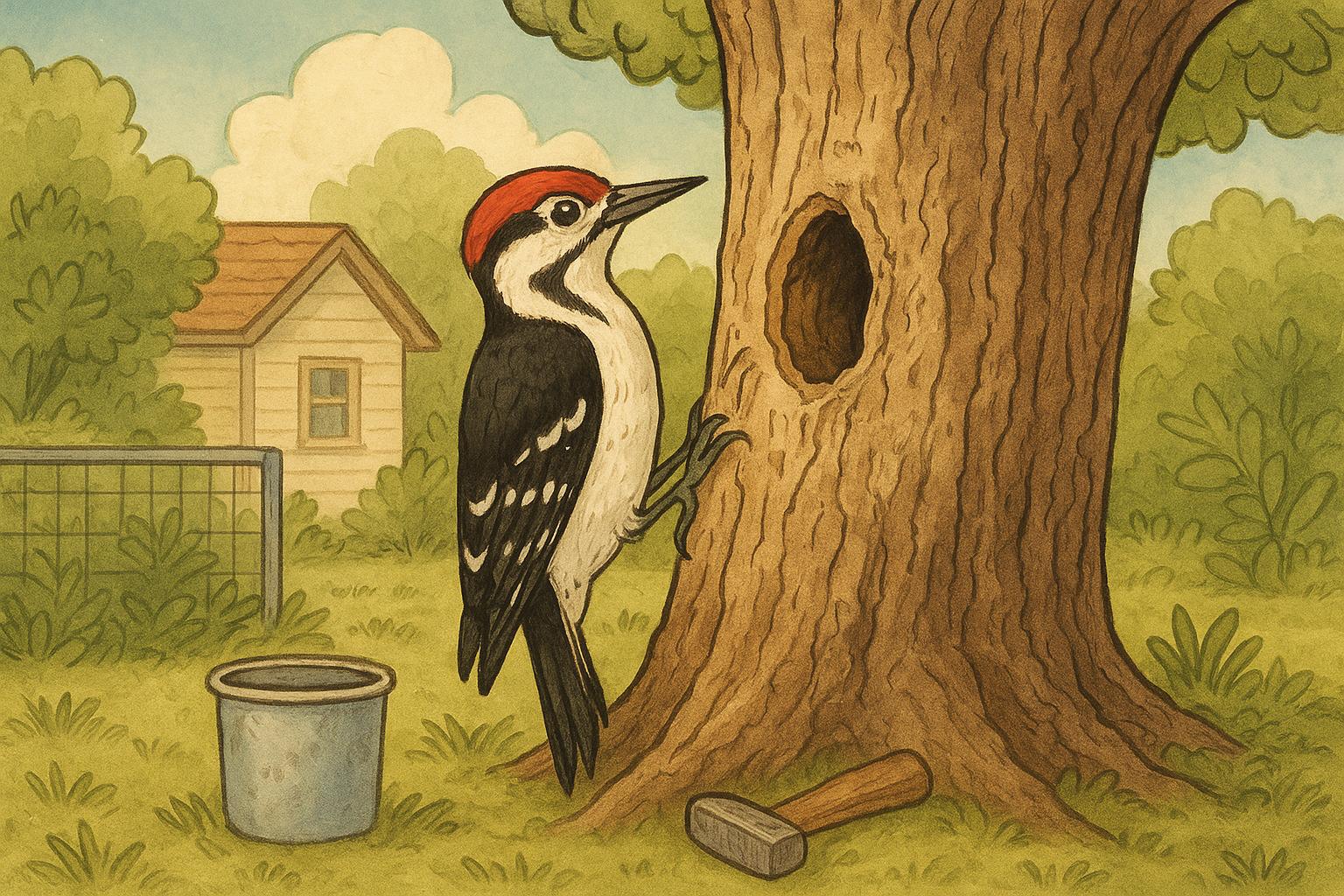
## Why Woodpeckers Pick Your House
If your siding sounds like a tap-dance audition at 6 a.m., you’re not alone. Woodpeckers are persistent, curious, and sometimes painfully enthusiastic about drumming on homes, decks, and poles. They search for insects, build cavities, and advertise territory. The result? Holes, stripped paint, and a homeowner with a strong desire to become a human shield.
Understanding the motivations behind this behavior makes effective woodpecker control easier. These birds are generally protected species in many places, so nonlethal, preventative, and exclusion-based approaches are the most responsible and legal options.
## Woodpecker Control Strategies For Homeowners
When we talk about woodpecker control, think prevention first, deterrence second, and repair/maintenance third. Quick fixes are tempting, but long-term success comes from removing attractants and making your structure less appealing for drumming or excavating.
### Habitat Modification To Reduce Attraction
Keep your yard and home less “inviting” to woodpeckers.
– Trim tree branches away from siding and rooflines; woodpeckers use close branches as staging platforms.
– Address insect infestations in dead or dying trees; many woodpeckers are insectivores and will exploit decayed wood.
– Seal gaps where insects could nest under fascia or trim—this reduces the food source that lures them.
This is practical, straightforward, and often overlooked. Think of it as making your house the least interesting gig in town.
### Visual And Acoustic Deterrents
Visual and sound-based deterrents can be effective when used correctly and rotated frequently to prevent habituation.
– Reflective tape, shiny metal strips, spinning pinwheels, and predator silhouettes can startle birds away.
– Commercial sound devices that play distress calls or predator noises sometimes help, but results are inconsistent and depend on placement, volume, and timing.
Use these as part of an integrated approach, not the only tactic.
## 3 Remedies For Woodpecker Control
Below are three remedies with materials and step-by-step instructions. The first focuses on exclusion and repair, the second on temporary visual deterrence, and the third on a custom netting solution. When applying any remedy, wear appropriate PPE, follow local wildlife regulations, and avoid harming the birds.
### Remedy 1: Exclusion And Repair (Permanent Fix)
Materials/Required Items:
– Exterior-grade wood filler or epoxy wood consolidant
– Galvanized flashing or sheet metal (as needed)
– Exterior caulk and backer rod
– Paint to match exterior
– Basic carpentry tools (putty knife, caulking gun, tin snips, drill, screws)
Step-by-Step Creation and Application:
1. Inspect The Damage: Identify all holes, softened wood, and gaps where birds are active. Document locations and measure damaged areas.
2. Remove Rotten Material: Carefully remove decayed wood and any frass. Use a chisel or saw to create clean edges for repair.
3. Apply Wood Consolidant: If wood is softened but structurally present, inject or brush on epoxy consolidant per manufacturer instructions to stabilize substrate.
4. Fill Holes: For small to medium holes, use exterior-grade wood filler or epoxy putty, overfill slightly, and shape to match the original surface.
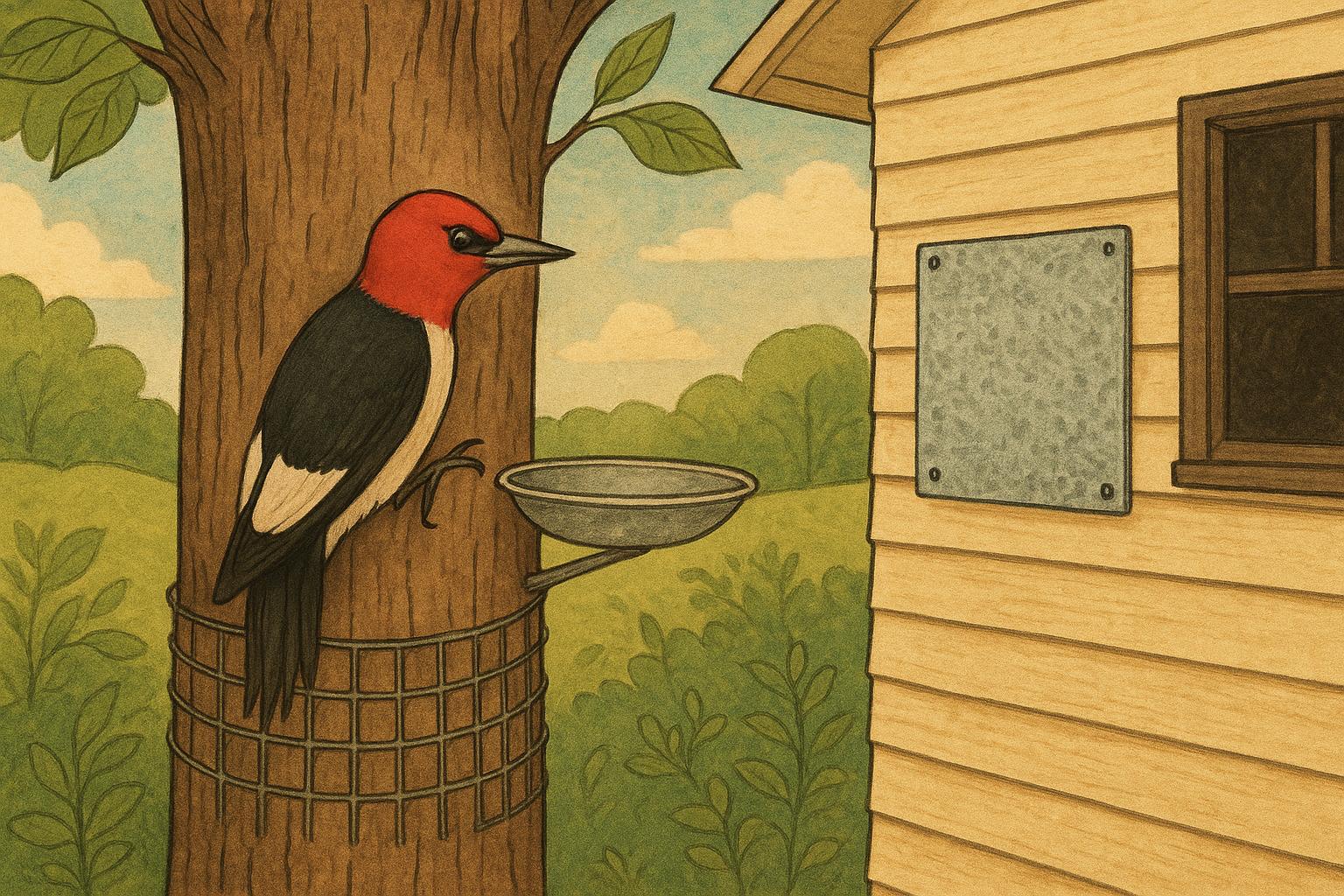
5. Install Flashing For Recurring Areas: For locations that are repeatedly targeted (e.g., fascia ends), apply galvanized flashing or a slim metal plate over the area. Secure with corrosion-resistant screws and seal edges with exterior caulk.
6. Finish And Paint: Sand repaired areas once cured, prime if needed, and paint to match. A smooth, painted surface is less attractive for pecking than rough, flaking wood.
7. Monitor And Reassess: Check repaired spots regularly through the season. If woodpeckers persist, combine with visual/acoustic deterrents or netting.
This is the most durable approach. Repairs remove the attractant (soft or insect-infested wood) and provide a physical barrier against repeat strikes.
### Remedy 2: Visual Deterrent System (Short-To-Mid Term)
Materials/Required Items:
– Reflective bird tape or Mylar strips
– UV-reflective predator silhouettes or decals
– Zip ties or stainless-steel clips
– Ladder and helper for safe installation
Step-by-Step Creation and Application:
1. Choose Target Areas: Identify the most frequently struck surfaces—usually flat siding, eaves, or chimneys.
2. Attach Reflective Tape: Fasten strips of reflective tape about 12–18 inches apart vertically and horizontally. Ensure they can move in the wind; movement increases effectiveness.
3. Install Predator Decals: Place silhouette decals above or near the impact zones. Attach securely but in a way that allows periodic repositioning.
4. Rotate And Reposition: Every 5–10 days, change tape locations or replace decals. Woodpeckers habituate when deterrents remain static.
5. Evaluate Effectiveness: Keep notes on any continued activity. If strikes continue, escalate to netting or professional intervention.
Be precise and methodical here; haphazard placement reduces effectiveness. When discussing and implementing this remedy, use a formal approach—document, install, observe, and adjust.
### Remedy 3: Netting And Exclusion Barriers (When Immediate Protection Is Needed)
Materials/Required Items:
– 1/2″ to 3/4″ bird netting or polyethylene exclusion netting
– UV-resistant zip ties or stainless-steel wire
– Mounting anchors or battens
– Scissors or utility knife, ladder, work gloves
Step-by-Step Creation and Application:
1. Measure And Cut Netting: Measure the area to be protected and cut netting with a modest overlap for secure anchorage.
2. Anchor At Top: Fasten the top of the netting to fascia or a secure anchor using zip ties or wire. Ensure there’s a gap of at least 4–6 inches between the net and the surface—birds should not be able to reach the substrate.
3. Tension And Secure Sides: Pull the net taut and secure sides and bottom to prevent sagging. Use battens or additional anchors to maintain tension.
4. Check For Entrapment Hazards: Inspect frequently to ensure no birds are trapped against the netting. Netting must be taught and away from surfaces to avoid entanglement.
5. Remove After Risk Period: If netting was deployed for nesting season or a high-activity period, remove once the birds disperse to reduce wildlife obstruction and weather wear.
Netting is effective but must be installed thoughtfully. Incorrect netting is hazardous; treat this method with the same seriousness you’d give to any structural retrofit.
## When To Call A Professional
If damage is severe, birds are nesting within your structure, or you’re unsure about federal/state protections, consult a licensed wildlife control professional or arborist. Professionals can assess structural integrity, employ legal trapping/relocation only where permitted, and coordinate with local wildlife authorities if necessary. For complicated jobs—chimney trims, deep fascia restoration, or multi-story netting—licensed contractors ensure safety and compliance.
### Legal And Ethical Considerations
Woodpecker species are often protected under migratory bird laws. Lethal control or nest destruction is illegal in many jurisdictions without a permit. Always check local regulations before undertaking removal or destructive actions. Ethical woodpecker control focuses on coexistence: prevent damage, protect property, and preserve wildlife where possible.
### Simple Preventative Maintenance Checklist
Perform these tasks seasonally to reduce the chance of attracting woodpeckers:
– Inspect exterior wood for soft spots and insect damage.
– Trim branches 6–8 feet from siding and rooflines.
– Repair peeling paint and loose trim immediately.
– Keep dead trees or limbs removed if they host pests.
– Rotate visual deterrents and inspect installed devices monthly.
A consistent maintenance program goes a long way toward long-term woodpecker control.
## Repair Materials And Professional Repair Options
For structural repairs beyond simple patches, use exterior-grade, weather-resistant materials. Pressure-treated trim, fiber-cement siding, and metal flashing are more durable against future pecking. If the damage impacts structural members, hire a contractor to assess load-bearing components and implement replaced or reinforced elements.
### Dealing With Persistent Individuals
Some individual woodpeckers become particularly stubborn. In these rare cases, combination tactics work best: repair and exclusion plus visual/acoustic deterrents and habitat modification. If a single pair is defending territory, their behavior will often abate after nesting season—so temporary exclusion can buy you enough time to make permanent repairs.
## Monitoring And Long-Term Management
Keep a log of sightings, strikes, and interventions. Note dates, materials used, and behavioral changes. Long-term management is about learning patterns—time of year, specific birds, and favored impact zones. With careful observation and timely action, woodpecker control becomes predictable and manageable rather than a morning surprise concert.
Now go get the tape, the epoxy, or the phone number for a good roofer—your house deserves a quieter percussion section.



























Leave a Reply