
## Why Birds Target Your Trash
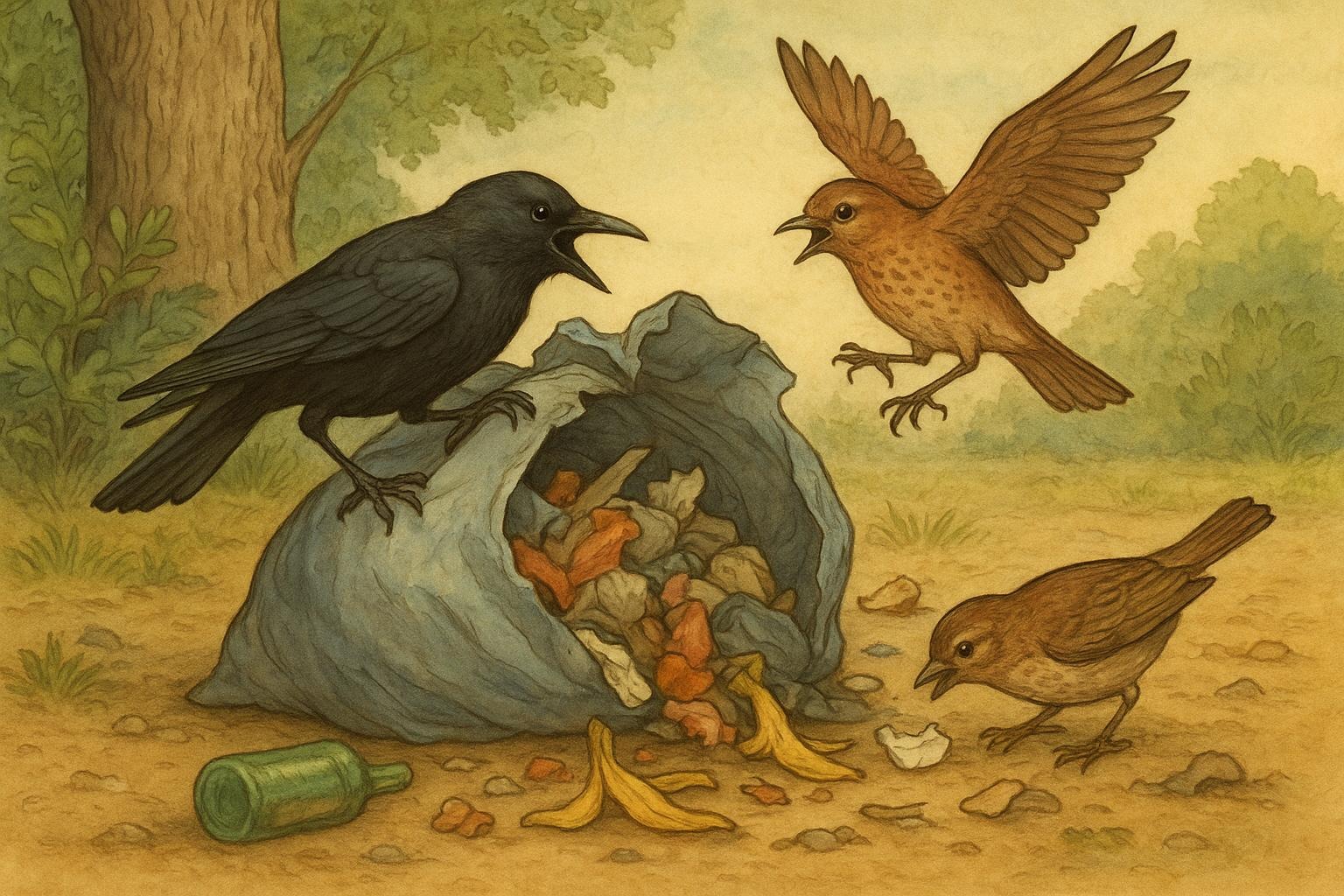
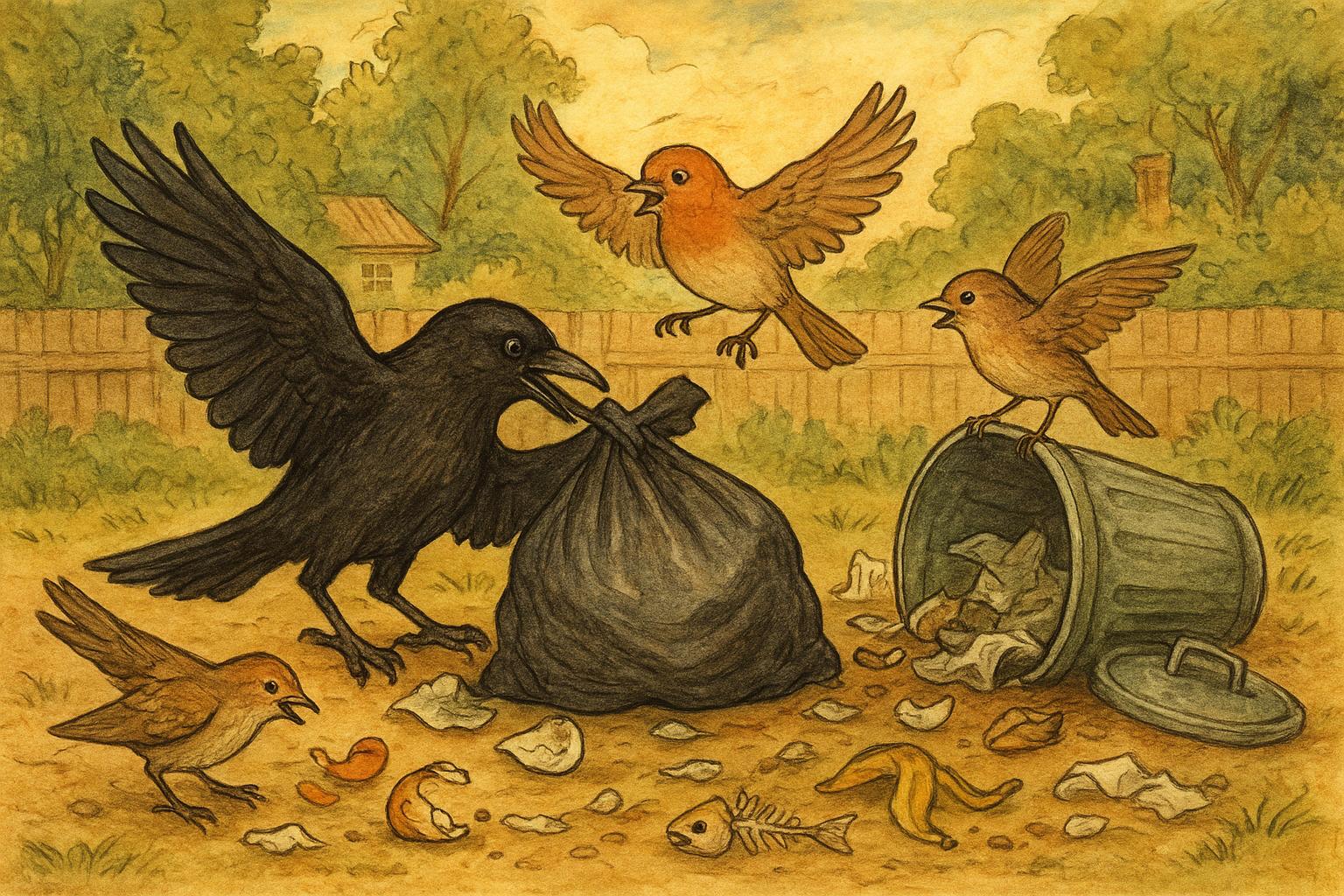
If you’ve ever woken to a confetti parade of wrappers and banana peels on your driveway, you’re not alone. Urban and suburban birds quickly learn that the easiest meal ticket is a curbside trash bag. The problem gets worse when animals—especially clever, persistent birds—rip open containers, turning neatly packed waste into a smorgasbord. Ripped bags are, frankly, a neon sign in the animal world: “Free Snacks Here.”
### The Appeal Of A Bounty
There are three simple reasons birds go after your garbage: smell, variety, and ease. Trash emits attractive odors as organic matter decomposes, and birds have keen olfactory and visual cues (yes, crows are more observant than some people give them credit for). When a bird lands and finds only a flimsy plastic barrier, the temptation to peck, tug, and rip is hard to resist. Ripped bags create a buffet where scraps are easy to reach, and one success teaches a flock to return.
### The Species Most Likely To Be Culprits
Not all birds are equally likely to be trash terrorists. Your most common offenders include:
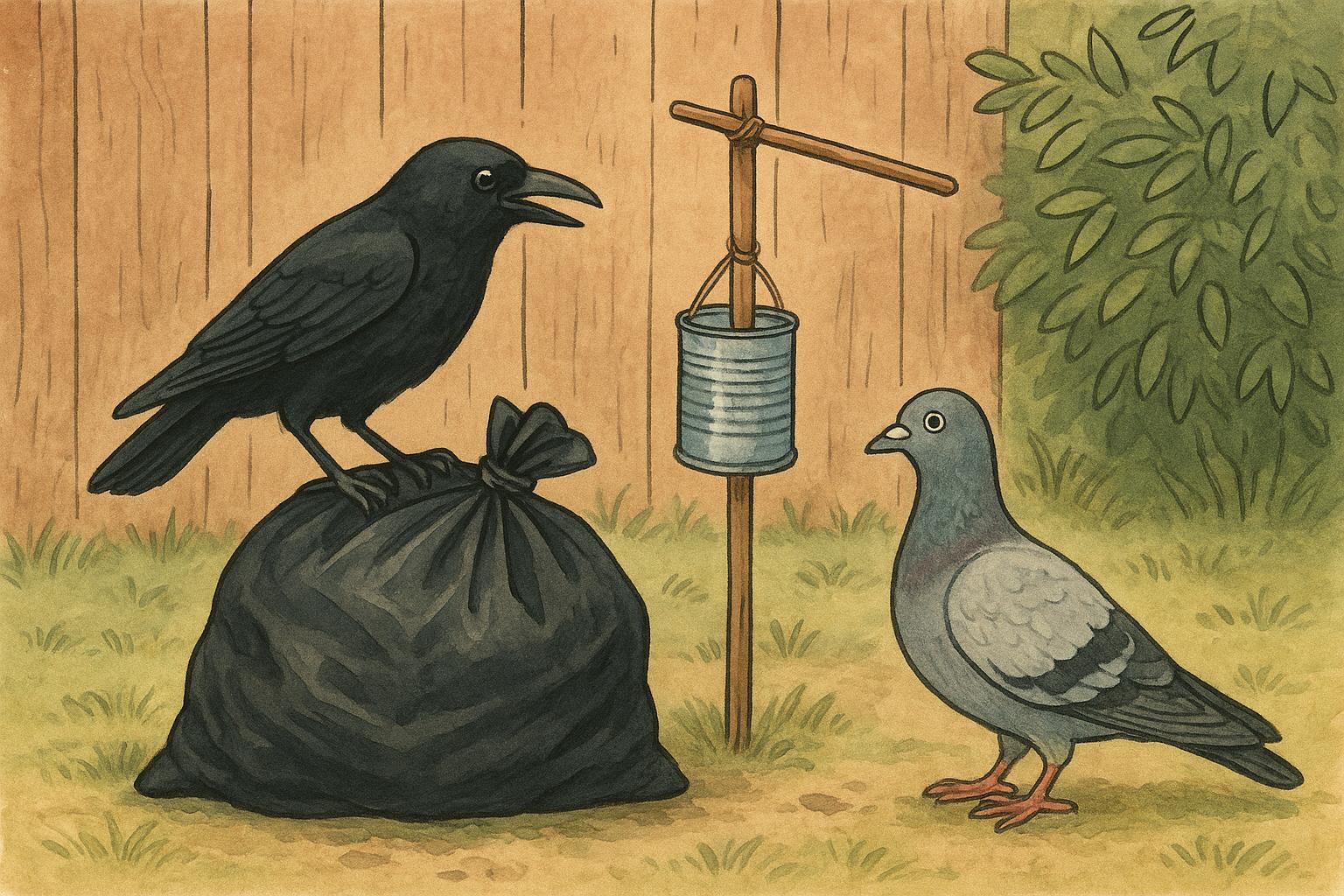
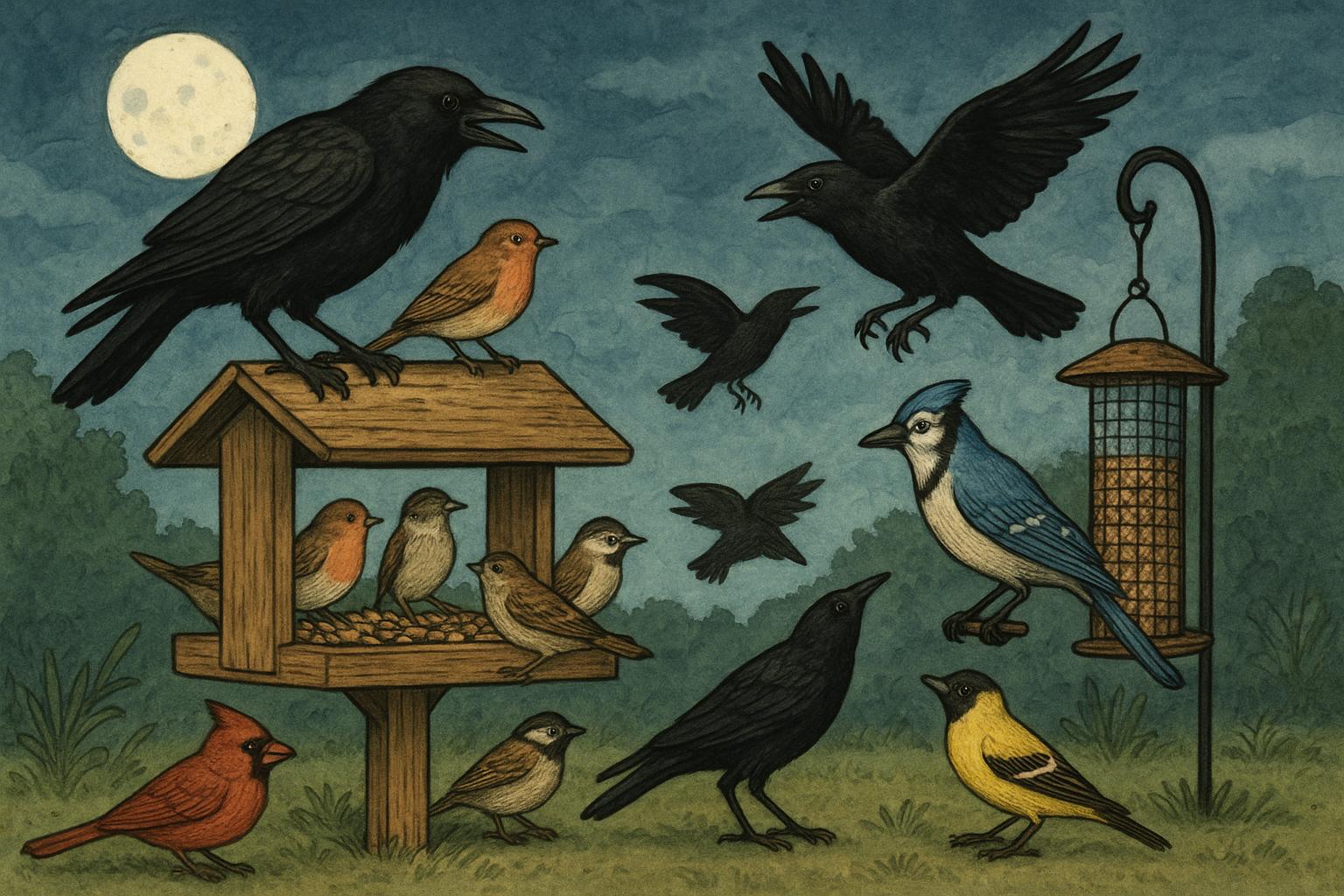
– Crows and ravens: Highly intelligent and often capable of opening latches or pulling bags.
– Seagulls: Coastal or lakeside homes will see gulls swoop in and yank trash during daylight.
– Pigeons and grackles: Smaller but persistent, often stealing crumbs and small items.
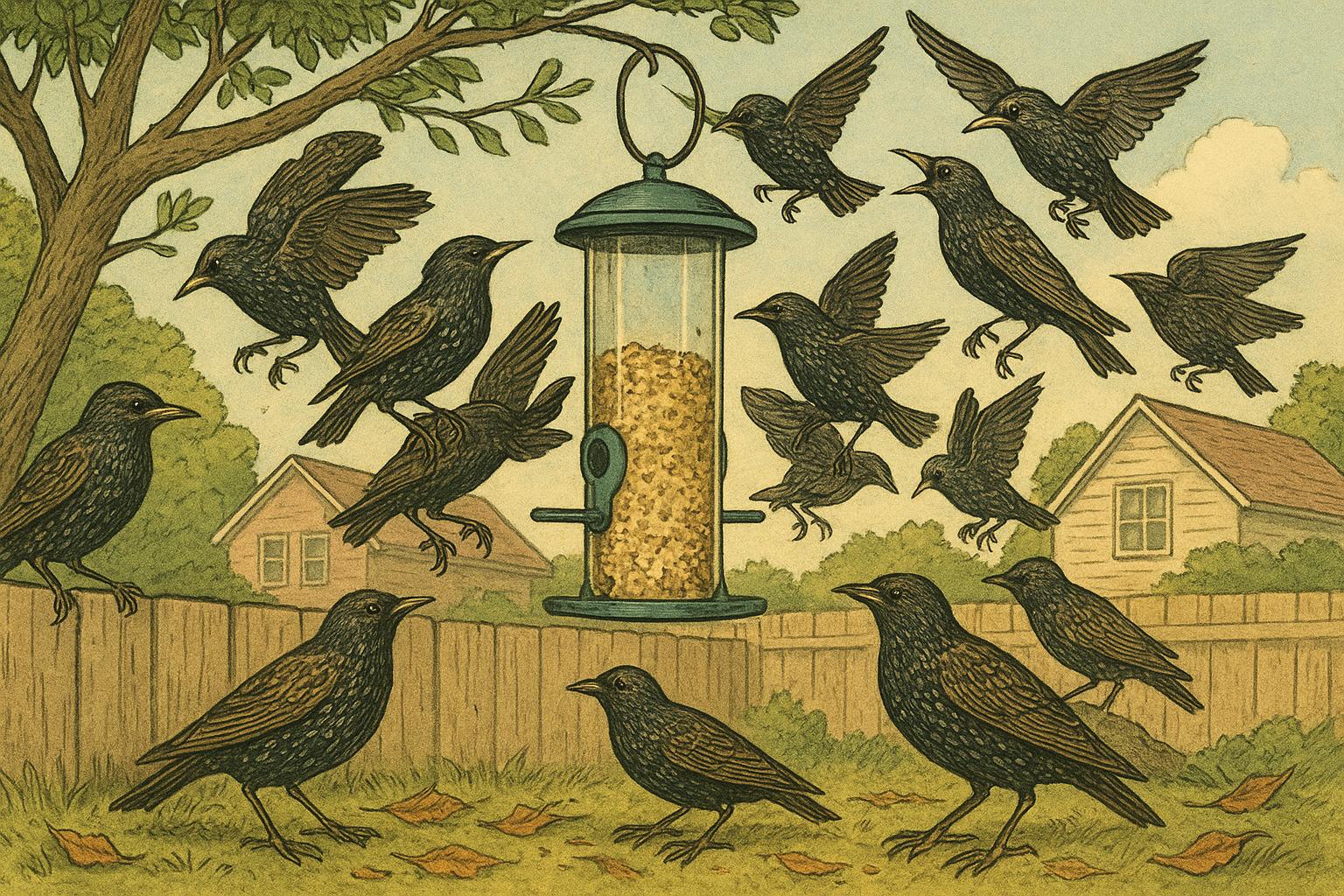
– Starlings and jays: Opportunistic and quick to learn routines.
Behavior varies by species and local conditions, but the outcome—ripped bags and scattered trash—looks fairly similar across neighborhoods.
## Ripped Bags: Why They’re A Bird Magnet
The materials and placement of trash play a big role. Thin supermarket bags, bags with pet waste mixed in, or those sitting in direct sunlight degrade and tear more easily. Birds look for weak seams, loose drawstrings, or lids that don’t sit flush. Once one bag has been breached, scent and scattered food become a beacon that draws in others. Ripped bags aren’t just messy; they’re contagious—one torn bag often leads to several more in the same area.
### How Bags Get Weak
A combination of factors weakens bags:
– Overloading: Too much weight stretches seams.
– UV exposure: Sunlight makes plastic brittle over time.
– Moisture and heat: These soften contents and the bag material, making it easier to puncture.
– Improper tying or folding: Loose closures invite opportunists.
Addressing these points reduces the chance of bags being compromised in the first place.
## Common Culprits And Behavior
Birds are not purely destructive for the thrill of it. For many, scavenging is survival and sometimes sport. When garbage is predictable—same time, same place—birds develop a schedule. Crows in particular are capable of coordinated problem solving: if one crow learns the trick of ripping a bag, it can spread through local populations. That’s why a single “ripped bags” incident can quickly become a neighborhood problem.
### Scavenging Patterns
Understanding timing helps prevention. Birds are most active at dawn and mid-morning, but seagulls and some crows will forage throughout the day. If trash is put out overnight, you’re practically handing them an all-night buffet. Adjusting timing and securing your refuse can break the routine these birds rely on.
## 1. Secure-Lid Strategy: A Practical Remedy
When you want a reliable, long-term fix, secure-lid containers are often the most effective option. This remedy focuses on replacing vulnerable bags and unstable bins with robust lidded containers that resist pecking, tipping, and prying.
### Materials Required
– Durable wheeled trash bin with tight-fitting lid (lockable models preferred)
– Bungee cords or ratchet straps (weather-resistant)
– Heavy-duty garbage bags (thicker gauge, 2–3 mil or higher)
– Optional: Bin locks or aftermarket lid clips
### Step-By-Step Application
1. Select the Right Bin
– Choose a bin sized for your household that has a snap-on or hinged lid which closes completely. Prefer models labeled “wildlife resistant” where available.
2. Reinforce The Closure
– Apply bungee cords or ratchet straps over the lid and around the body to prevent birds from lifting the lid. Ensure cords do not prevent lid from seating fully when you need to open it.
3. Use Thicker Bags
– Place trash in heavy-duty bags before setting into the bin. Heavier gauge plastic resists tearing from beaks and claws.
4. Secure The Bin To A Fixed Point
– If raccoons or tipping is also a problem, clip the bin to a post or wall using a cable lock. Make sure attachment doesn’t impede proper latching; lock mechanisms should be accessible for routine emptying.
5. Maintain Regular Cleaning
– Clean interior surfaces monthly to reduce residual odors that attract birds. Use a diluted bleach solution (1:9 bleach to water) or a biological cleaner and rinse thoroughly.
6. Implement A Schedule
– Set out the bin only the morning of pick-up where possible. Keeping bins off the curb overnight reduces exposure time to scavengers.
This approach is formal in its requirements: select appropriate materials, install them properly, and maintain the system consistently to reduce the chance of ripped bags.
## 2. Bag Replacement And Timing
If replacing bins isn’t feasible, changing how and when you use bags can cut risk significantly. This is a lower-cost but effective strategy when executed reliably.
### Materials Required
– Heavy-gauge trash bags (2–3 mil or above)
– Twist ties or zip ties (weather-resistant)
– Small airtight containers for food scraps (for pre-bagging)
– Schedule or reminder system (notes, app alerts)
### Step-By-Step Application
1. Pre-Bag Food Waste
– Place particularly odorous items (meat scraps, oily leftovers) into small airtight containers or double-bag them to limit scent leakage.
2. Double-Bag Critical Loads
– For heavier or sharp-edged waste, slip one bag inside another. This layering increases puncture resistance and delays degradation.
3. Secure Closures Tightly
– Use twist ties or zip ties to seal bags. Knot ties tightly to prevent birds from pecking a loose knot open.
4. Time Your Curbside Placement
– Put the bags out only on the morning of collection. If collection is early, place bags out after 6 a.m. to minimize nocturnal and early-morning foraging opportunities.
5. Remove Spilled Material Immediately
– If a bag is punctured, clean the area promptly to avoid attracting more birds or mammals. Use gloves and a disinfectant.
These steps require discipline but are straightforward and can dramatically reduce instances of ripped bags when applied consistently.
## 3. Reinforced Bag Sleeve (DIY)
A durable, reusable sleeve you slide over a bag provides physical protection without replacing existing bins. This DIY solution is cost-effective for renters or tight budgets and can be assembled from commonly available materials.
### Materials Required
– 1 roll of heavy-duty tarp material or canvas (cut to size)
– Heavy-duty needle and UV-resistant thread or a durable adhesive suitable for outdoors
– Velcro straps or buckles
– Measuring tape and markers
– Optional: Reflective tape for visibility
### Step-By-Step Creation And Application
1. Measure Your Bag Size
– Measure the circumference and height of a typical trash bag as you tie it closed. Add 2–3 inches for allowance.
2. Cut The Sleeve Material
– Cut a rectangular piece of tarp or canvas to the measured dimensions, allowing overlap for fastening.
3. Fabricate Seams Or Joints
– Sew along the long edge to form a cylinder, using UV-resistant thread. Alternatively, bond with a weatherproof adhesive rated for fabric and vinyl. Ensure seams are strong—these will take tension when a bird pulls.
4. Add Closure Mechanisms
– Attach Velcro straps or buckles so the sleeve can be cinched tightly around a bag. Place them along the overlap area so the sleeve stays snug without slipping.
5. Optional Reinforcements
– Attach a strip of reflective tape to discourage nighttime foraging and to help crews spot bins. Sew or adhere a reinforced panel at the base if your neighborhood has frequent dragging or abrasion.
6. Usage And Maintenance
– Slide a filled and tied trash bag into the sleeve, cinch the top closure, and place at curb only on collection morning. Inspect the sleeve monthly for wear and repair seams promptly.
When installed correctly, the reinforced sleeve offers a formal, engineered barrier against pecking and tearing. It’s scalable, reusable, and avoids the need for additional municipal bins or permanent fixtures.







Leave a Reply