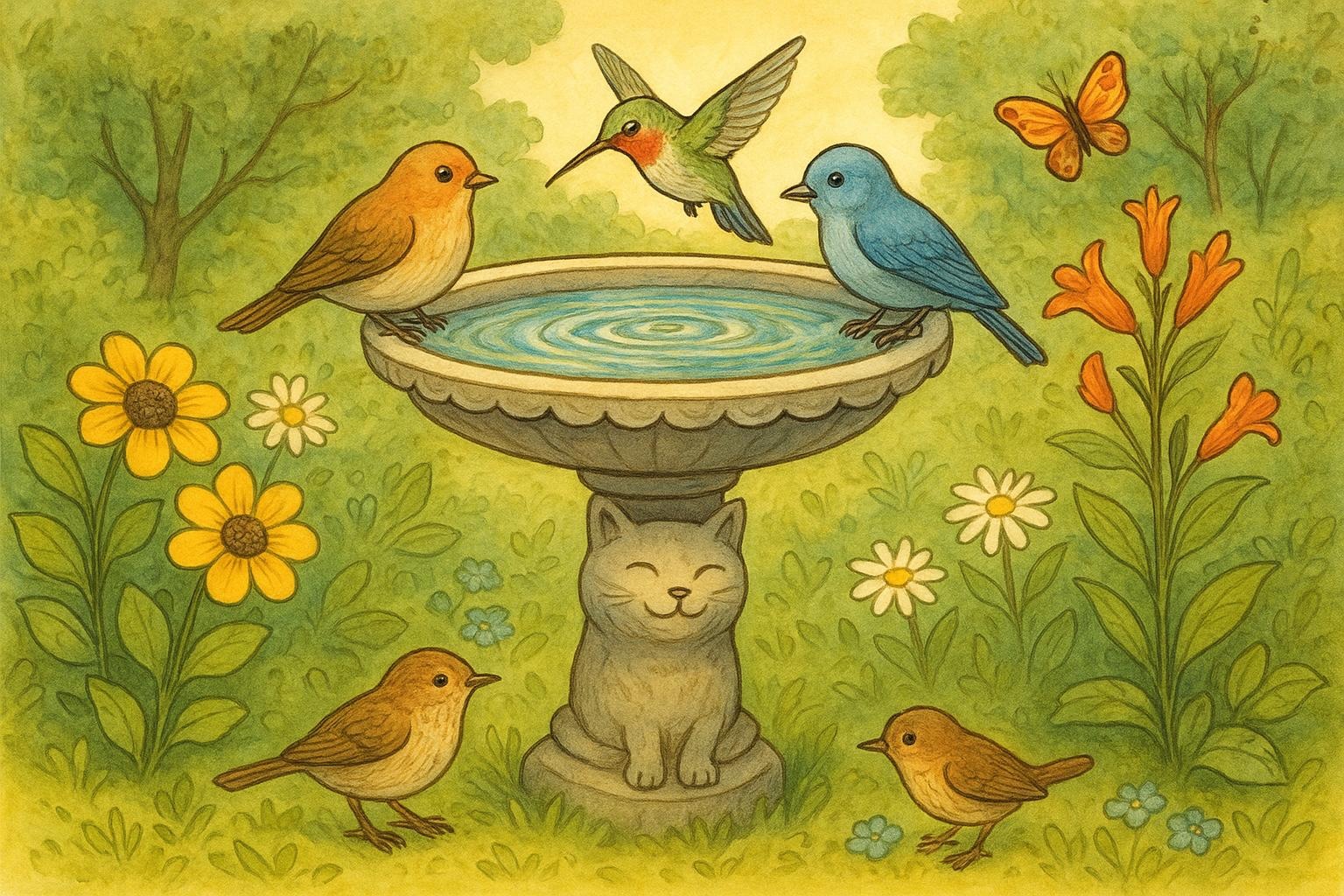
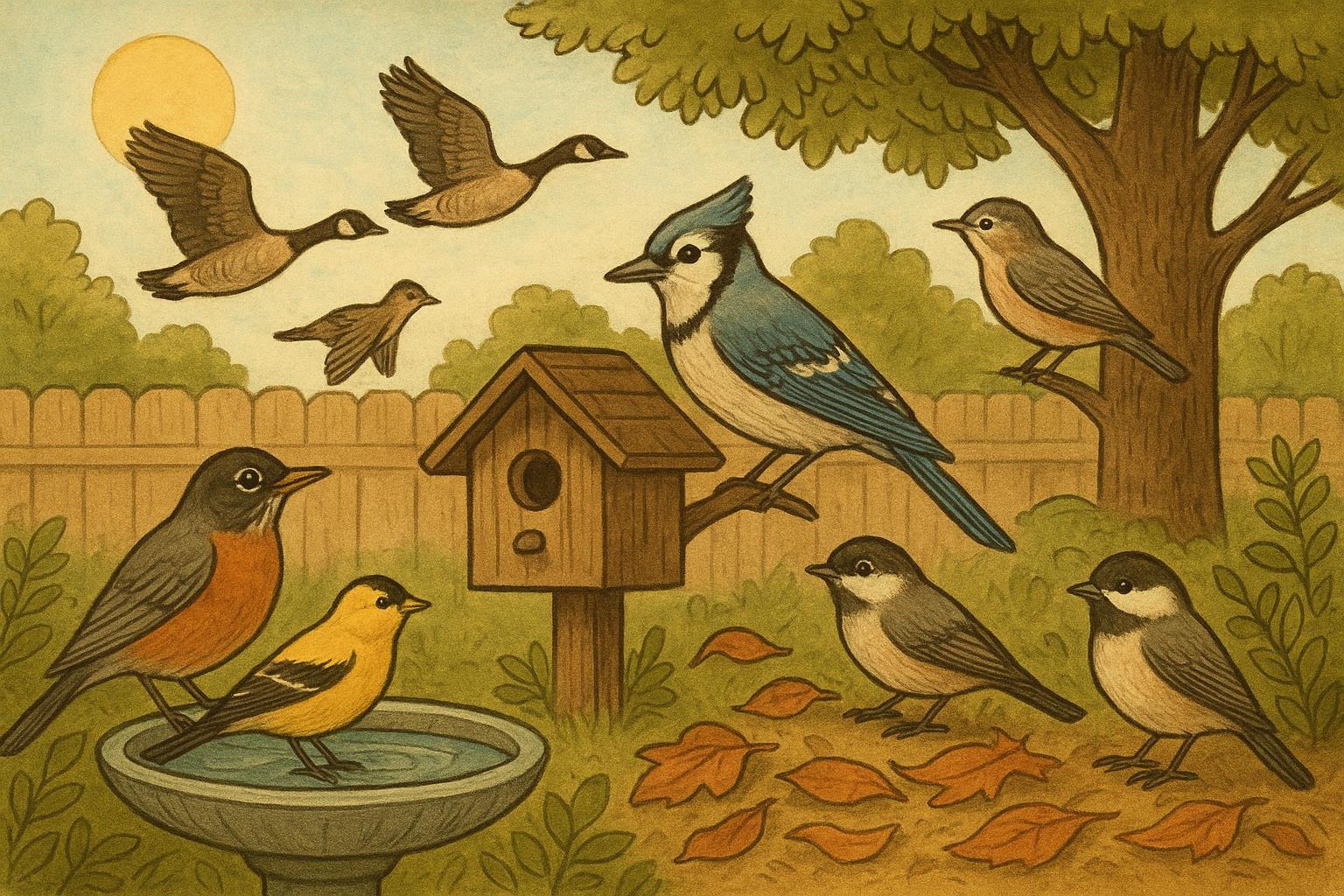
Hello there — pull up a garden chair, wipe the dirt off your knees (or don’t — I’m not the boss of you), and let’s daydream about a small, splashy oasis that will have wrens, robins, and even the occasional dignified jay stopping by for tea. This is about creating a whimsical refuge that’s easy on the eyes and irresistible to local wildlife.
## Whimsical Birdbath Oasis For Fresh Garden Wildlife
### Birdbath Basics For Busy Backyard Birds
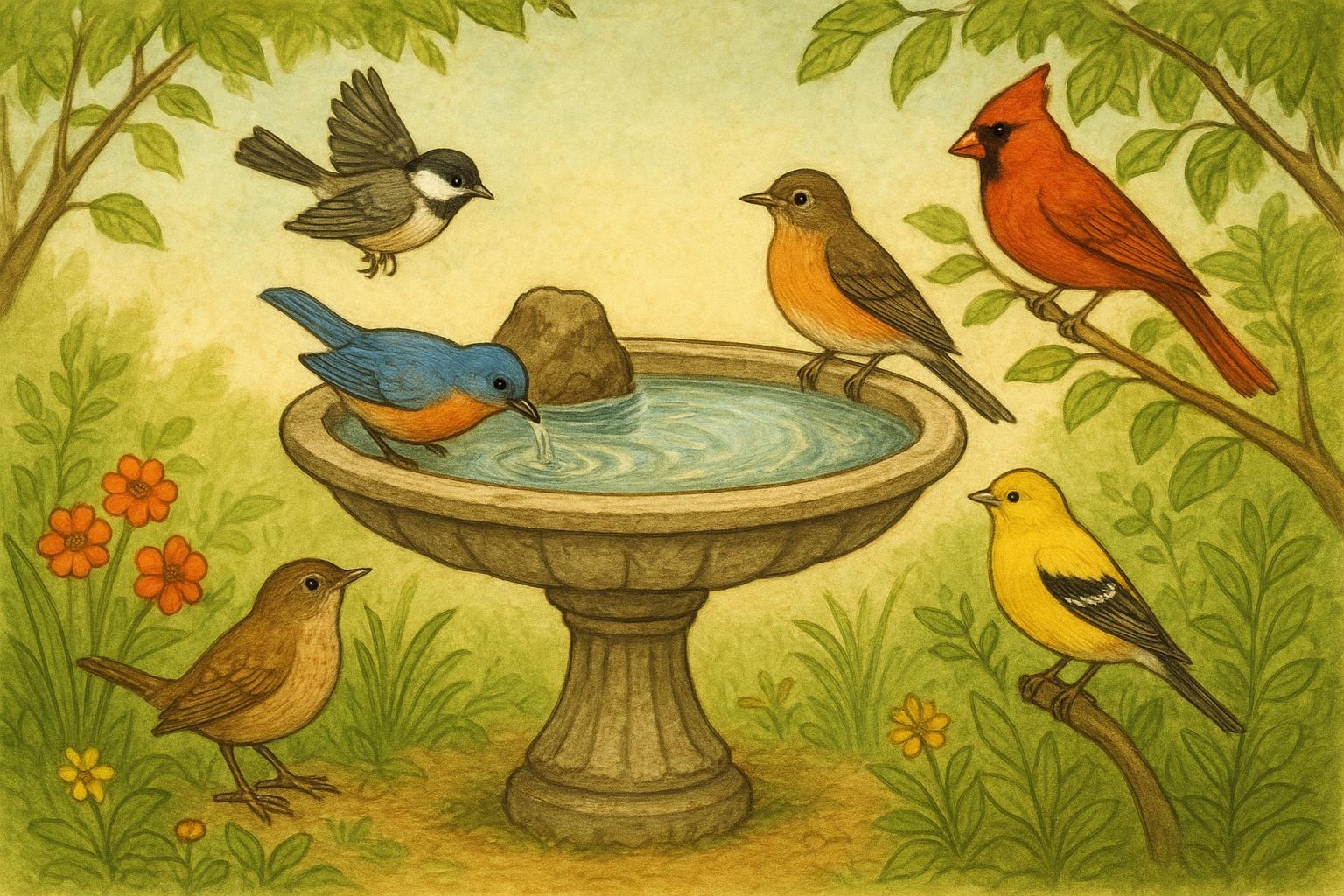
A steady supply of clean, shallow water makes your patch of yard more than pretty; it becomes livable real estate for birds. A birdbath is one of the simplest ways to invite feathered friends to linger, preen, and gossip loudly about the neighbor’s hedges. Beyond aesthetics, moving water increases bird visits — they’re like tiny water sommeliers who prefer a bit of motion to tell them the water is fresh.
#### Why Water Matters
Birds need water for drinking and bathing. Bathing keeps feathers clean and effective for flight and insulation. In hot months, water also provides a thermal refuge. A proper birdbath reduces stress for smaller species that would otherwise compete for puddles or risky sources.
#### How Deep Should It Be
For most backyard songbirds, aim for 1 to 2 inches at the edges, sloping to no more than 3 inches in the center. Young or clumsy birds appreciate textured surfaces and gentle slopes they can stand on. If you want to attract shorebirds or larger visitors, you can add a slightly deeper area, but keep the shallow edges — victory lies in the margins.
#### Placement And Safety
Place the birdbath in a semi-open area, within 10–20 feet of shrubs or trees. These nearby perches offer quick escape routes while keeping birds close enough to shelter. Avoid placing baths in tight cover where predators could ambush birds, and situate them away from busy footpaths so your feathered guests don’t get startled by impromptu yoga sessions.
## How To Keep The Water Fresh And Enticing
Clean water equals repeat visitors. Stagnant water accumulates algae, mosquito larvae, and particulates that deter birds. Change the water every 2–3 days in warm weather; weekly is usually fine during cooler months. Consider adding a small solar fountain — the gentle movement discourages algae and mosquito breeding and gives birds that attractive trickle they love.
### Small Maintenance Checklist
– Empty and scrub the bowl with a soft brush every week.
– Refill with fresh water; use a hose rather than rain barrels if your water has contaminants.
– Check for ice in freezing weather — a heated bath or deicer keeps the water accessible.
– Rinse well after cleaning; avoid soaps or detergents.
## Remedy 1: DIY Whimsical Upcycled Birdbath
Formal Instructions: This is a durable, low-cost solution that repurposes household items into a stable, attractive birdbath. Follow safety and construction steps carefully to ensure stability and non-toxicity.
Materials Required
– A sturdy, flat-topped pedestal (old plant stand, short concrete block, or overturned terracotta pot)
– A shallow, wide bowl or shallow ceramic saucer (at least 12–16 inches diameter)
– Non-toxic waterproof adhesive or mortar (optional, for permanent installation)
– Small pebbles or smooth stones
– Outdoor-safe sealant (optional, for porous bowls)
– A level and gloves
Step-by-Step Creation And Application
1. Site Selection: Choose a level spot 10–20 feet from cover. Clear debris and ensure good visibility for you and the birds.
2. Prepare The Pedestal: Place your chosen pedestal on the spot and use the level to ensure stability. If it’s wobbly, add a thin layer of gravel for drainage and tamp it down.
3. Prepare The Bowl: If using a porous ceramic or stone bowl, apply an outdoor-safe sealant according to manufacturer instructions and allow to cure completely. This prevents leaching and extends the bowl’s life.
4. Attach Bowl To Pedestal (Optional): For a permanent fixture, apply a ring of non-toxic waterproof adhesive or mortar on the pedestal top and set the bowl. Allow full cure time.
5. Add Texture: Place a scattering of small pebbles or smooth stones in the shallow areas to give birds secure footing.
6. Fill With Water: Add fresh water until the shallow edge is 1–2 inches deep, with the deepest point no more than 3 inches.
7. Final Checks: Verify stability. If windy or if predators are a concern, position the bath closer to the house or near low shrubs for safety.
Maintenance: Clean the bowl weekly with a non-abrasive brush and refill with fresh water. During hot seasons, change water more frequently to prevent mosquito larvae.
## Remedy 2: Simple Solar Dripper To Refresh Your Birdbath
Formal Instructions: A solar dripper system introduces steady moving water without wiring. It increases attraction and reduces microbial growth. This is an add-on for existing baths and can be installed with minimal tools.
Materials Required
– Small solar fountain pump rated for continuous outdoor use
– Flexible tubing compatible with pump outlet
– Ceramic or decorative “dripper” nozzle (optional)
– Small suction cups or clips
– A shallow reservoir (your existing birdbath)
– Water source for initial filling
Step-by-Step Creation And Application
1. Choose An Appropriate Pump: Select a solar pump that fits the size of your birdbath and provides modest flow (too vigorous a flow can deter some birds).
2. Position The Solar Panel: Place the solar panel where it receives full sun for most of the day. Use clips or stakes to secure it. Ensure the pump can reach from the bath to the panel.
3. Install The Pump: Attach the flexible tubing to the pump outlet and position the pump in the center or slightly off-center of the basin. Use suction cups or clips to hold the tubing in place against the side of the bath.
4. Fit The Nozzle: If using a decorative dripper, fix it to the tubing tip so the water trickles rather than sprays. Test flow to ensure a gentle stream; adjust tubing length or nozzle as needed.
5. Secure Connections: Check that all fittings are snug and that the pump sits flat on the bath bottom to minimize noise and vibration.
6. Fill And Test: Fill the bath with water and observe the flow. The pump should create a gentle ripple or dribble — enough to show movement but not flood the edges.
7. Seasonal Care: Remove and store the pump during freezing weather, or use a pump rated for year-round operation with appropriate anti-freeze precautions.
Maintenance: Inspect the pump monthly for debris and clean according to the manufacturer’s instructions. Replace worn tubing if clogging occurs.
### Attracting More Visitors With Whimsy (But Not Too Much)
Birds appreciate a bit of drama; humans appreciate a bit more. Add natural stones, low flat perches, and a few native plantings nearby to provide cover. Avoid excessive bright-colored decorations that could intimidate wary species. A mirror or wind chime can make your space charming for you, but remember: simplicity often attracts more birds than spectacle.
#### Plant Suggestions To Complement The Birdbath
Choose native, low-maintenance plants that offer seeds, berries, or nectar throughout the year. Consider coneflower, serviceberry, elderberry, and native grasses. These plantings support food chains and will keep birds interested beyond splash hour.
### Seasonal Considerations
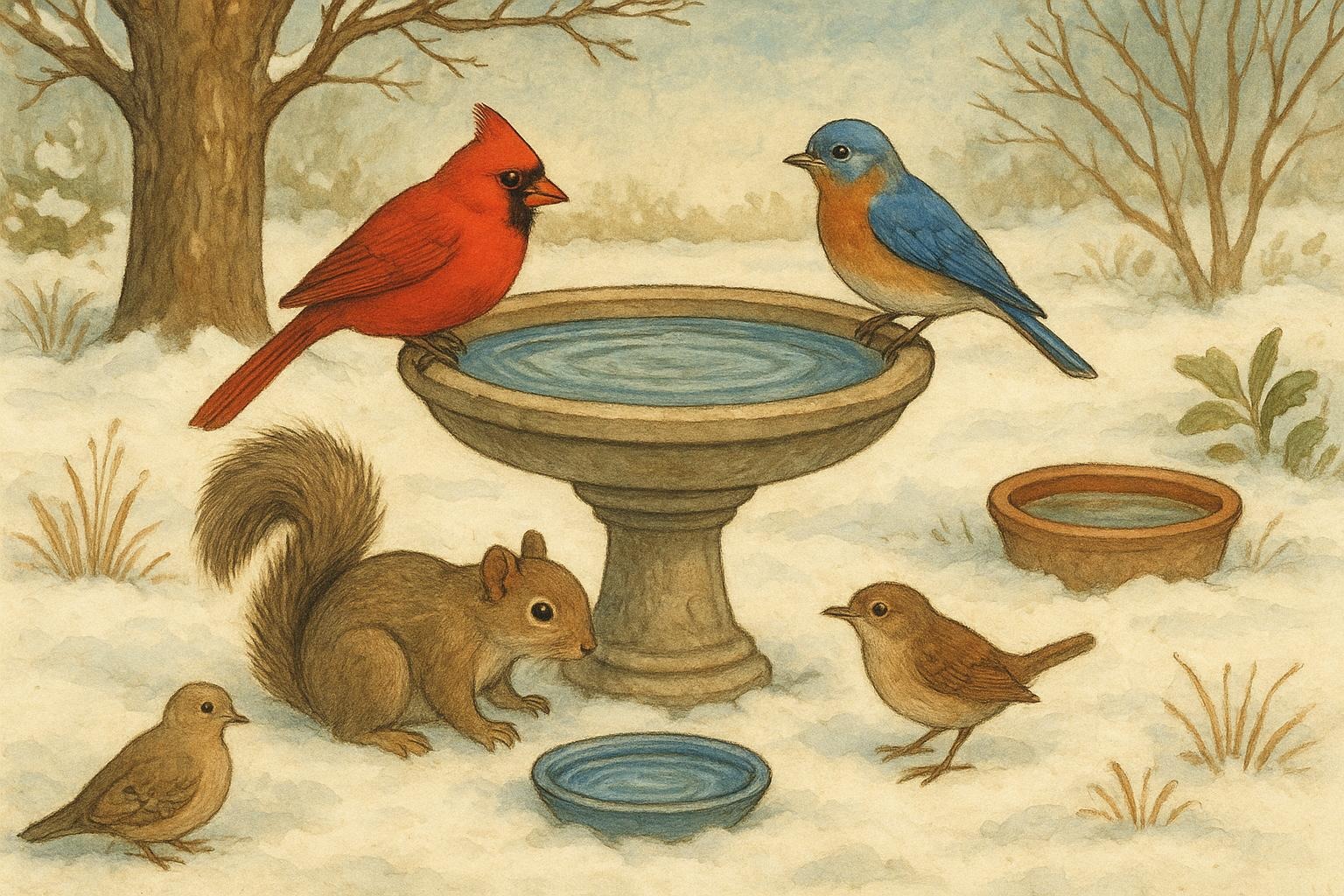
In winter, replace a dish with a heated birdbath or use a small heater meant for birdbaths; always follow manufacturer safety guidelines. In summer, place the bath partly in shade to keep water cool and slow evaporation. After heavy storms, check for debris and refill.
## Feeding The Experience Without Feeding The Problem
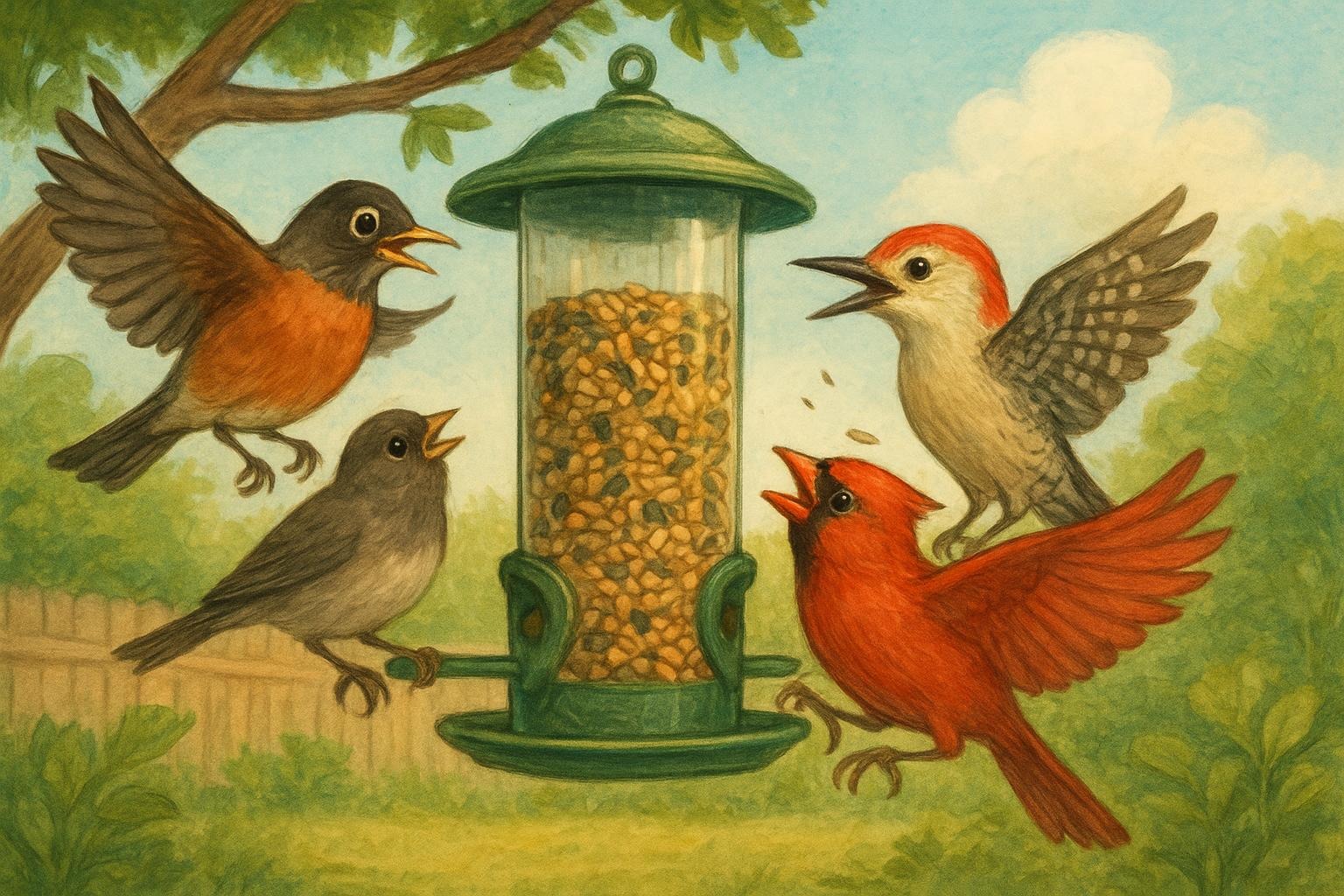
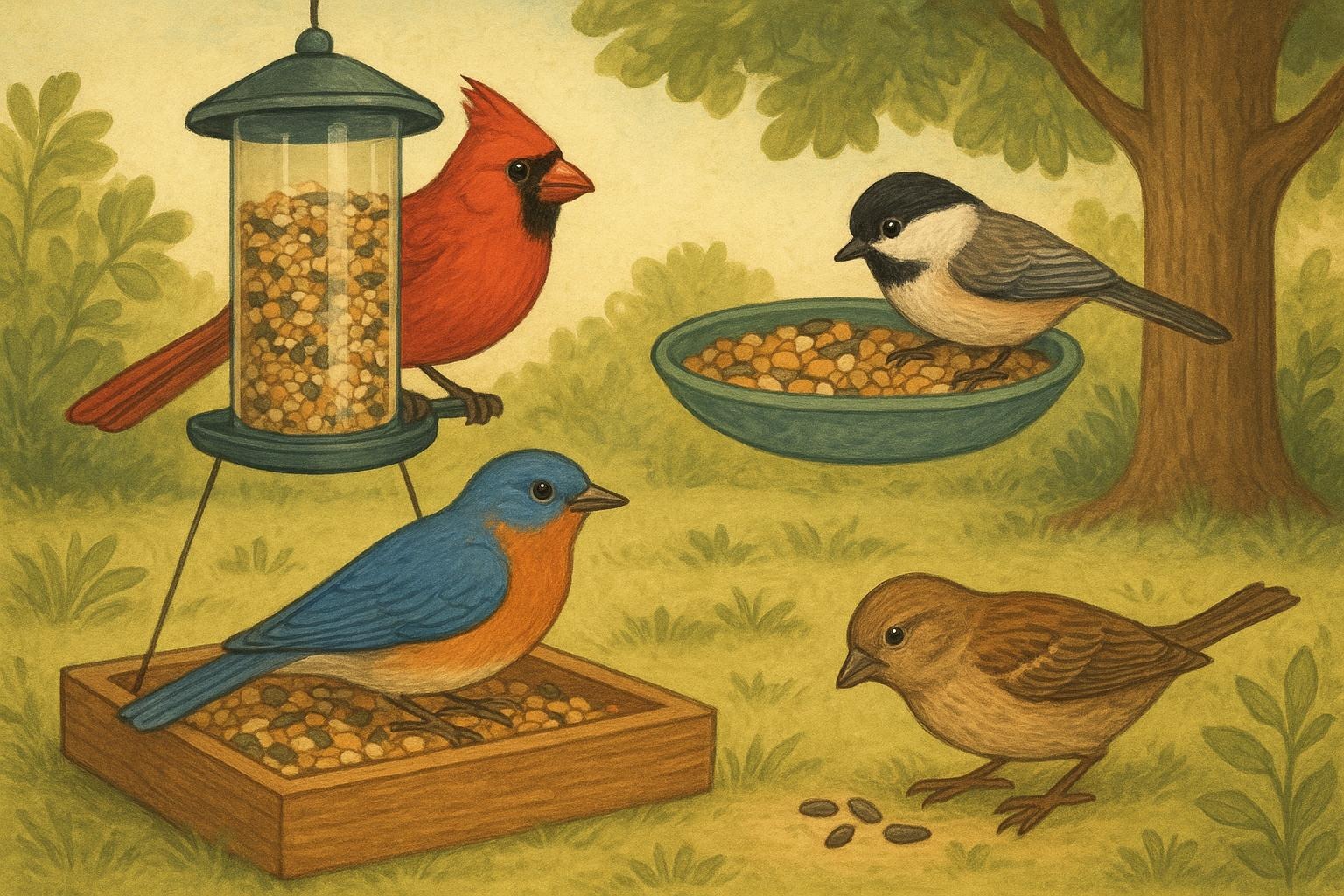
Avoid putting food directly in the birdbath. Seed and bread in water accelerate contamination and invite pests. If you also feed birds, keep feeders a field of view away from the bath — about 10–20 feet — so birds can drink without being squabbled over seed.
A final friendly nudge: frequent, small changes to the environment help birds learn your space is safe. Refill, clean, and gently move a stone now and then to keep predators guessing. You’ll notice increased visits within days and a steady parade of personalities: inquisitive sparrows, flamboyant male cardinals, and the occasional dramatic warbler.
Keep an eye on your birdbath water, and enjoy the low-cost, high-return theater of wildlife that follows.






































Leave a Reply