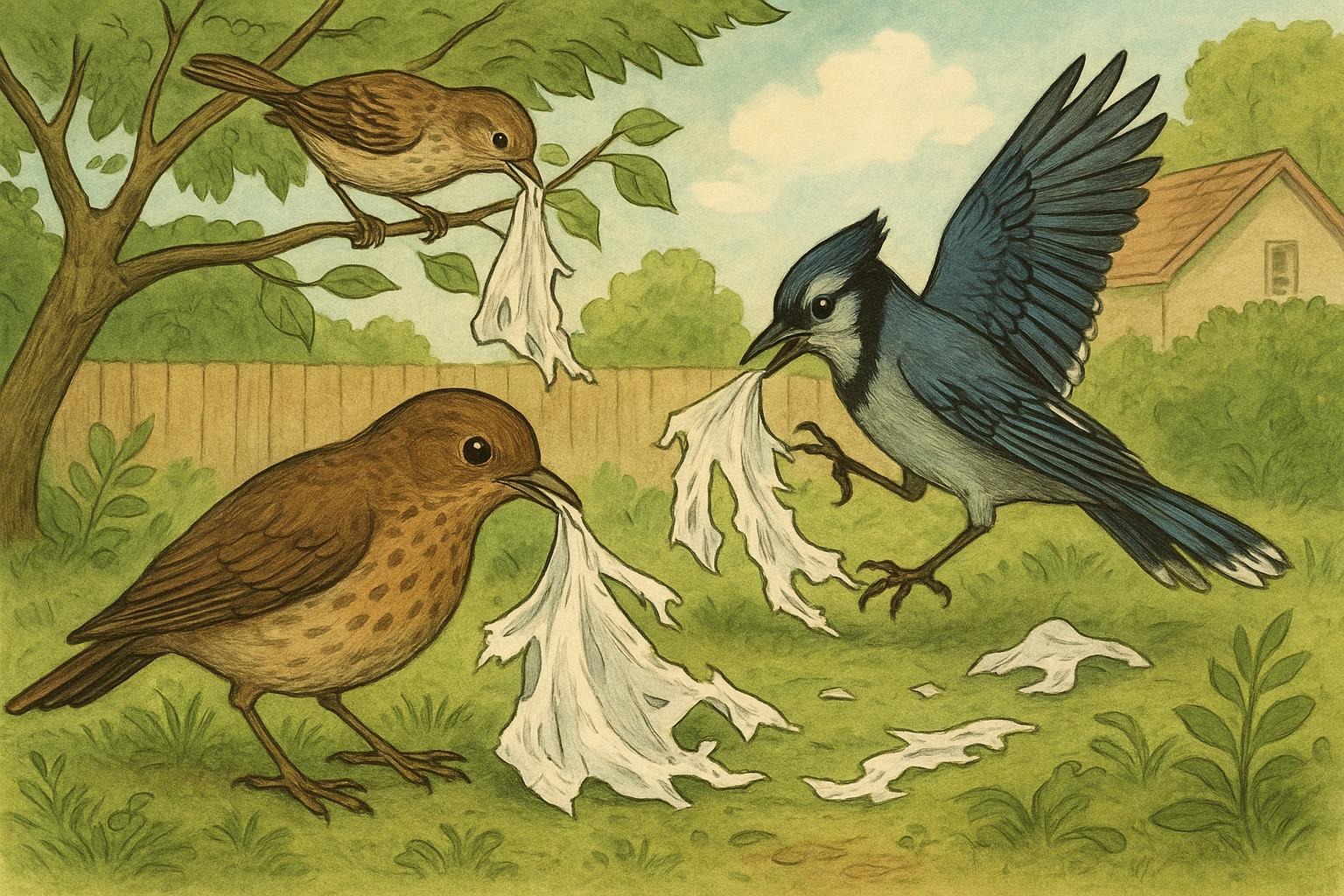
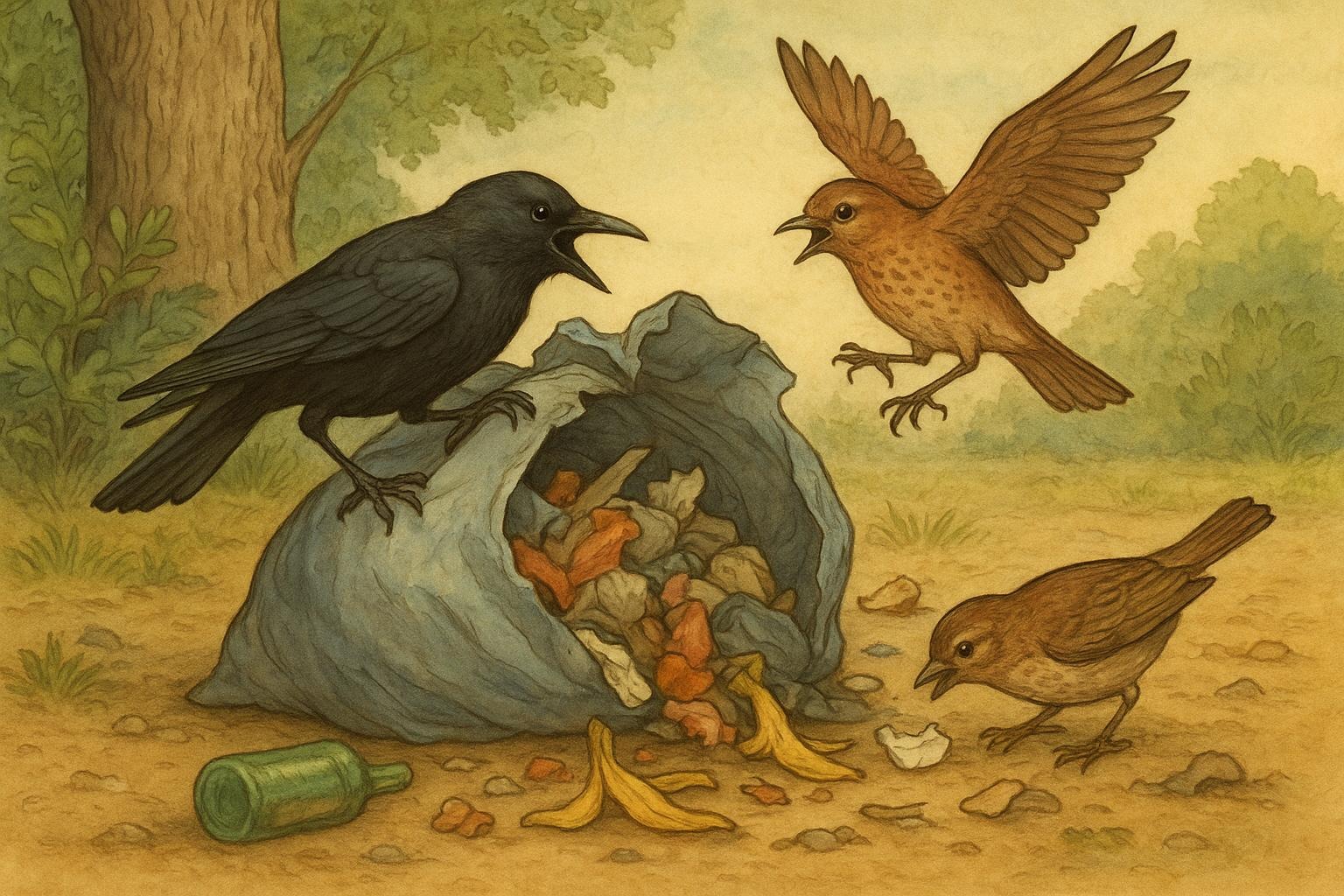
If you’ve ever walked into your yard and felt like a confetti tornado passed through — paper, plastic, bits of who-knows-what strewn across the lawn — you’re not alone. Birds tearing bags is a surprisingly common nuisance. They’re curious, opportunistic, and — let’s be honest — terrible at keeping secrets. This article explains why birds do it, what risks it creates, and how to stop it humanely and effectively.
## Birds Tearing Bags? Why Birds Do It
Birds tearing bags doesn’t mean they’re auditioning for a recycling commercial. There are a few simple reasons behind the chaos. First, many species are attracted to the smell of food: leftover scraps, pet food, fruit peels, or even compost. Second, the texture and sound of plastic or paper can mimic nesting material, especially during breeding season. Third, some birds are just opportunistic scavengers that quickly learn which bags are worth investigating.
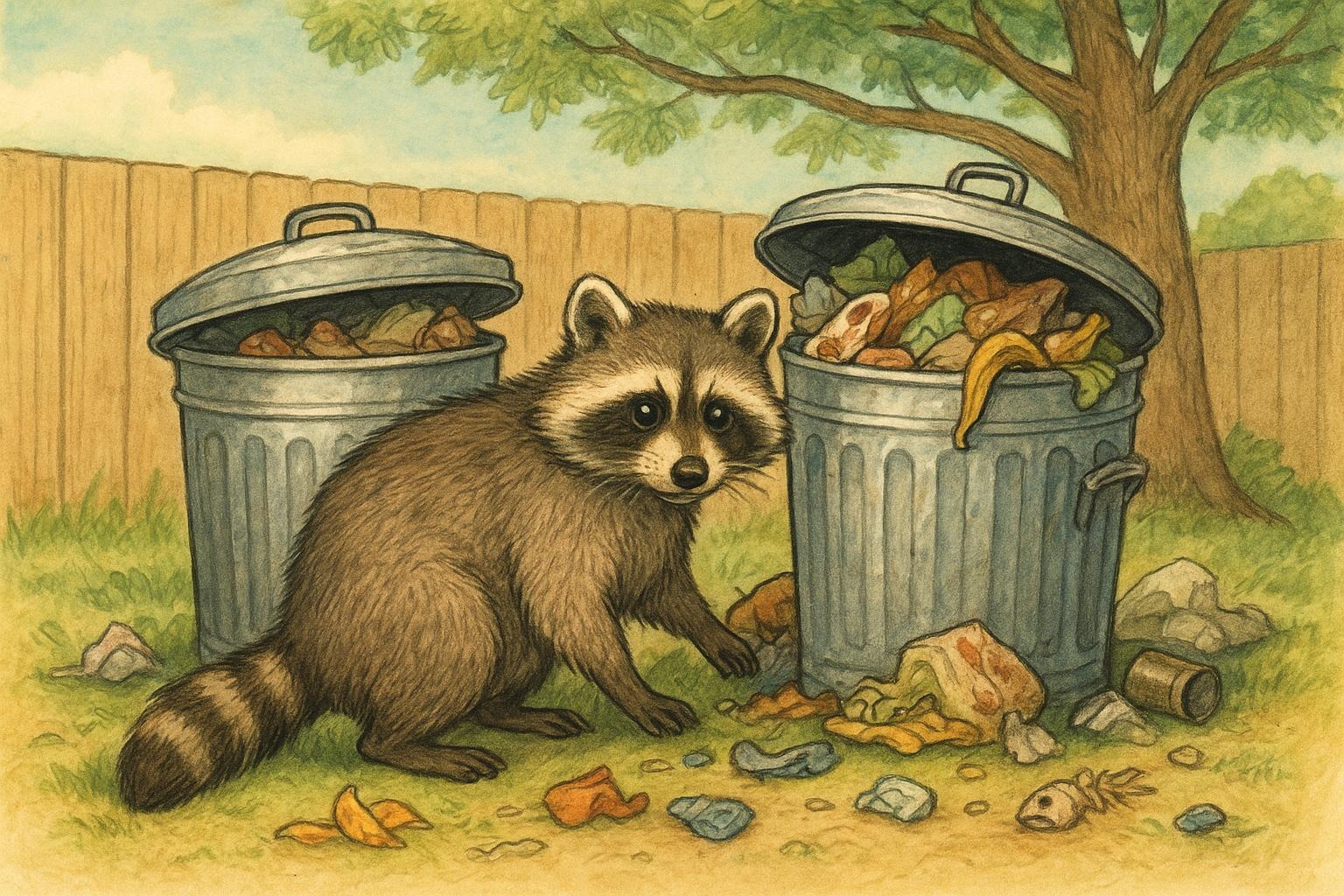
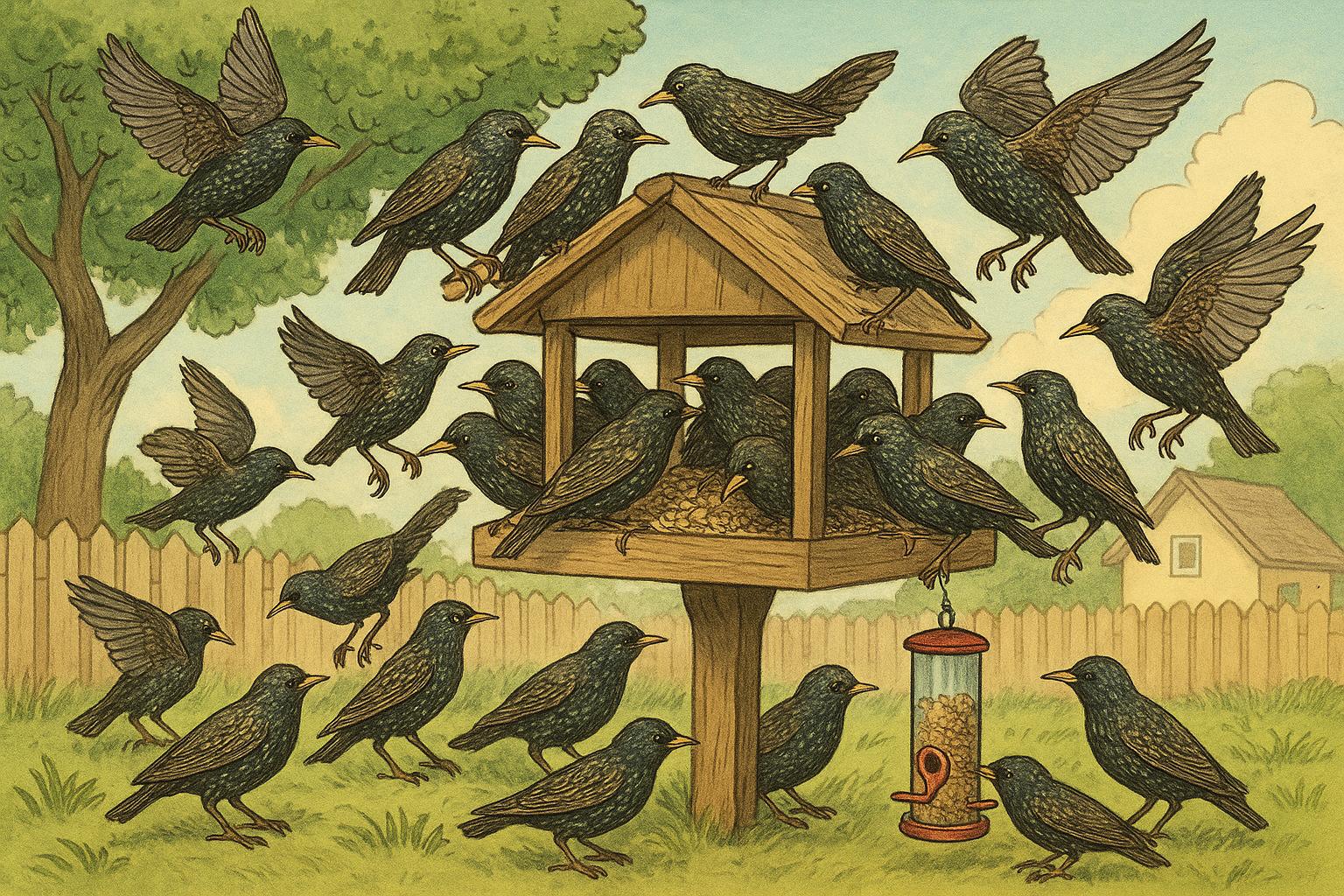
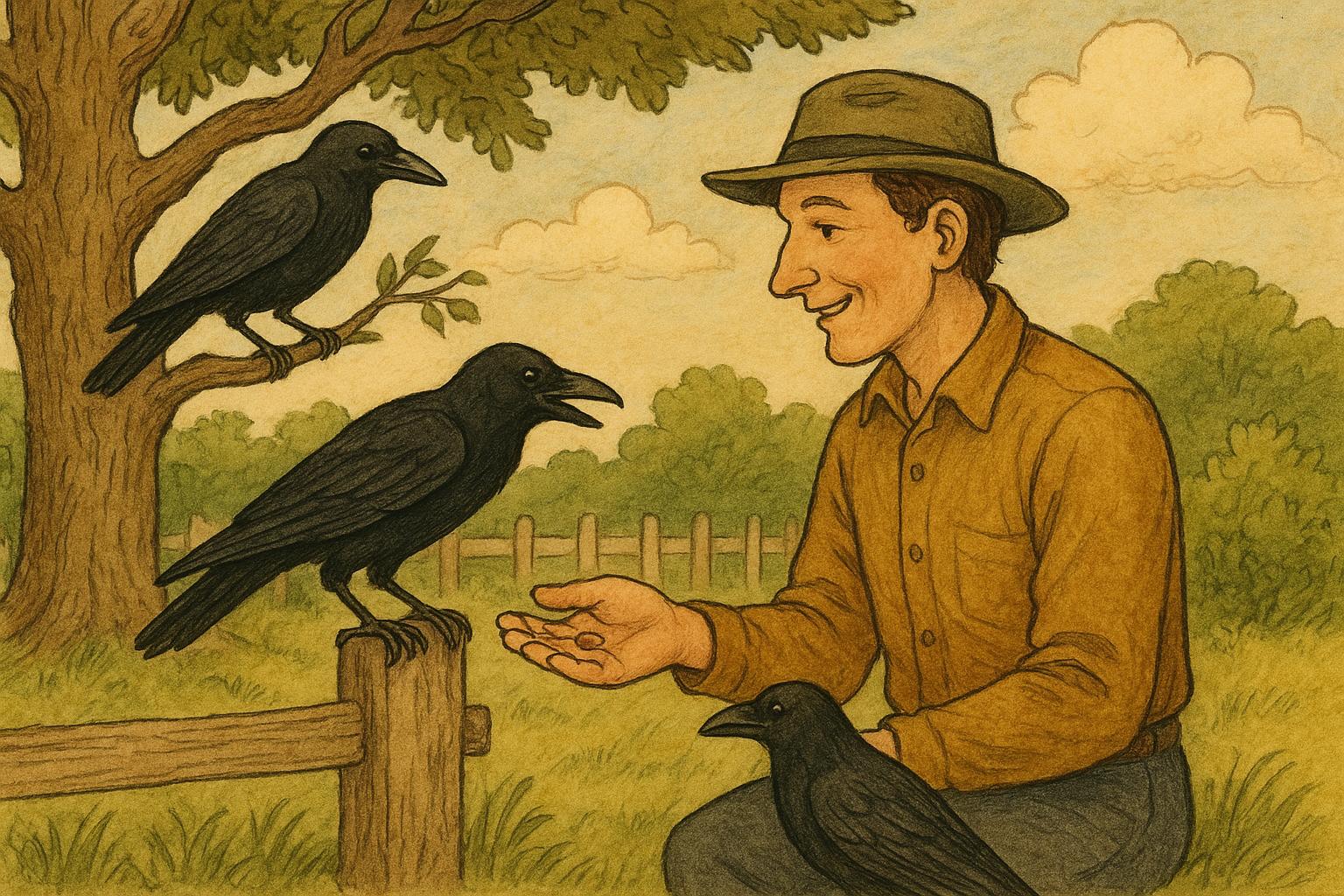
Different species behave differently: crows and gulls are bold and persistent, starlings and grackles work in groups, while raccoons and squirrels (not birds, but relevant) can complicate the picture. Understanding why birds are tearing bags helps you choose the best prevention method.
## Assessing The Damage And Risk
Birds tearing bags is more than an aesthetic problem. Open bags lead to:
– Increased wildlife encounters beyond birds (rats, raccoons, insects).
– Litter that can get into storm drains, harming waterways.
– Scattered food that attracts larger predators or neighbors’ complaints.
– Health risks from spoiled food or contaminated waste.
Before you act, walk your yard at different times (morning, dusk) to see when birds are most active and which bags they target. Noticing patterns makes prevention more efficient and less expensive.
## Remedy 1: Secure Trash Bags In Closed Containers
Materials Needed:
– Rigid trash bins with tight-fitting lids (plastic or metal)
– Bungee cords or lid locks (optional)
– Heavy-duty trash bags (if you still use bags inside bins)
– Labels or signage (optional, for shared areas)
Step-By-Step Creation And Application:
1. Choose bins that are animal-resistant: Look for containers designed to be wildlife-proof, with lids that clamp or lock. Metal or thick plastic works best.
2. Replace curbside loose bags: Immediately place loose trash bags inside the bin. If collection rules require bags outside, put the bin curbside just before pickup rather than the night before.
3. Secure the lid: Use the bin’s locking mechanism. For extra security, attach a bungee cord or specialized lid lock across the top to prevent birds from lifting the lid.
4. Keep bins clean: Rinse and dry bins periodically to reduce odors. Residual food smells attract birds even when bins are closed.
5. Train household members: Make it a habit to crush food waste and seal it in the bag before disposal. If you live in a shared area, label bins and post simple usage instructions.
Formal Note: Properly designed containers substantially reduce the chance that birds tearing bags will be able to access waste. This is the most reliable first-line defense for residential areas.
## Remedy 2: Netting And Covers To Prevent Access
Materials Needed:
– Bird netting (plastic or nylon, weather-resistant) or mesh bag covers
– Hooks, staples, or garden stakes for attachment
– Zip ties or twine
– Scissors or a utility knife
– Gloves for installation
Step-By-Step Creation And Application:
1. Measure the area: Determine how many square feet you need to cover (trash bin tops, compost piles, or an entire storage pallet).
2. Select netting: Choose a mesh size small enough to prevent birds from reaching through (less than 1 inch openings) and durable enough for outdoor use.
3. Cut and fit: Trim the netting to size, allowing for overlap on all sides so it can be secured.
4. Attach securely: Anchor the netting with hooks, staples, or garden stakes. If covering bins, tie the netting under the bin using zip ties or twine, ensuring no gaps remain.
5. Inspect regularly: Check for tears or sagging and repair immediately. Replace netting annually or sooner if damaged.
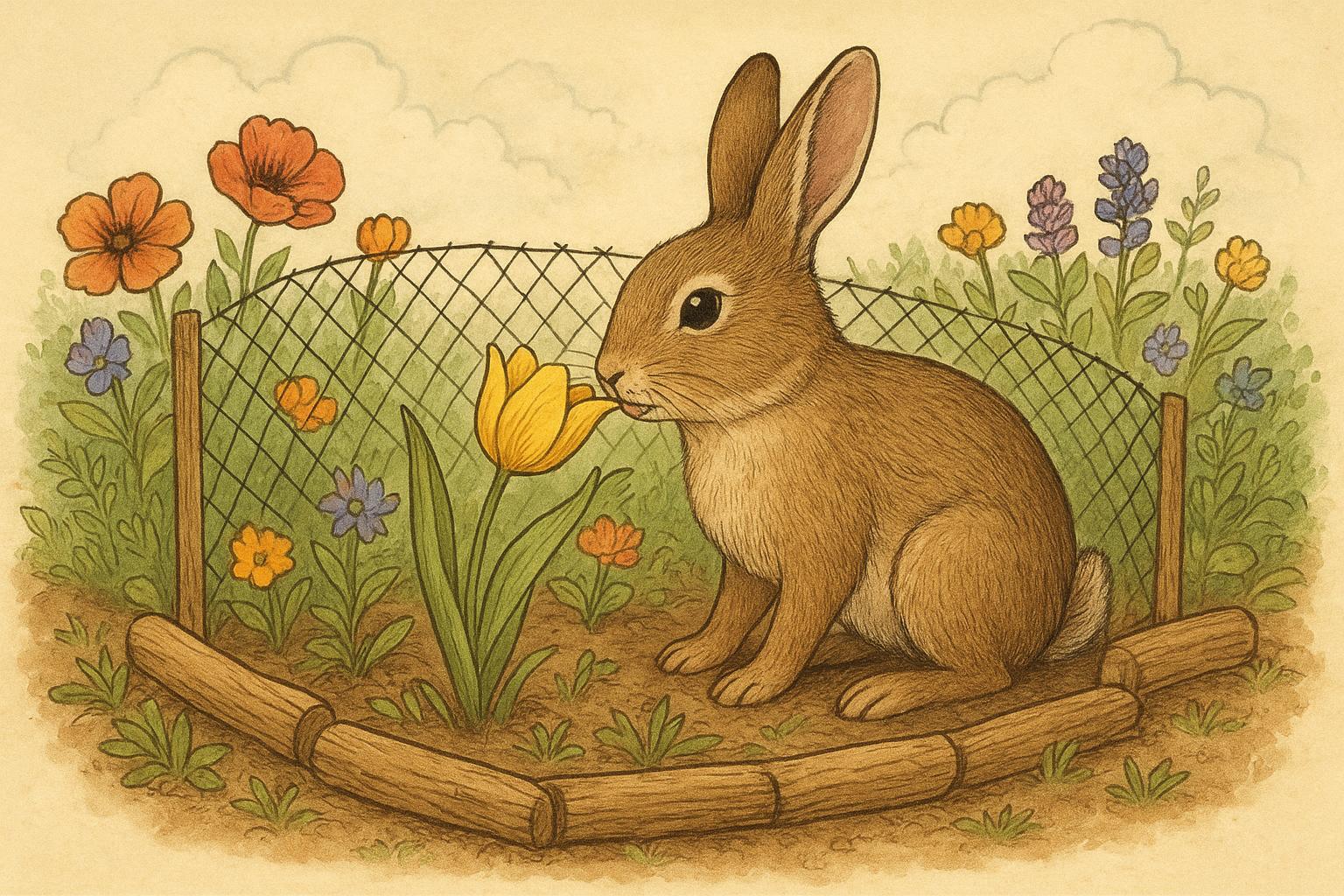
Formal Note: Properly installed netting is an effective physical barrier that prevents birds tearing bags while keeping access easy for humans when needed. Ensure the netting is taut and free of loose sections to avoid entanglement hazards for wildlife.
### When Netting Is A Partial Fix
If you live in a windy area or have frequent large animals, combine netting with a secured container strategy. Netting works best for temporary covers and for protecting specific problem spots like a blue-cart area or uncovered compost.
## Remedy 3: Sensory Deterrents And Visual Scares
Materials Needed:
– Reflective tape or old CDs
– Predator decoys (owl or hawk models)
– Ultrasonic bird deterrents (optional; research local effectiveness)
– Wind chimes or aluminum pie tins
– Motion-activated sprinklers (optional, for large yards)
Step-By-Step Creation And Application:
1. Select deterrents appropriate for the species: Visual deterrents tend to work best for gulls and crows; reflective items are effective against many species that avoid flashy, moving objects.
2. Install reflective tape or CDs: Hang strips or discs near the trash area so they catch the wind and sunlight. Space them every few feet for consistent coverage.
3. Place predator decoys strategically: Don’t position them in obvious, static spots. Move them every few days to maintain their intimidation value.
4. Add sound and motion: Wind chimes or pie tins add unpredictable movement and noise. A motion-activated sprinkler provides a humane, startling deterrent that rarely harms animals.
5. Monitor and rotate tactics: Birds learn quickly. Rotate or combine methods to prevent habituation. Replace faded reflective tape and move decoys periodically.
Formal Note: Sensory deterrents can reduce instances of birds tearing bags but are most effective when integrated with physical barriers like secured bins or netting. Follow manufacturer guidelines for electronic devices and ensure decoys do not cause stress or harm to wildlife.
### Legal And Ethical Considerations
Avoid lethal control and methods that could injure birds (sharp spikes, glue traps, etc.). Many bird species are protected by law; using humane deterrents and exclusion techniques minimizes legal risk and supports local ecosystems.
## Practical Tips For Ongoing Prevention
– Time your put-outs: Set trash and recycling out just before pickup. The shorter the exposure window, the better.
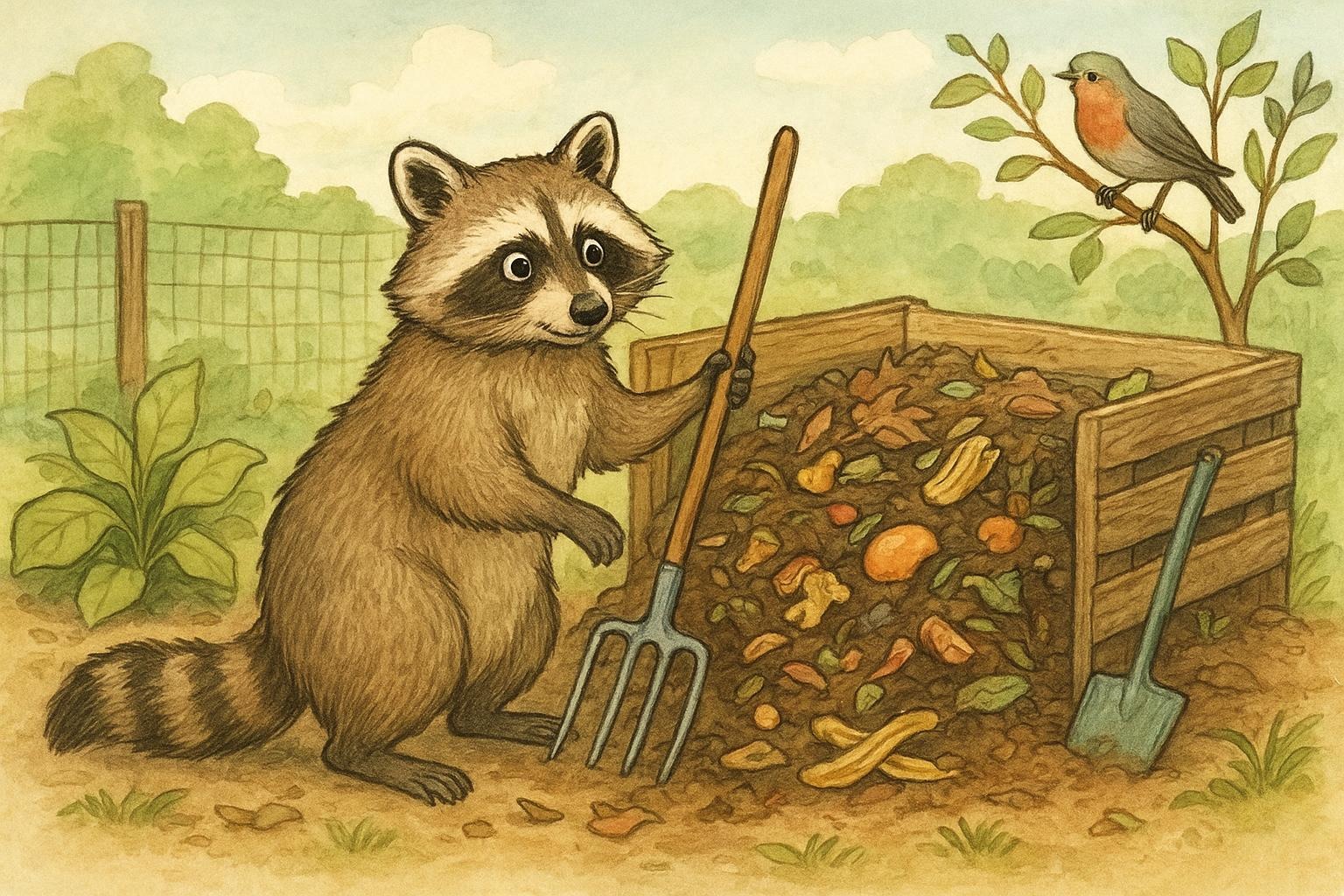
– Compost smart: Use enclosed compost tumblers if food scraps are tempting birds. If you must use a pile, secure it with wire mesh.
– Reduce attractants: Clean pet feeding areas promptly and avoid leaving pet food outside. Harvest fruit trees regularly and pick up fallen fruit.
– Make cleanup easy: Keep a leaf blower or rake handy to quickly remove scattered debris before it attracts more wildlife.
– Talk to neighbors: Often a community-wide approach (shared secure containers, coordinated put-out times) is most effective.
## If You Still See Birds Tearing Bags
If problems persist despite these measures, you may need a targeted approach: document the behavior (photos and timing), consult a local wildlife control specialist or ornithologist for species-specific advice, and review municipal waste management options. Sometimes the solution is as simple as changing pickup schedules or installing community bins.
You can stop the confetti with a mix of prevention, exclusion, and occasional deterrent rotation. With a few practical changes and a touch of persistence, the birds will have to find a less messy hobby.


Leave a Reply