
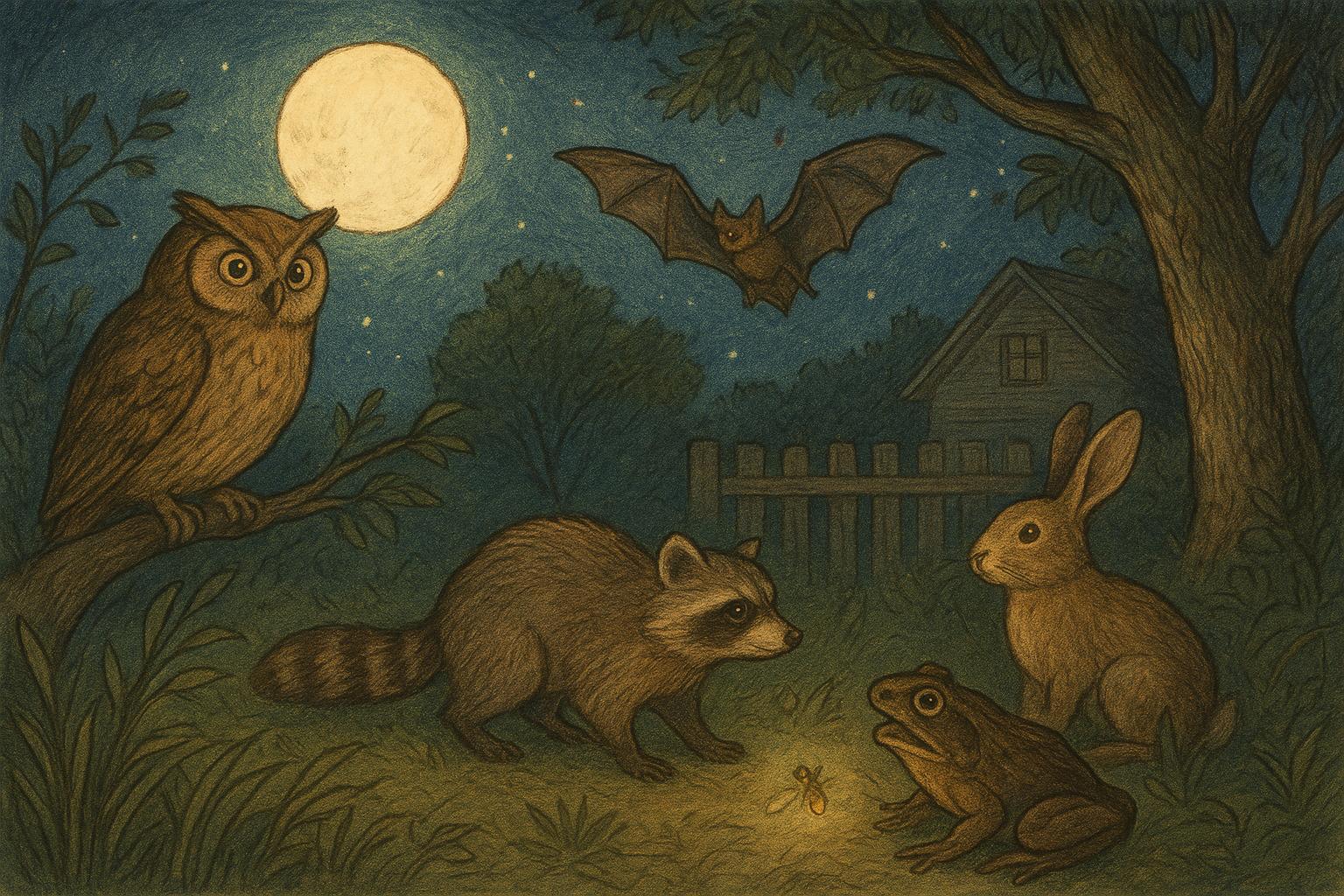
There’s a secret concert happening after the streetlights hum: frogs tuning up, crickets keeping time, an owl dropping in for a solo, and the occasional raccoon improv session. If you’ve ever sat on your back steps with a cup of something warm and wondered “what on earth is that?”, you’re in the right place to become a backyard nocturnal insider. This piece will help you identify the players, appreciate the score, and—if necessary—quiet the rowdier guests without calling in a SWAT team for wildlife.
## Night Sounds Identification: Common Backyard Callers
The tapestry of night sounds in your yard is as much about who’s there as it is about when and why they’re singing. Learning a few reliable cues will turn mystery squawks into “oh, that’s a barred owl” moments.
### Amphibian Choruses
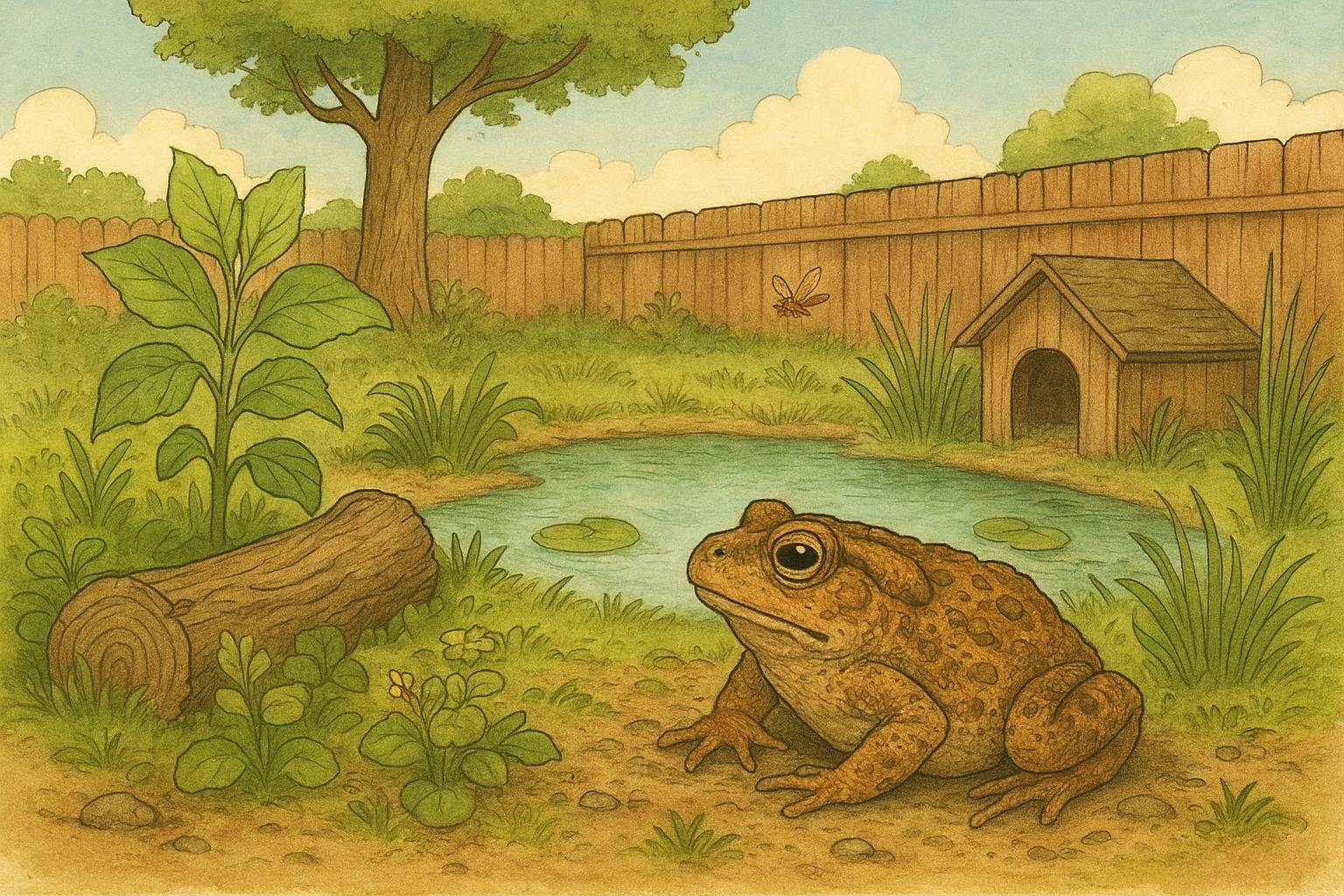
Frogs and toads are the headliners for many suburban and rural patches. Spring rains, puddled gutters, and backyard ponds act like radio stations for amphibian DJs.
#### How To Tell Frog Calls Apart
– Short, rhythmic trills that repeat rapidly often mean tree frogs.
– A low, resonant “jug-o-rum” or deep monotone is usually a bullfrog.
– Fast, high-pitched clicks are more often chorus frogs.
If you live near water, your pond’s frog population will dominate the night sounds for weeks during breeding season. Consider this pleasant natural background music—sometimes loud, always authentic.
### Insect Percussion
Crickets, katydids, and cicadas each keep their own metronome. Crickets rub wing edges to produce a steady chirp; the rate increases with temperature (yes, you can roughly tell the temperature by cricket speed—nature’s little thermostat).
#### Crickets Versus Katydids
– Crickets: steady, even chirp (often rhythmic).
– Katydids: more erratic, a rasping “katy-did” sound across long stretches.
– Cicadas: daytime sirens more than nocturnal vocalists, but late summer evenings can still host their fading buzz.
### Feathered And Furry Night Owls And Neighbors
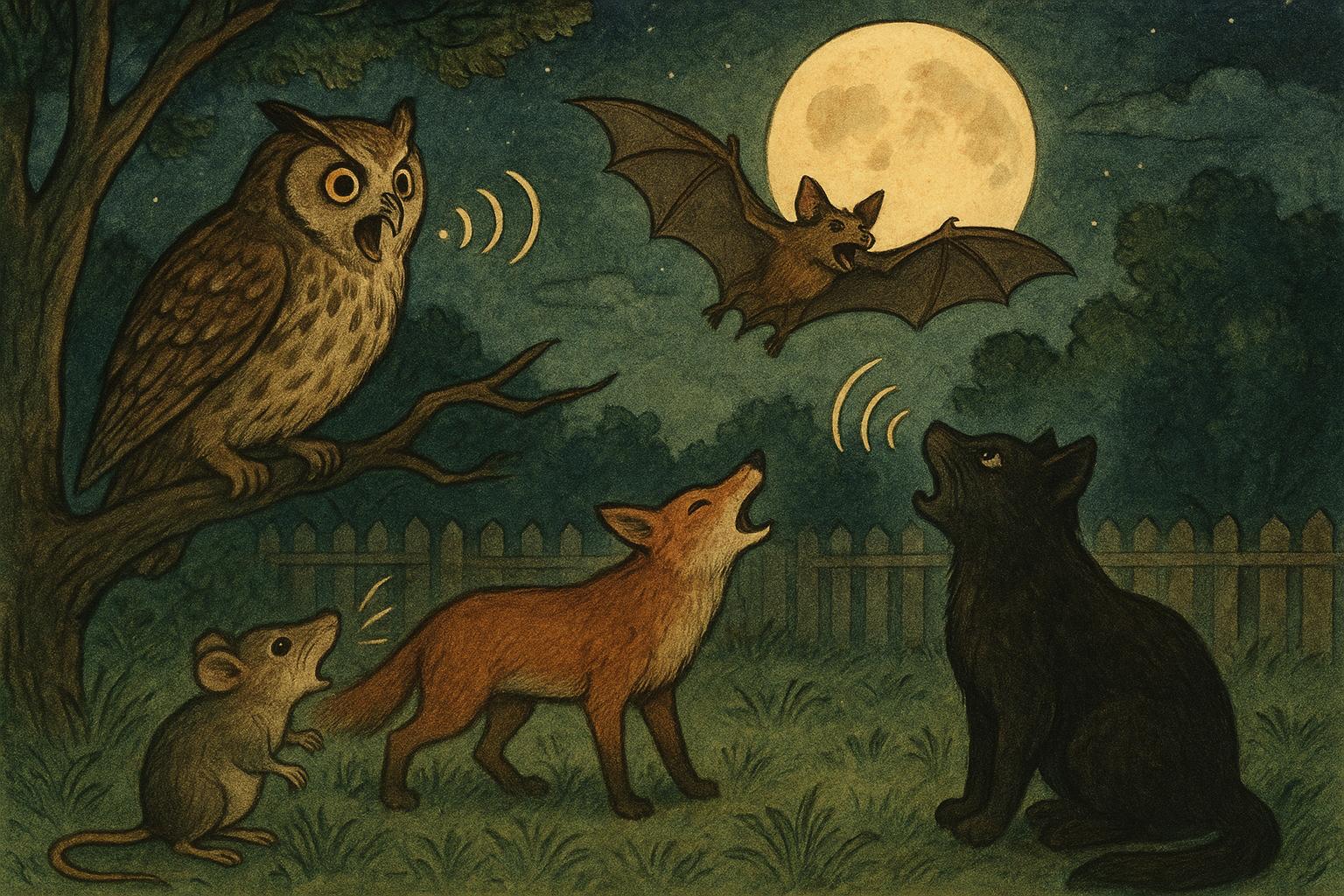
Owls are dramatic: hoots, shrieks, and boundary-marking calls that feel theatrical. Then there are mammals—raccoons clanging tubs, opossums huffing through leaves, foxes yipping like distant laughter, and coyotes yodeling across neighborhoods.
#### Owls, Bats, And Small Mammal Cues
– Hooting patterns: species-specific; great horned owls have deep, resonant hoots, while screech owls are more piercing.
– Bats: ultrasonic echoes you can’t hear without gear but sometimes audible clicks or rustles near lights that attract insects.
– Mammals: rustling, repetitive pawing sounds, and the metallic clatter of raccoons make them easy to pick out.
## Backyard Listening Tips: Make The Most Of Night Sounds
If you want to become a better listener, think like a field biologist with a taste for late-night snacks. Keep a small notebook or phone voice memo app handy to record odd sounds. Try these easy listening strategies:
– Turn off noisy HVAC units or fans to reduce competing noise.
– Take 5–10 minutes to simply sit still; many creatures stop if they hear human movement.
– Use a flashlight sparingly—sudden light can halt an animal’s call sequence.
With a little practice you’ll start associating patterns: the sighing rhythm of frogs, the late-summer chorus of katydids, or the periodic, territorial yips of a distant coyote. And yes, some of those patterns are downright musical.
### Good Tools For Backyard Auditory Exploration
– Smartphone recorder apps (for saving snippets).
– A basic field guide or online database for local calls.
– A pair of inexpensive earbuds for quiet listening to recorded sounds.
## Remedy 1: Motion‑Activated Lighting To Deter Raccoons And Stray Cats
When certain night sounds translate into repeated nocturnal foraging—knocking over trash cans, pawing at pet food, or consulting your compost—it’s fair to want a humane remedy. Motion‑activated lighting is an effective, nonlethal way to reduce nighttime visits from raccoons, feral cats, and other mid-sized mammals.
### Ingredients/Materials
– 2–4 motion-activated LED floodlights (choose warm-color LEDs to minimize insect attraction)
– Weatherproof mounting hardware (screws, anchors)
– Outdoor-rated extension cable or hardwired hookup (follow local electrical codes)
– Optional: timer or smart plug for schedule control
– Safety gear: ladder, gloves, eye protection
### Steps (Installation And Application)
1. Site Assessment: Walk the perimeter at night or use recorded night sounds to identify paths animals use (near fences, along hedges, or to food sources). Place lights to interrupt these movement corridors while avoiding direct glare into neighbors’ windows.
2. Mounting Height: Install lights 6–10 feet above ground so the sensor catches typical animal heights but reduces false triggers from small insects or plant movement.
3. Angle And Sensitivity Settings: Aim fixtures toward the activity zone at a slight downward angle. Adjust sensitivity to ignore wind-blown foliage; most sensors have a sensitivity dial.
4. Wiring: If using plug-in models, route cables discreetly and use outdoor-rated extension cords and waterproof covers. For permanent installations, hire a licensed electrician to hardwire and install timers or motion sensor circuits.
5. Programming: Set lights to remain on for 30–120 seconds after activation. Combine with a timer to disable the motion sensor during desired quiet hours if needed.
6. Monitoring: After installation, observe for a few nights and tweak angles and sensitivity to prevent nuisance triggers and optimize deterrence.
Effectiveness: Motion lighting startles and interrupts behavior, teaching animals to avoid lit zones. It’s humane and reversible, with minimal ecological impact if properly focused and timed.
## Remedy 2: Plant‑Based Sound Buffer And Privacy Barrier (Soft Landscape Solution)
If the goal is to dampen and soften the volume of night sounds—especially mechanical or human-made noises—strategic planting builds a living sound buffer that improves privacy and biodiversity.
### Ingredients/Materials
– Native evergreen shrubs (e.g., holly, yew, or native laurel species suited to your region)
– Dense deciduous shrubs (e.g., serviceberry, viburnum)
– Ornamental grasses for understory (e.g., switchgrass)
– Mulch, soil amendments as needed
– Shovels, pruners, landscape fabric (optional), planting stakes
– A basic layout plan or tape measure
### Steps (Design, Planting, And Maintenance)
1. Site Planning: Measure the area that needs buffering. Identify existing paths of sound and choose a staggered, multi-row design to maximize sound absorption.
2. Species Selection: Favor native species for resilience and wildlife value. Use a combination of evergreens for year-round mass and deciduous shrubs for seasonal density.
3. Layering: Plant in at least two rows—taller evergreens in the back, shorter shrubs and grasses in front. Stagger plants to avoid straight-line gaps.
4. Soil Preparation: Amend planting holes with compost if needed. Ensure proper drainage to prevent root rot.
5. Planting: Place shrubs at recommended spacing (usually 3–6 feet apart depending on mature size). Mulch well to conserve moisture and suppress weeds.
6. Irrigation And Establishment: Water regularly through the first two growing seasons. Use drip irrigation for efficiency.
7. Long-Term Maintenance: Prune to shape and encourage fill-in, but allow some natural density. Over time, the layered vegetation will dissipate noise energy and break up direct sound pathways.
Functionality: A properly designed and planted buffer reduces perceived volume and filters direct sound. It also enhances habitat, making your yard a quieter, more ecologically friendly place to listen to the remaining natural chorus.
### When To Combine Remedies
For yards with both noisy wildlife and unwanted mechanical sounds (e.g., distant road noise plus raccoon visits), combine the motion‑activated lighting and living buffer. The lights deter nuisance visitors, while shrubs reduce the overall noise level and add habitat benefits.
There’s a unique pleasure in recognizing the cast of characters that make up your night orchestra. With a few inexpensive tools, some patient listening, and a humane approach to conflict, you can keep the backyard stage set for the music you want—and gently discourage the acts that aren’t invited. Pull up a chair, lean back, and let the nocturnal concert unravel; you’ll be surprised how quickly the yard’s stories come into focus.












































Leave a Reply