
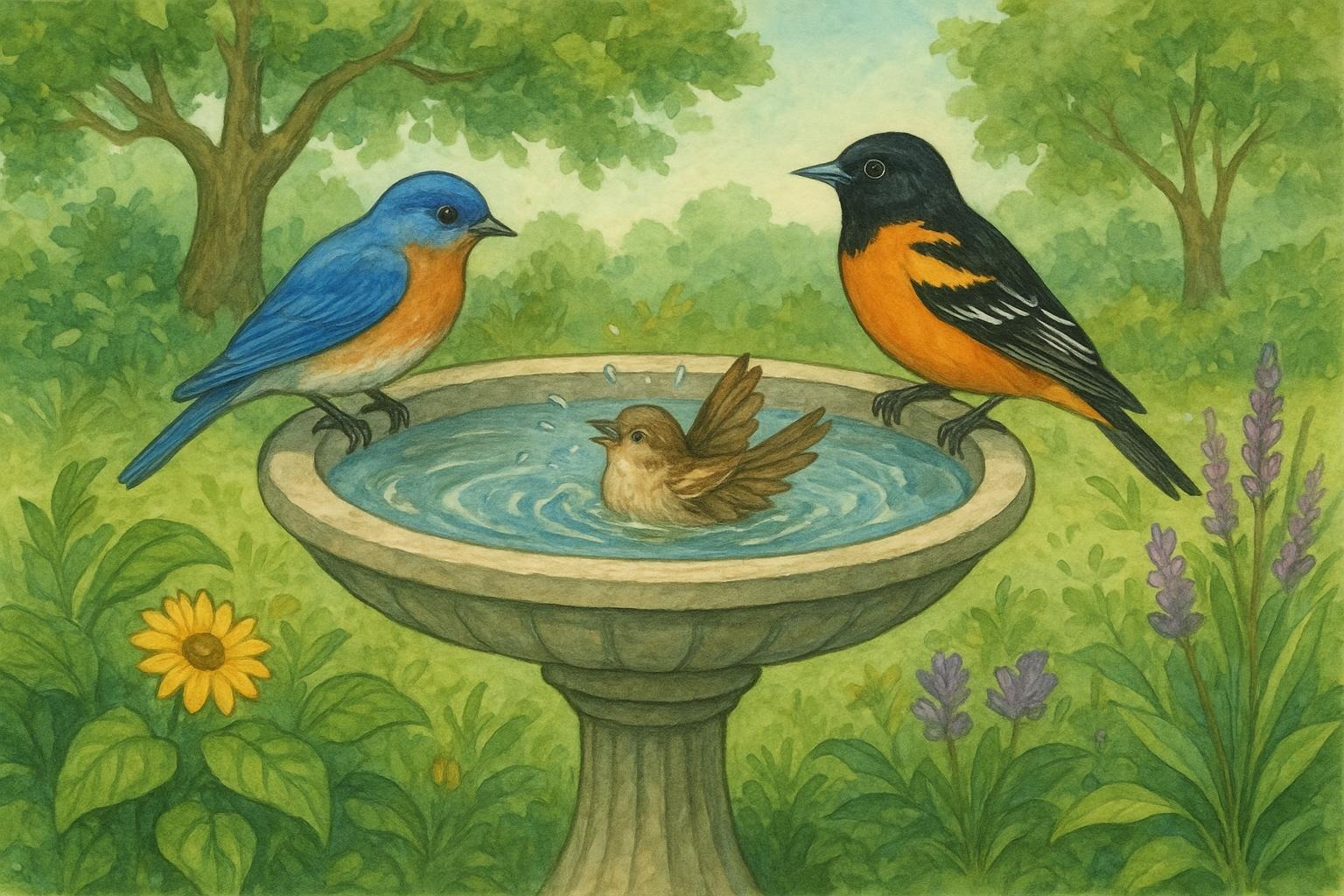
Welcome to a relaxed stroll through the small but mighty world of backyard water: bird baths, the neighborhood spa that doubles as a wilderness water cooler. If you’ve ever watched a finch do an enthusiastic somersault in three inches of water, you know there’s pure joy (and drama) in a good splash. This article will help you design, place, and maintain safe water features that keep birds happy and hazards low—without turning your yard into a mosquito hotel or a coyote snack stand.
## Why Bird Baths Matter In Backyard Habitats
Bird baths provide essential drinking and bathing water for birds, especially during hot or dry stretches and in winter when liquid water can be scarce. Beyond hydration, a well-designed bird bath encourages feather maintenance, which is critical to insulation and flight. Good bird baths also attract a diversity of species, bringing song and beneficial insect control to your garden.
However, poorly considered water features can increase disease transmission, harbor mosquitoes, or expose birds to predators. Thoughtful design and maintenance are the antidotes: shallow water, changing it regularly, and providing sightlines to escape routes make a world of difference.
### Water Depth, Bowl Shape, And Surface Texture
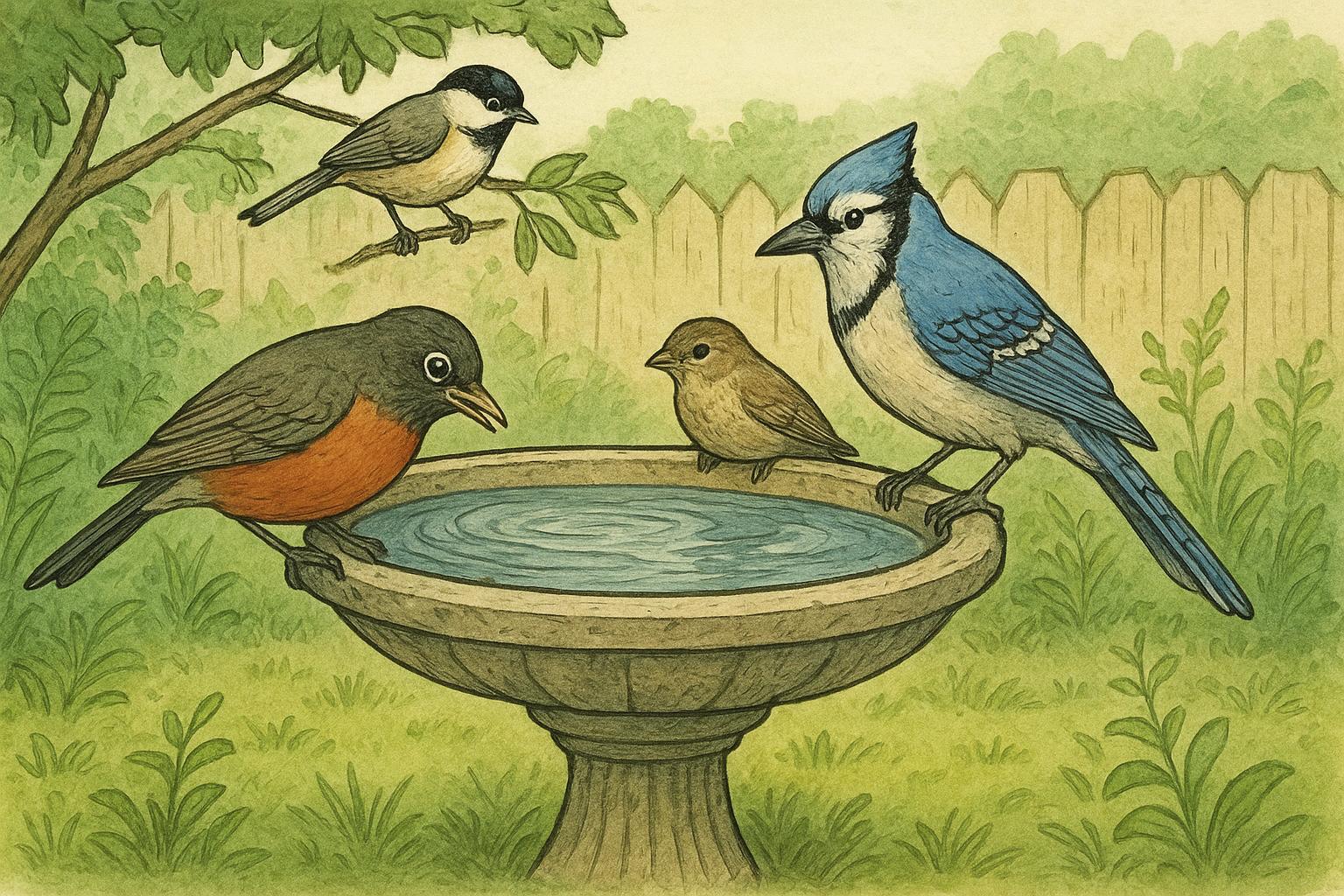
Shallow is safe. Most songbirds prefer water depths of 1 to 2 inches at the rim, with a gradual slope to a maximum of about 3 inches. A gently contoured bowl with a textured surface helps birds gain footing and prevents slips. Flat, wide saucers mimic natural puddles and are often more inviting than deep, ornate basins.
– Broad, shallow shapes suit smaller species.
– Smooth glazed ceramics can be slippery; roughened stone or concrete works better.
– Avoid deep bowls that force birds to wade; ducks and larger waterfowl need deeper ponds or dedicated pools.
### Location, Visibility, And Predator Safety
Place your bird bath where birds can see approaching threats but still have cover nearby. A classic rule: clear lines of sight out to at least 10–15 feet in the main approach directions, with shrubs or low trees 5–15 feet away to provide quick escape options.
Avoid placing baths right next to dense cover where predators can hide. Elevated pedestals help reduce the risk of ground predators, while low banks attract ground-foraging species that prefer quick access.
### Seasonal Considerations And Maintenance Schedules
Cold weather and algae growth are seasonal realities. In winter, consider a thermostatically controlled heater designed for bird baths to keep water liquid. In warm months, swap water daily or every other day to deter mosquitoes and reduce bacterial load.
A simple maintenance schedule:
– Daily: Remove droppings or obvious debris; top up evaporative loss.
– Twice weekly: Empty and scrub basin with a stiff brush and plain water; avoid strong detergents.
– Weekly in hot weather: Full water replacement and check for algae growth.
## Remedy 1: Build A Shallow Wildlife-Friendly Bird Bath
(This remedy is formal and instructive; follow steps precisely for best results.)
#### Materials And Required Tools
– Concrete mixing kit or a pre-cast shallow concrete basin (18–24 inches wide, 2–3 inches deep at rim)
– Fine sand or non-slip aggregate (for texturing)
– Pedestal or stable base (stone column, metal stand, or stump)
– Food-grade sealer (optional, to protect concrete)
– Heavy-duty gloves, trowel, bucket, and water
– Level and measuring tape
#### Step-By-Step Creation And Application
1. Select A Location: Choose a spot with partial shade during the hottest hours and with clear sightlines for birds. Ensure the base will sit on firm, level ground.
2. Prepare The Basin: If casting concrete, mix concrete per manufacturer instructions. Pour into a mold sized for a shallow saucer (18–24 inches diameter), and gently press a layer of fine sand or aggregate into the surface before it sets to create non-slip texture.
3. Shape The Slope: While concrete is workable, shape a gentle slope from rim to center—1–2 inches depth near the deepest point is sufficient. Smooth edges to avoid sharp surfaces.
4. Cure And Seal: Allow concrete to cure fully (usually 48–72 hours). Apply a food-grade sealer if desired to reduce porosity; ensure the sealer is non-toxic once fully cured.
5. Install The Pedestal: Secure the basin to your chosen pedestal using construction adhesive suitable for outdoor use or by setting the basin firmly so it won’t shift in wind or under bird activity. Confirm level.
6. Add Water And Test: Fill to a shallow depth and observe. If water seeks a deeper center than planned, adjust slope or add stones to reduce depth.
7. Maintenance Application: Empty and scrub the basin at least twice weekly; scrub with a stiff brush and rinse thoroughly. Replace water daily in hot weather. Remove ice in winter if not using a de-icer.
Safety Notes: Use non-toxic materials. Never use paints, glues, or sealers not explicitly labelled as safe for wildlife or potable-water equipment.
## Remedy 2: Create A Filtered Recirculating Bird Bath Fountain
(Second formal solution—designed for longer-lasting clean water with minimal daily maintenance.)
#### Materials And Required Tools
– Durable basin or bowl (stone, resin, or ceramic; 18–24 inches diameter)
– Submersible pump rated for small fountain (flow 50–200 GPH)
– Inline pre-filter or foam filter sock
– Flexible tubing sized to pump outlet
– Small filter media (ceramic rings or bio-ball) for a hidden reservoir (optional)
– Solar panel kit or GFCI outdoor outlet for electric supply
– Tubing clamps, silicone sealant, and mounting hardware
– Gravel or stones for gradual steps and perches
– Basic tools: drill with appropriate bits, screwdriver, utility knife
#### Step-By-Step Installation And Application
1. Choose A Basin And Site: Select a UV-stable basin and a location with partial shade. Ensure electrical access (solar or grounded outdoor outlet with GFCI).
2. Install Pump And Pre-Filter: Place the submersible pump in the basin, fitted with a foam filter sock on the intake to trap debris. Connect flexible tubing to the pump outlet and route to the return spout.
3. Conceal Filter Media (Optional): For improved water quality, construct a small hidden reservoir (a plastic tub) beneath the basin to house bio-media and the pump. Route water through media before re-entering the basin for biological filtration.
4. Establish Flow And Depth: Aim for a gentle, shallow cascade or trickle—strong currents deter small birds. Adjust flow using valve or pump settings so the shallow rim depth remains 1–2 inches. Use stones to slow flow and create perching spots.
5. Secure And Weatherproof: Seal any tube penetrations with silicone. Anchor pump and tubing so they won’t shift. If using solar power, orient panels for maximal sun exposure and secure wiring.
6. Start-Up And Testing: Run system and check for leaks, strong currents, or vibration. Confirm water movement is gentle and water returns clear.
7. Routine Maintenance: Clean pre-filter weekly and replace foam as needed. Every 2–4 weeks, drain basin, scrub with a stiff brush, and rinse media per manufacturer recommendations. Winterize by draining and storing pump indoors or use a heater rated for fountains.
Technical Notes: Choose a pump with adjustable flow and ensure all electrical components are outdoor-rated. Sizing: for a small bird bath, 50–200 GPH is sufficient; less aggressive flow is preferable.
### Managing Disease, Mosquitoes, And Algae
Bird baths can be vectors for disease if water is stagnant or contaminated. The key preventive measures are mechanical and sanitary.
– Change water frequently: Fresh water reduces bacteria and fungal loads.
– Use movement: Even a small fountain or dripper discourages mosquitoes, whose larvae need still water to develop.
– Clean properly: Scrub with a stiff brush; avoid bleach or strong chemicals. If disinfecting is necessary (after a known disease outbreak among local birds), use a 10% bleach solution: scrub, let sit 10 minutes, rinse thoroughly, and refill. When using any disinfectant, follow manufacturer instructions and ensure full rinsing.
– Remove droppings and food: Bird baths should be free of seed hulls and other organic debris that accelerate contamination.
### Encouraging Use While Minimizing Conflict
Make the bath inviting without creating territorial flashpoints:
– Provide multiple baths spaced throughout larger yards to reduce aggression.
– Add low perches nearby for small birds to monitor the bath safely.
– Keep feeders and baths separated by at least 10–15 feet to prevent seed accumulation in water and reduce crowding.
### Troubleshooting Common Issues
If birds avoid the bath, check depth and movement—too deep or still tends to be the issue. If algae blooms, increase cleaning frequency and add more shade during the hottest part of the day. For persistent mosquitoes, ensure there is no standing water in saucers or plant pot trays nearby and consider adding a small solar-powered bubbler or a biological control like Bacillus thuringiensis israelensis (Bti) for ornamental containers, following label instructions.
If predators are a concern, raise the basin on a stable pedestal, keep surrounding shrubs trimmed to reduce ambush spots, and provide nearby escape cover for birds.
Enjoy setting up neighborhood hydration stations that are as safe as they are charming. A little planning and routine care give local birds the confidence to drink and bathe—and give you the pleasure of watching the show.














































Leave a Reply