
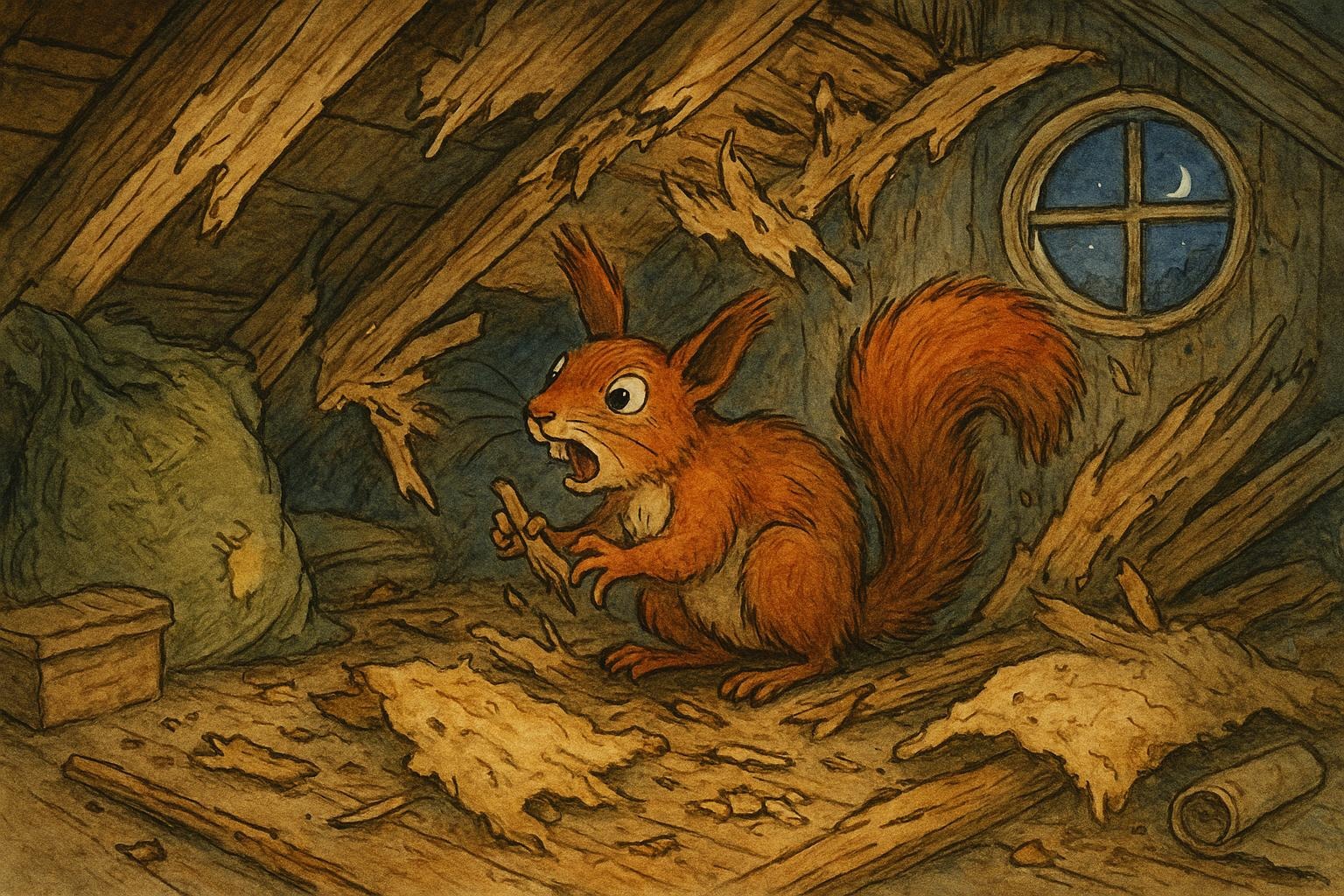
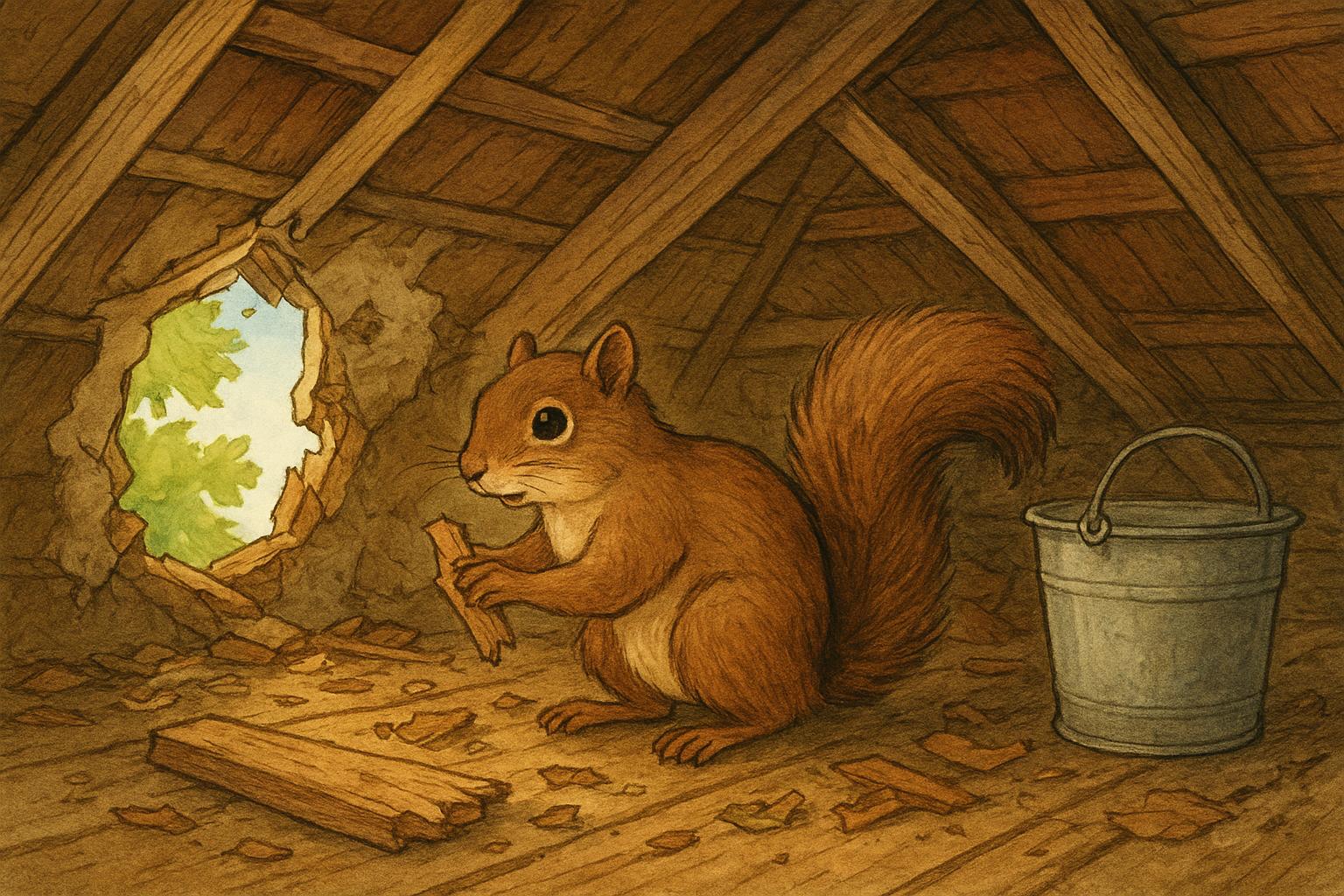
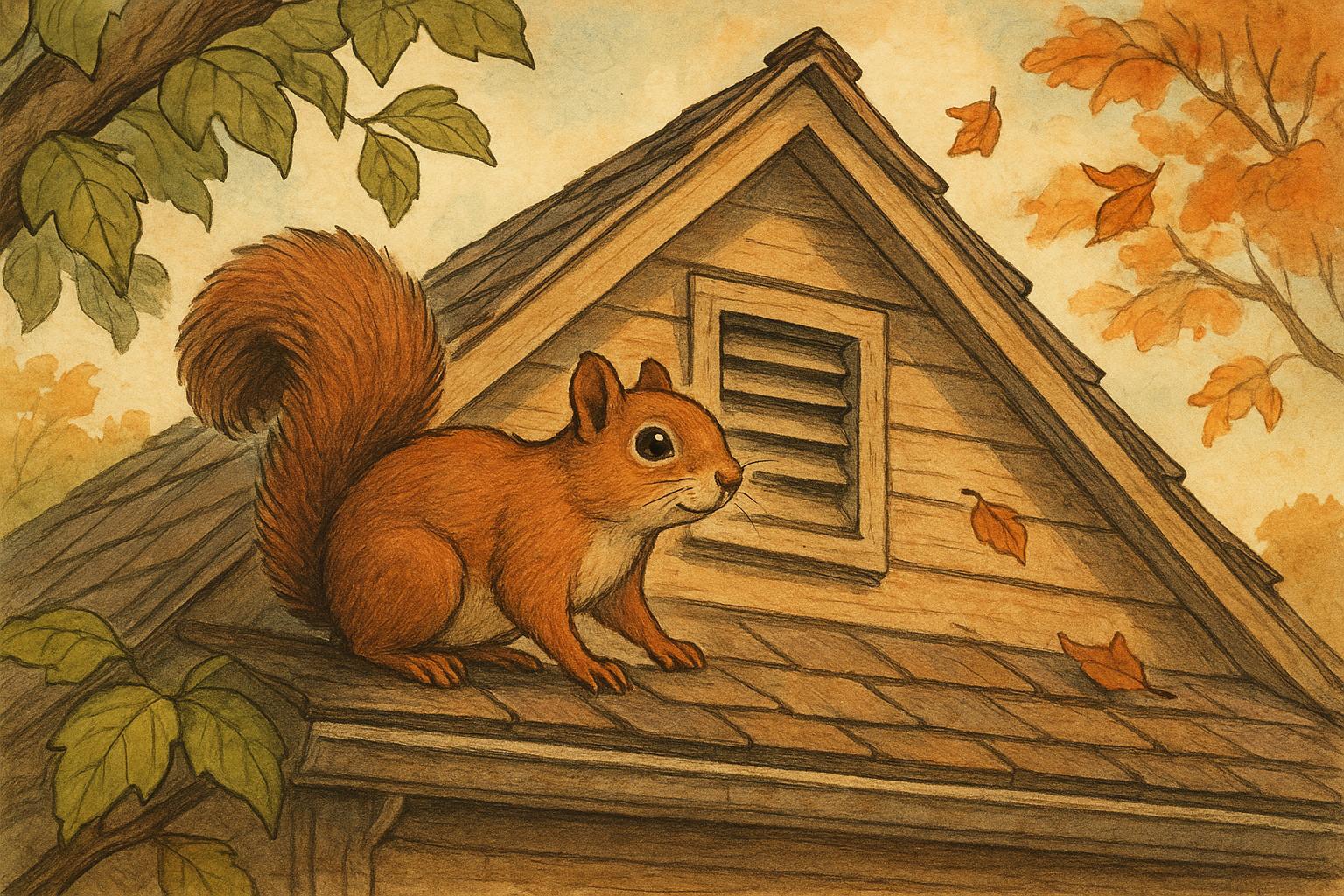
You wake up to distant scrabbling, a dropping here and a faint thump above your bedroom. Before you get dramatic—yes, it could be a midnight thriller starring a squirrel in a place it isn’t supposed to be: your attic. If you let it run, small mischief becomes major expense fast. Read on (with just a little disbelief) as we unpack what that noise likely means, how bad squirrel damage can get, and what to do about it tonight.
## Shocking Squirrel Damage Exposed In Your Attic Tonight
Squirrels are charming outside, acrobatic in trees, and somehow impossible to resist feeding from a stoop. Invite one into your attic—intentionally or not—and charm turns into chaos. Squirrel damage is often subtle at first: a few nibbled rafters, shredded insulation, or fresh gnaw marks at eaves. Left unchecked, it escalates to chewed wiring, ruined insulation, and droppings that bring secondary pests or disease concerns. The sooner you identify and address it, the less money and time you lose.
### How Squirrels Get In And Why They Stay
Squirrels are expert exploiters of small openings. They can squeeze through gaps as narrow as two inches and will use torn soffits, roof vents, loose flashing, and gaps around chimneys as entry points. They’re attracted by:
– Easy nesting spots with shelter and insulation.
– Nearby tree branches that give a pathway to your roof.
– Attics rich in insulation material suitable for dens.
The more comfortable the space, the more likely they’ll stay and reproduce. A breeding pair can multiply issues quickly, turning minimal squirrel damage into a full-scale renovation headache.
### Common Signs Of Squirrel Damage You Can Spot Tonight
Listen for late-afternoon or nighttime activity—squirrels are most active around dawn and dusk. Other indicators of a squirrel invasion include:
– Claw marks, gnawing, or holes in soffits and fascia.
– Fresh droppings (which differ from mouse droppings in size and shape).
– Displaced or shredded insulation and nesting material.
– Chewed electrical wires or damaged HVAC ducts.
– Odd smells from urine or nesting materials.
Spotting these early helps limit structural harm and health risks.
## Remedy 1: Exclusion And Repair To Stop Squirrel Damage
When discussing remedies and repairs, clarity and precision matter. Exclusion is the most reliable long-term method: remove access points, then make sure they cannot be reopened. This remedy focuses on prevention, structural repair, and humane exclusion tactics.
Materials Required
– Heavy-gauge galvanized hardware cloth (1/4″ or 1/2″ mesh).
– Exterior-grade caulk and expanding foam (for tiny gaps).
– Galvanized steel flashing and metal vent covers.
– Exterior screws, washers, and metal strapping.
– Ladder, work gloves, safety glasses, and a headlamp.
– Tin snips, drill, caulk gun, and reciprocating saw for larger repairs.
– Optional: One-way exclusion door (commercially available) — only if state/local wildlife regulations allow.
Step-By-Step Application
1. Conduct a Night Survey: At dusk, listen and watch rooflines and eaves to locate noise sources. Use binoculars and a flashlight to inspect gaps.
2. Map Entry Points: From ground level and attic (carefully), mark all holes, chewed areas, and loose vents. Photograph for reference.
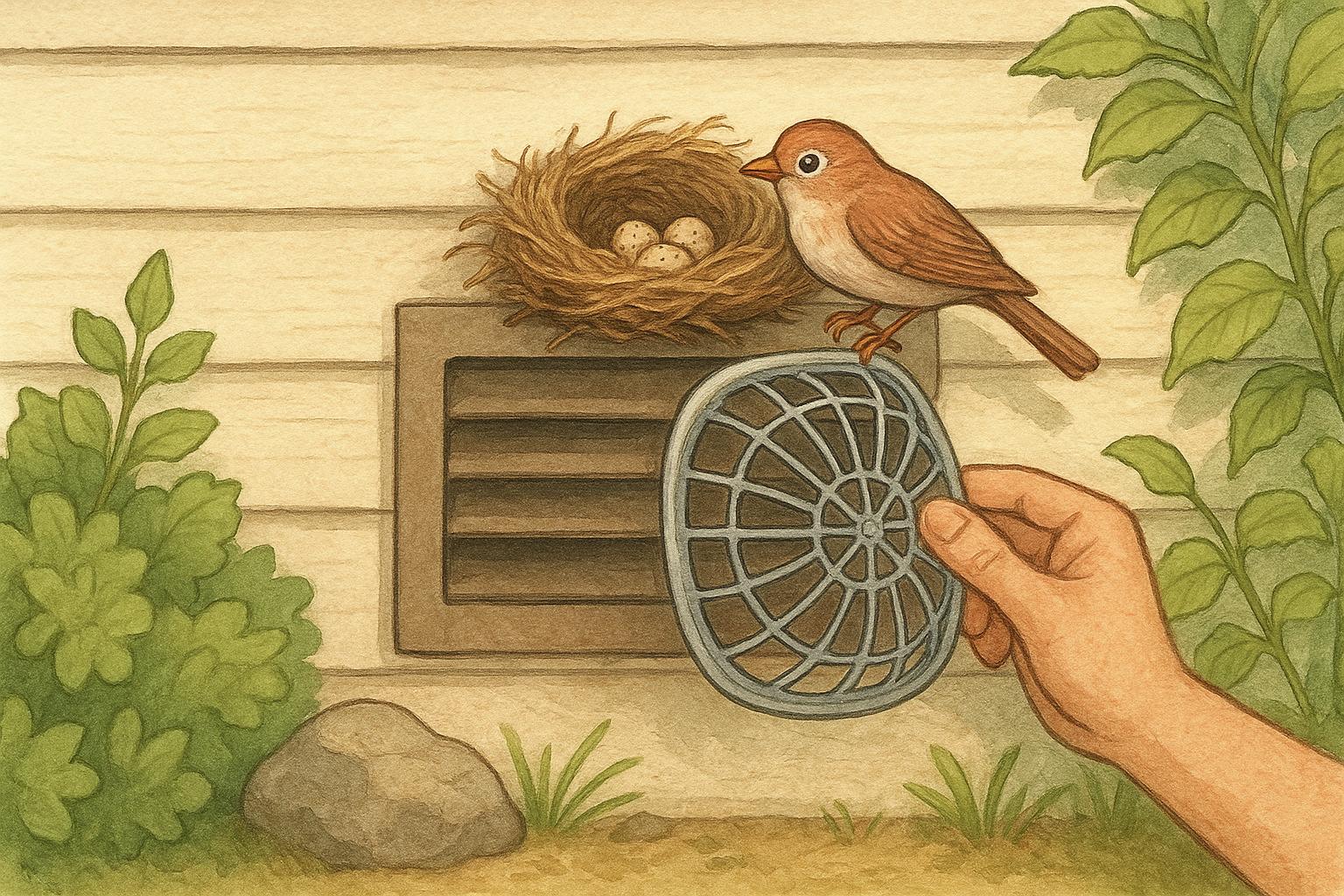
3. Temporarily Close Large Gaps (If No Animals Inside): For vents or larger holes where you are sure no animals are trapped, install hardware cloth secured with screws and washers. For uncertain spots, do not seal entry until you confirm the attic is clear to avoid trapping animals inside.
4. Install One-Way Exclusion Doors (If Needed): Where squirrels are definitely in residence, professionally install a one-way door that lets animals exit but not return. Monitor for at least 48 hours to ensure all residents leave.
5. Permanently Repair Gaps: Replace damaged fascia, soffit, or flashing with galvanized metal. Use hardware cloth over vents and cover edges with flashing to prevent chewing and prying.
6. Seal Small Gaps: Use exterior caulk for hairline cracks and expanding foam for cavities, trimming excess after curing. Reinforce with metal where gnawing could occur.
7. Trim Trees And Remove Pathways: From the ground, trim back branches to at least 8–10 feet from the roofline to reduce access.
8. Final Inspection: After repair, monitor nightly activity for a week. Re-check for fresh gnawing or attempts to re-open barriers.
Note: If you find evidence of young squirrels or are unsure how many are inside, call a licensed wildlife removal professional. Improper sealing can trap and harm wildlife and may violate local regulations.
#### When To Call A Professional For Exclusion Work
If entry points are high, repairs require roof work, or electrical wiring is involved, hire contractors experienced in wildlife exclusion. Professionals can also perform pre- and post-exclusion attic checks to ensure no animals are trapped inside.
## Remedy 2: Cleanup, Repairs And Insulation Replacement After Squirrel Damage
Once squirrels are excluded, you must address damage left behind. This section is technical: follow safety steps and, when in doubt, hire remediation pros.
Materials Required
– Protective gear: N95 respirator or better, disposable coveralls, gloves, eye protection.
– Heavy-duty garbage bags and sealed containers.
– Replacement insulation batts or blown-in insulation and blower machine (or hire insulation contractor).
– Plywood or roof sheathing for structural repairs.
– Electrical tester and licensed electrician (if wiring suspected to be chewed).
– Disinfectant cleaner and enzyme-based odor neutralizer.
– Garden rake, shovel, and HEPA vacuum (professional grade preferred).
Step-By-Step Restoration
1. Safety First: Wear protective gear. Squirrel droppings can harbor pathogens; minimize airborne dust during cleaning.
2. Inspect Structural Integrity: Check rafters, joists, roof sheathing, and HVAC ductwork for gnawing or structural compromise. If structural elements are damaged, consult a carpenter or roofer.
3. Assess Electrical Risk: If you suspect chewed wiring, shut off circuits at the breaker and have a licensed electrician inspect and repair. Damaged wiring is a fire hazard and must be handled professionally.
4. Remove Contaminated Insulation: Carefully remove spoiled or soiled insulation into sealed bags. Use a HEPA vacuum to collect loose debris and droppings; avoid sweeping which aerosolizes particles.
5. Sanitize Surfaces: Apply disinfectant to contaminated areas. For persistent odors or urine, use enzyme-based neutralizers per manufacturer instructions.
6. Replace Insulation: Install new insulation matching R-value recommendations for your climate. Ensure even coverage and proper ventilation clearance around soffits and eaves.
7. Repair Cosmetic And Structural Damage: Replace torn vapor barriers, drywall, or attic flooring. Check for and repair any roof leaks that could have been exploited.
8. Final Verification: After restoration, re-inspect exclusion points to ensure repairs remain secure and document work for home insurance records.
### Health And Secondary Pest Concerns After Squirrel Damage
Squirrel nests and droppings can encourage insects, mites, and flies, and may attract predators. Proper cleanup reduces these secondary issues. If rodent or insect infestations persist, work with pest control professionals who can target the specific problem without harming restored attic spaces.
### Frequently Asked Questions About Squirrel Damage (Short And Helpful)
– How fast can squirrel damage escalate? Pretty fast—within weeks you can see insulation shredded and gnawed wiring; signs multiply during breeding season.
– Will repellents stop them? Odor repellents are only marginally effective; physical exclusion is the reliable solution.
– Can I do this myself? Yes for small-scale exclusion and cleanup if you’re comfortable on ladders and following safety protocols, but hire pros for electrical, roof, or structural repairs.
A little vigilance tonight can prevent a big bill tomorrow. If those scuttling noises persist after you’ve checked the usual spots, consider the remedies above—start with exclusion and follow with cleanup and repairs in a careful, stepwise fashion. And remember: squirrels look innocent from the yard, but in the attic they’re tiny demolition experts with big appetites for insulation.


Leave a Reply