

So you want a backyard pond that hums with dragonflies, hosts a polite parade of frogs, and maybe becomes the neighborhood bird spa. Good news: with the right plants, your little watery ecosystem will do most of the work for you. I’ll walk you through practical choices, a formal planting and balancing recipe, and a few troubleshooting tips — all without making you wade in muck more than necessary.
## How To Choose Pond Plants For A Wildlife Backyard Pond
Choosing the right pond plants is about matching functions to habitat. Some plants oxygenate the water, some hide fish from herons, and some offer nectar and pollen for pollinators. Start by thinking: what do you want the pond to do? Provide habitat? Be a reflective centerpiece? Feed tadpoles? Your answers will guide which pond plants belong where.
### Understand Plant Categories And Their Roles
Plants fall into three broad categories for ponds, and each category performs different chores.
#### Submerged Plants
Submerged species live entirely under the surface. They oxygenate water, outcompete algae for nutrients, and provide nursery space for aquatic invertebrates. Examples include hornwort and elodea.
#### Marginal Or Emergent Plants
These grow at the pond edge with roots underwater and stems or leaves above. Marginals like iris, pickerelweed, and cattails stabilize banks, provide perching and nesting sites, and help filter runoff.
#### Floating Plants
Floating plants rest on the surface and shade the water. Think water lilies, duckweed, and water hyacinth (note: hyacinth is invasive in many areas). They reduce algal blooms by limiting light and can create sheltered microhabitats.
### Match Plants To Pond Size, Depth, And Light
A tiny container pond needs a different plant palette than a multi-tiered garden pond. Depth zones matter: most marginals prefer shallow shelves (6–18 inches), true bog plants thrive in very wet but not submerged soil, and deeper basins (2–4 feet) suit lilies and submerged oxygenators.
– Full sun spots favor broad-leaved water lilies and many marginals.
– Part shade is fine for pickerelweed and some irises.
– Deep shade limits options to a few tolerant species and floating plants.
### Consider Wildlife Benefits Before Looks
For a wildlife-focused pond, prioritize native pond plants that local insects and amphibians recognize as food and shelter. Natives often seed local food webs better than exotic ornamentals. For example, native irises and rushes support many local insects which in turn feed birds and amphibians.
## Planting And Balancing Pond Plants: Materials And Steps
When it’s time to plant, follow this formal, precise process. Proper planting prevents later problems such as uprooting, nutrient spikes, and invasive spread.
Materials (Ingredients)
– Appropriate planting baskets or pots (coir, plastic, or ceramic)
– Heavy pond planting compost or loam (low in peat; avoid ordinary garden compost)
– Gravel (pea gravel) to top pots and secure soil
– Selected pond plants (submerged, marginal, floating as per plan)
– Pond liner or pre-dug pond with shelves at planned depths
– Gloves, trowel, and a helper (optional)
– Clean water source for filling and topping up
Step-by-Step Creation And Application
1. Prepare Containers: Use baskets or pots sized for the plant’s mature size. Line baskets with pond-safe fabric if desired. Fill containers with pond planting compost, packing lightly — roots need firm contact but not compaction.
2. Plant Selection And Placement: Place submerged oxygenators directly in deep areas or in containers sunk below the surface. Position marginals on shallow shelves at their recommended depths (check plant tags). Floating plants are simply placed on the surface; if they spread too aggressively, thin them.
3. Secure And Cover: Add a 1–2 inch layer of pea gravel over the soil to prevent particulate wash and discourage fish from disturbing roots. Gravel also weights the pot to prevent buoyancy.
4. Install In Pond: Gently lower containers into place. For heavy pots, use two people to avoid falls. Ensure the crown of marginal plants is at the correct height relative to the waterline.
5. Initial Watering And Fill: Fill the pond slowly to avoid disturbing placements. If filling from tap water, dechlorinate or use aged water to protect sensitive fauna and plant roots.
6. Monitor Nutrient Levels: In the first 4–8 weeks, watch for green water (free-floating algae). Controlled shading with floating plants and allowing submerged plants to establish will curb blooms. Avoid fertilizer for at least the first season.
7. Routine Adjustments: Trim dead foliage, thin floating mats, and repot overgrown containers yearly to prevent nutrient buildup. Record locations and species so future management is easier.
When planting, be formal and methodical: accurate depth, correct substrate, and logical spacing reduce later maintenance. This recipe minimizes common missteps like burying crowns too deep or overcrowding which can cause rot.
### How Many Plants Should You Start With?
A simple rule of thumb: cover about 60–70% of the pond surface with a mix of plant types over the first two seasons. Too sparse invites algae; too dense chokes oxygen exchange and open-water species. A balanced first-year planting might be: one oxygenator per every 2–3 square meters of surface, 3–5 marginal species around the edge, and a moderate number of floating patches.
## Common Problems And Practical Fixes
Even with good choices, ponds present predictable problems. Here are formal remedies for the top three complaints.
Algae Blooms
– Cause: Excess nutrients (phosphates, nitrates), too much light, or insufficient plant competition.
– Remedy: Reduce nutrient inputs (avoid fertilizing), add or increase submerged oxygenators and floating shade, and remove decaying matter. For persistent blooms, perform partial water changes and vacuum accumulated sediment.
Plants Overgrowing Or Spreading Invasively
– Cause: Some ornamentals reproduce rapidly or spread via rhizomes.
– Remedy: Contain them in baskets, regularly thin runners, and remove flower heads to prevent seeding. Replace known invasive species with native alternatives.
Pests And Herbivory
– Cause: Ducks, fish, or mammals may nibble emergent growth.
– Remedy: Protect newly planted marginals with chicken wire cages until established; use perimeter planting to distract grazers; provide shallow refuges for fish.
### Maintenance Schedule And Recordkeeping
Establish a simple schedule: monthly visual checks, seasonal trimming and repotting in spring, and debris removal in autumn to reduce winter muck. Keep a log of plant species, planting dates, and interventions. Good records help you track which pond plants are thriving and which might need replacing.
## Choosing Native Vs Ornamental Pond Plants
Native pond plants are typically the best choice for wildlife ponds. They co-evolved with local insects and amphibians, offering more suitable nectar, pollen, and structural habitat. Ornamentals often look great but may be sterile cultivars that provide limited ecological value or, worse, become invasive.
If you choose ornamentals for appearance, balance them with a core of native species. This gives you the aesthetic you want while maintaining ecological function.
### Legal And Sourcing Considerations
Some pond plants are regulated due to invasiveness. Before buying, check local invasive species lists. Buy from reputable nurseries that label plants clearly and avoid “free” water plants from unknown sources (they often spread hitchhiking species).
## Where To Place Plants For Maximum Wildlife Benefit
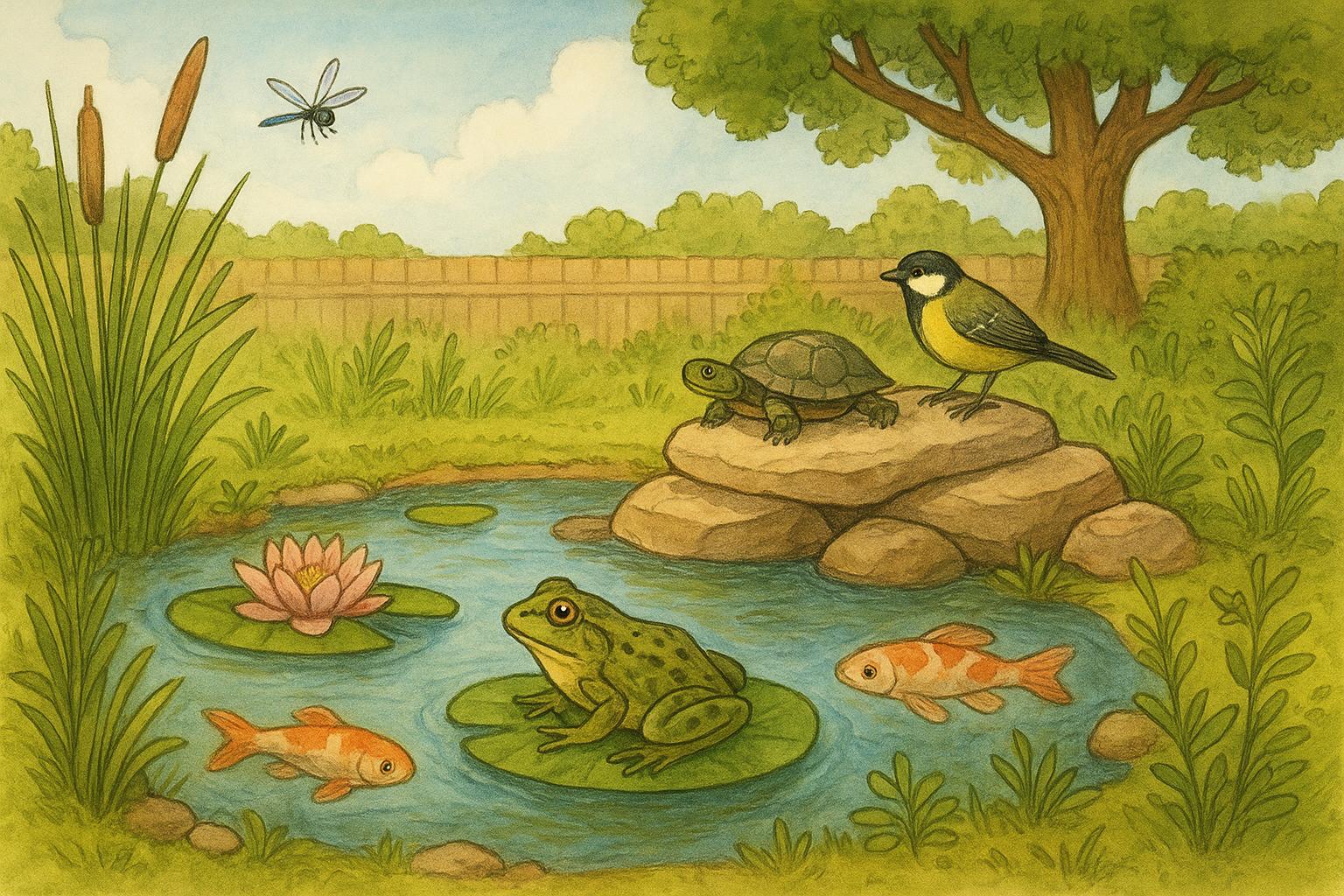
Scatter structural diversity around the pond: dense marginal clumps for frogs, floating patches for dragonflies to perch, and submerged tangles for invertebrates. Place sheltered bays with shallow shelves to create warm, vegetated hotspots where amphibians can lay eggs and dragonfly larvae can develop.
If you want a focal point, use a water lily in a central deep pocket, but surround it with emergent and marginal plantings to provide edges and hiding spots.
A final practical tip: start small and add gradually. Ponds change as plants establish and wildlife arrives; a paced approach lets you observe, adjust, and enjoy the slow, satisfying work of building a living backyard retreat.








Leave a Reply