
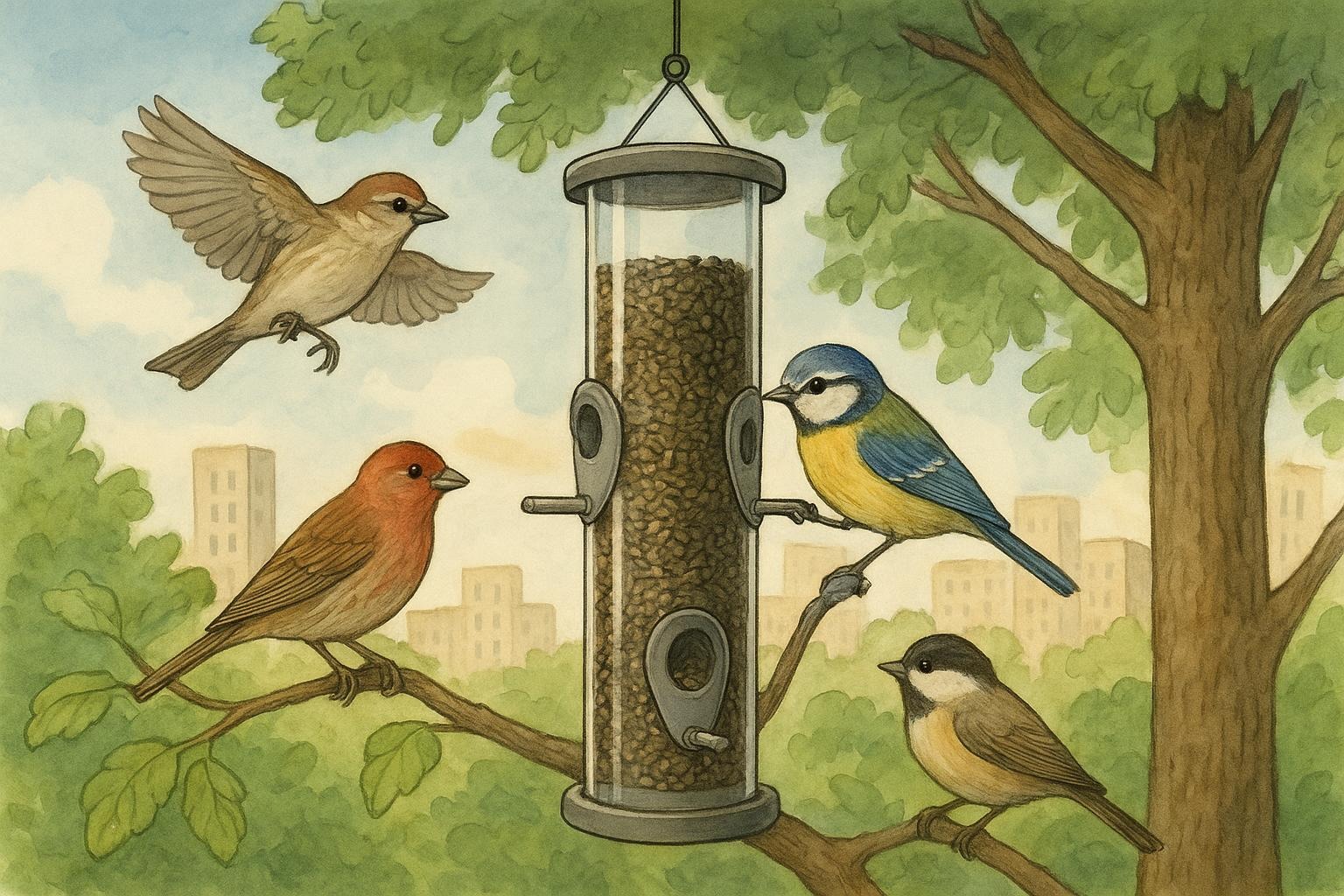
Welcome to a small-city wildlife experiment that doesn’t require a lab coat: putting out nyjer seed and mastering the tiny drama of siskins, goldfinches, and the occasional curious chickadee. If you’ve got a balcony, stoop, or narrow yard, tube feeders filled with this peanut-sized treasure can turn your space into a miniature concert hall of high-pitched tweets. Relax—this guide is part backyard banter, part careful instruction, and all about making the most of those finicky little diners.
## Nyjer Seed Tube Feeder Basics
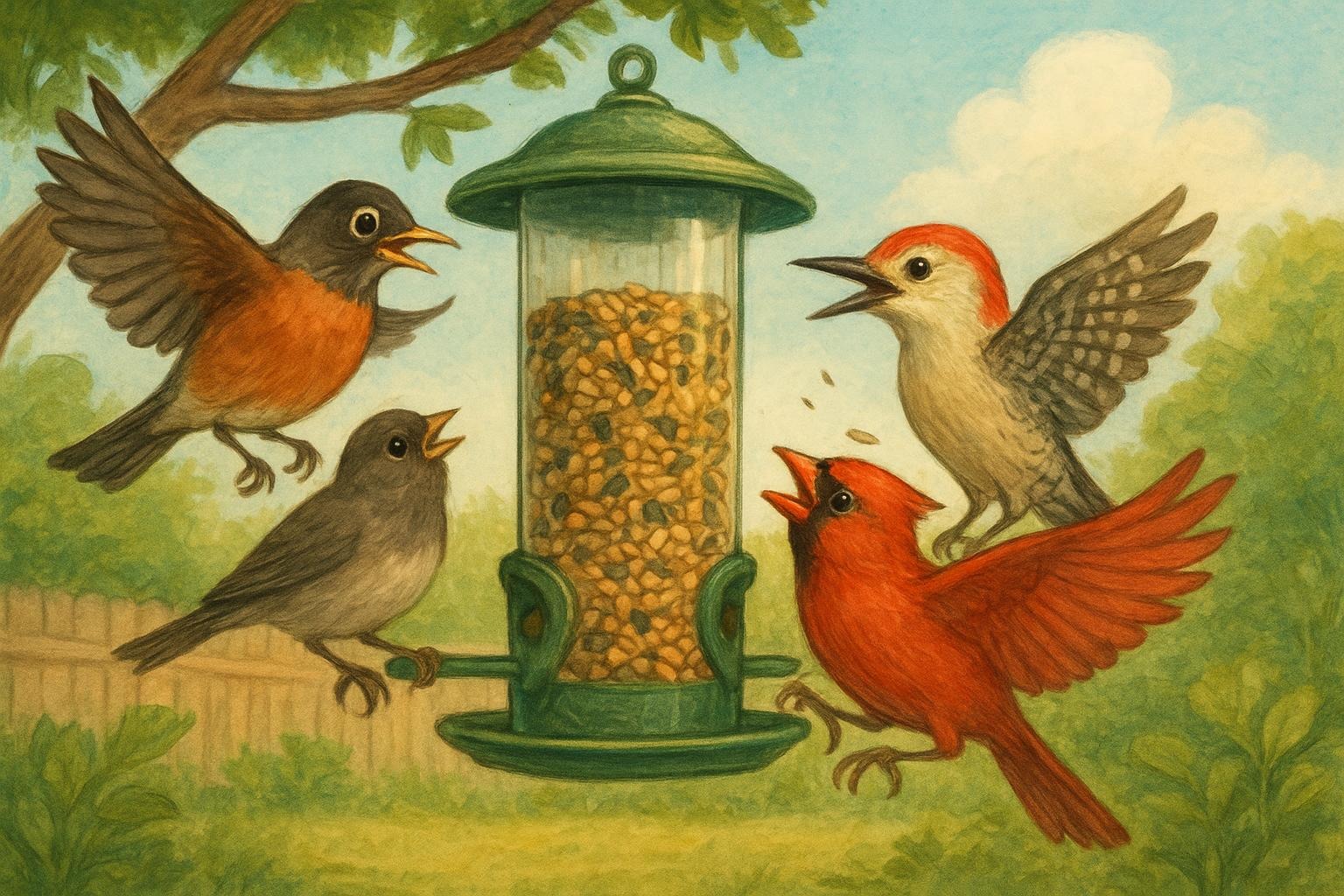
Tube feeders are the Versailles of small-bird dining when you’re using nyjer seed. They’re slim, compact, and offer perches and ports sized for delicate feet and beaks. Because nyjer seed is tiny and oil-rich, it behaves differently than sunflower or hulled corn: it pours, it clings, and it attracts a very specific guest list.
### Why Tiny Birds Love Nyjer Seed
Nyjer seed is essentially high-calorie confetti for small songbirds. Its small size and high oil content provide dense nutrition with quick energy—perfect for small bodies that burn calories fast. Goldfinches, siskins, redpolls, and some sparrows prefer it because their bills are adapted for extracting these seeds. Urban areas, with fewer natural thistle sources, can become magnets when feeders are filled with quality nyjer seed.
#### Seed Quality And Freshness
Fresh nyjer seed looks glossy and smells faintly nutty. Old seed loses oils, becomes dusty, and can sprout mold if wet. Because the seeds are so small, moisture is the enemy: it clumps and blocks ports, and it fosters spoilage. Rotate stock regularly and store bulk bags in a cool, dry place. Avoid buying cheap mixes that contain filler seed—tiny feeders and picky birds both dislike surprises.
## 1. Nyjer Seed Feeder Setup To Maximize Visits
When you want predictable success—more birds, less droppings on your balcony—setup matters. The following remedy-style instructions are precise and intended to be followed for reliable results.
Required Materials:
1. A quality tube feeder with small ports and perches sized for finches.
2. 5–10 lb. of reputable nyjer seed (buy sealed bags).
3. A short, sturdy hanger or bracket (squirrel-resistant if possible).
4. A small platform or tray (optional, for catchment).
5. Fine brush and mild dish soap for cleaning.
6. A rain guard or baffle (adjustable, depending on mounting).
7. Gloves and a scoop for hygienic filling.
Step-By-Step Feeder Setup And Application:
1. Clean the feeder: Before first use and monthly thereafter, disassemble and wash with warm water and mild soap. Rinse thoroughly and air dry. Cleanliness prevents bacterial growth and mold.
2. Inspect ports: Confirm that feeding ports are the right diameter for small bills. Replace any broken parts.
3. Fill carefully: Using gloves and a scoop, pour nyjer seed into the feeder. Fill to about 80% capacity to reduce spillage and movement that can dislodge seed.
4. Position for visibility: Hang the feeder 5–15 feet from cover (shrubs or small trees) to allow birds quick shelter access without making predators ambushable. In urban settings, an unobstructed view from a window increases your enjoyment and reduces accidental collisions.
5. Protect from weather: Install a rain guard above the feeder and, if necessary, a small tray underneath to catch spills. Ensure the feeder is slightly tilted so water won’t pool in ports.
6. Monitor and rotate: Replace seed every 2–3 weeks in warm months or sooner if damp. Discard any seed that appears clumped, discolored, or foul-smelling.
7. Keep a schedule: Birds respond to consistency. Refill before the feeder is empty to maintain predictable traffic.
This setup emphasizes safety and consistency. Proper maintenance of nyjer seed and feeder hygiene will not only attract more birds but also reduce disease transmission.
### Placement Tips For Cozy City Spaces
City songbirds exist in a network of microhabitats—ledges, planters, wires, and the occasional potted ficus. Mount the feeder where you can see it from your favorite chair but where cats and raccoons can’t easily launch an attack. Balconies above human activity work great because ground-based predators have a tougher time. If you have aggressive pigeons or starlings, placing the feeder higher and using baffles can help.
#### Timing And Seasons
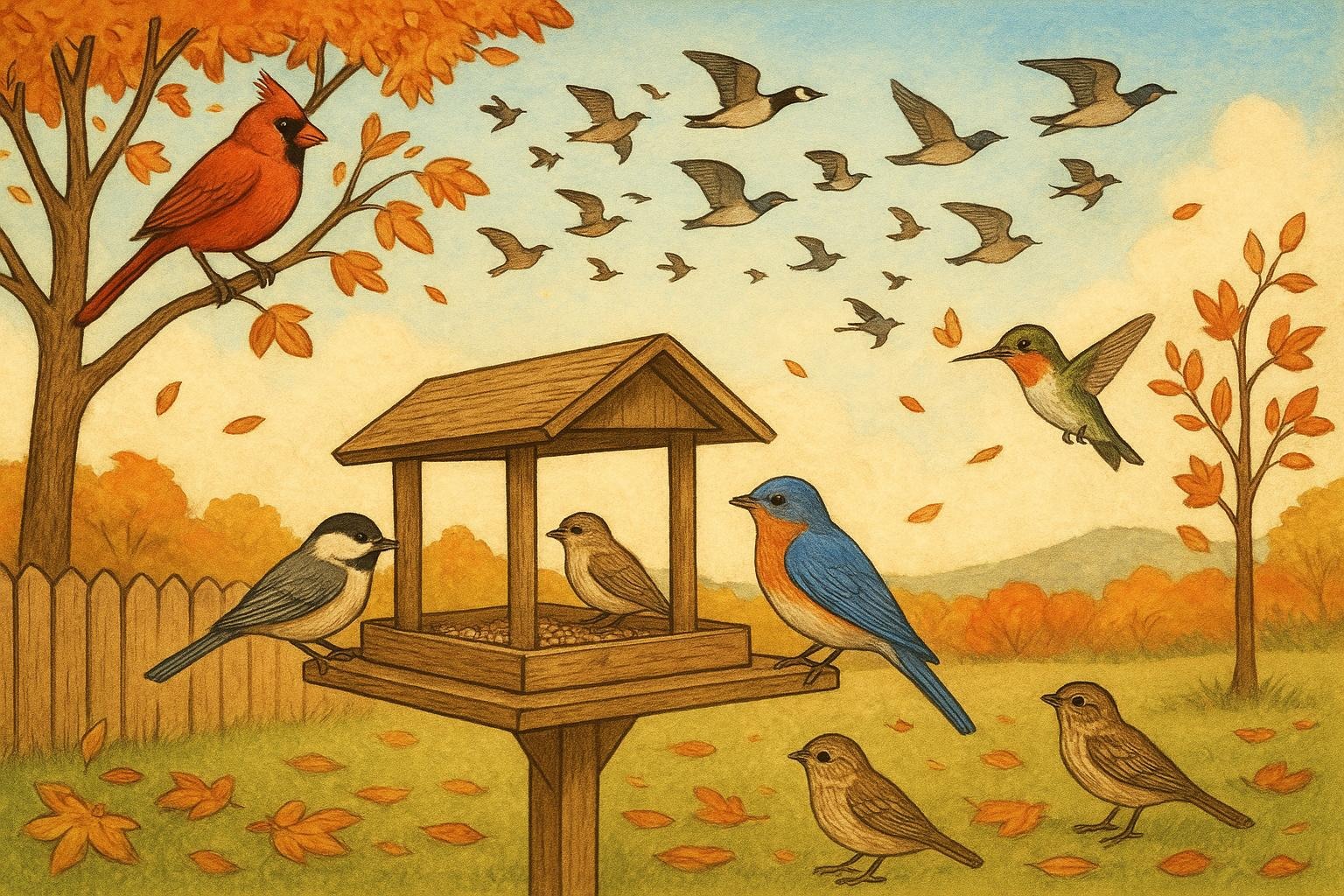
Nyjer seed is a year-round option, but migratory influxes can spike interest in spring and fall. During molt or cold snaps, birds rely heavily on high-fat foods. Keep feeders topped during especially cold nights if you want steady attendance.
## 2. Keep Nyjer Seed Fresh And Wildlife-Friendly
This second remedy addresses both spoilage and non-target pests. Read this carefully—these steps are practical, evidence-based, and designed to minimize waste and conflict with urban wildlife.
Required Materials:
– Airtight storage containers (plastic bins or metal cans).
– Desiccant packets (optional for humid climates).
– Squirrel baffle or weight-activated feeder mechanism.
– Fine mesh feeder socks (optional for extra protection).
– Sturdy cleaning brush.
Step-By-Step Preservation And Pest Management:
1. Store properly: Transfer unopened bags of nyjer seed into airtight containers to block moisture and pests. For humid environments, include desiccant packets or use a dehumidified storage area.
2. Prevent mold: Inspect seed weekly for any sign of moisture or mold, especially after heavy rain or in humid summers. Discard compromised seed immediately—do not attempt to dry and reuse.
3. Install deterrents: Use squirrel baffles, weight-sensitive perches, or placement strategies (higher poles with baffles) to deter larger birds and squirrels that can contaminate or waste seed.
4. Use feeder socks or covers: In heavy bird traffic areas, a fine mesh sock over the feeder can reduce seed leakage and deter larger beaks. Ensure the sock doesn’t trap moisture.
5. Control spillover: Place a small tray under the feeder to capture stray seed. Clean this tray frequently to reduce germination and rodent attraction.
6. Maintain cleanliness: Regularly brush away hulls and debris from perches and landing zones to keep fungus and insect pests at bay.
These measures reduce waste, prolong seed life, and lower the risk of attracting undesired critters to your urban patch of nature.
### Troubleshooting Common Tube Feeder Problems
If birds aren’t coming, the reasons are usually practical, not personal. Check three things first: Is the nyjer seed fresh? Is the feeder clean and functional? Is the placement visible and safe? Replace old seed, adjust the feeder height, or alter nearby cover. If seed clogs ports, try a different feeder design with narrower or differently shaped ports.
#### When Large Birds Dominate
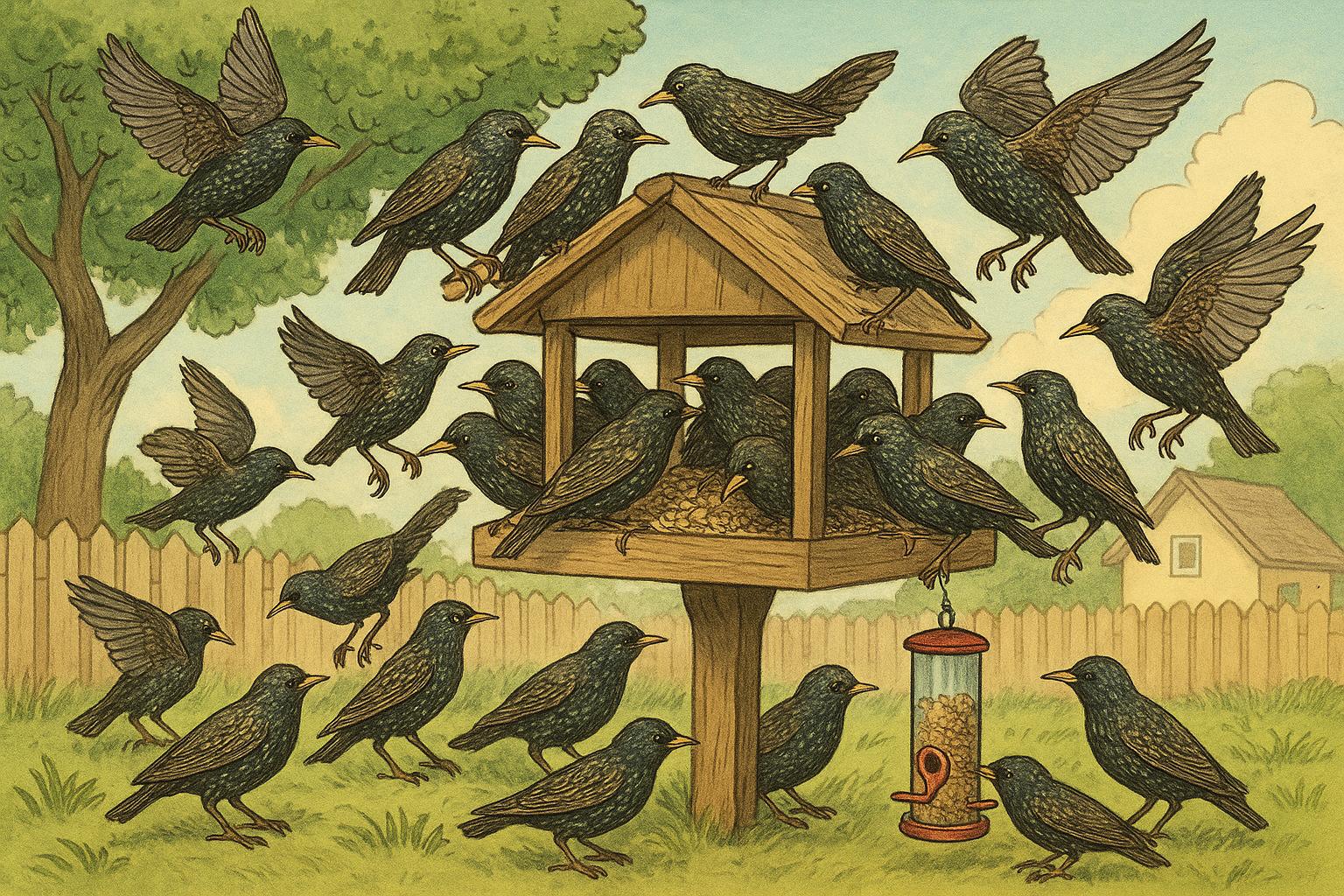
If starlings or grackles have taken over, switch to feeders with smaller perches and tighter feeding ports. Adjustable-length perches can be shortened so that only small birds can perch comfortably. For persistent issues, alternating feeding times (off-peak human hours) can help reestablish patterns favoring the smaller species.
## Attracting Specific City Songbirds With Nyjer Seed
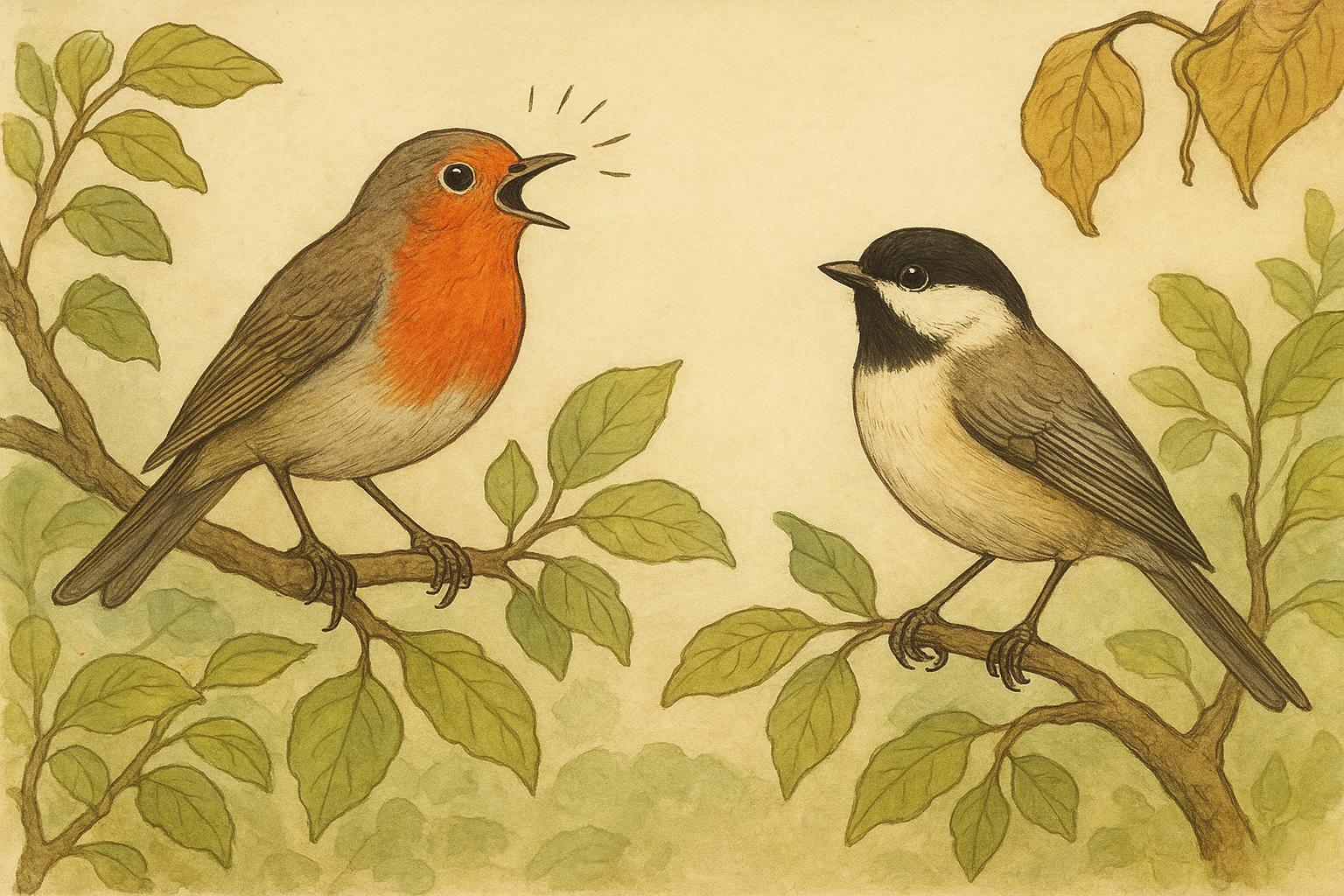
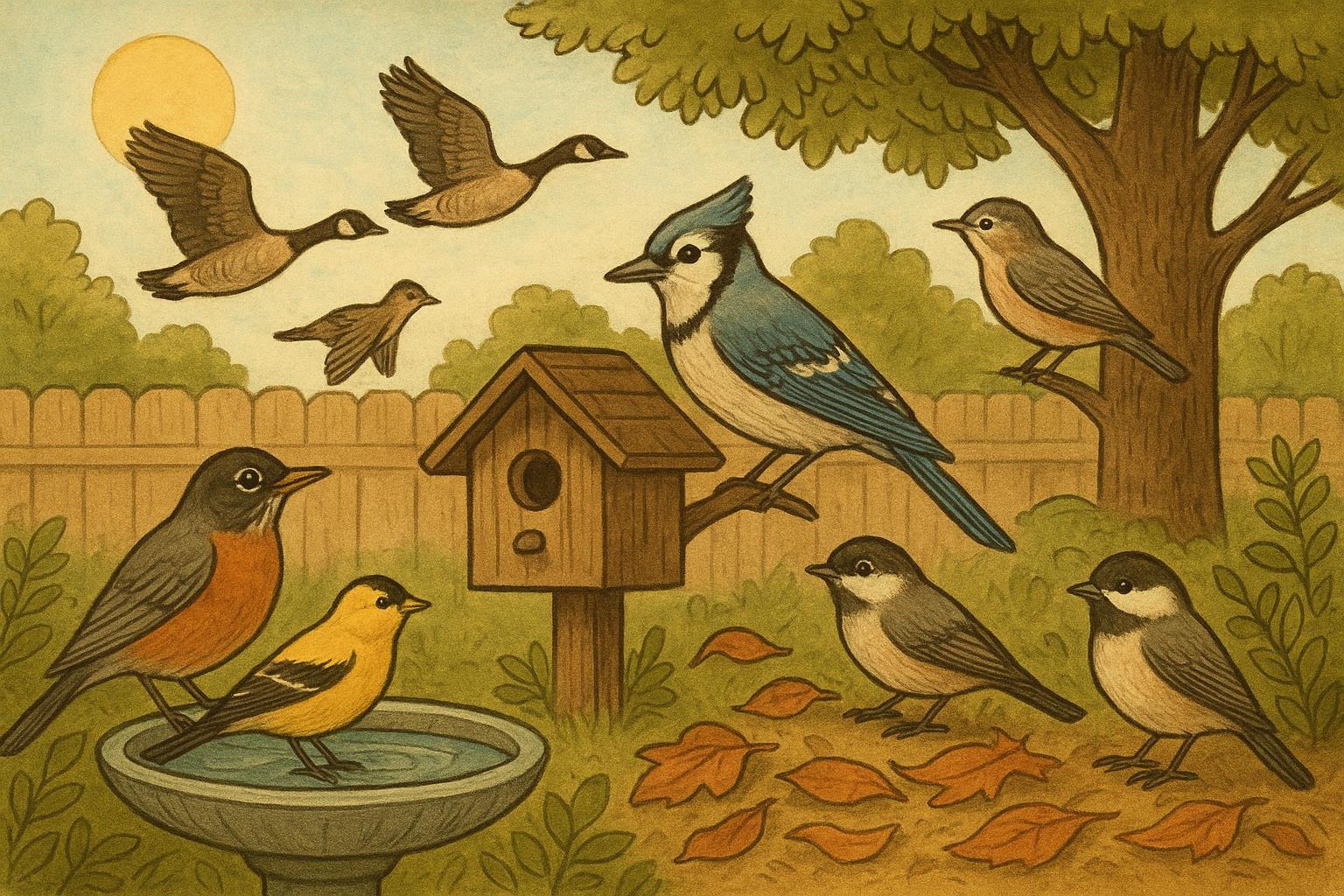
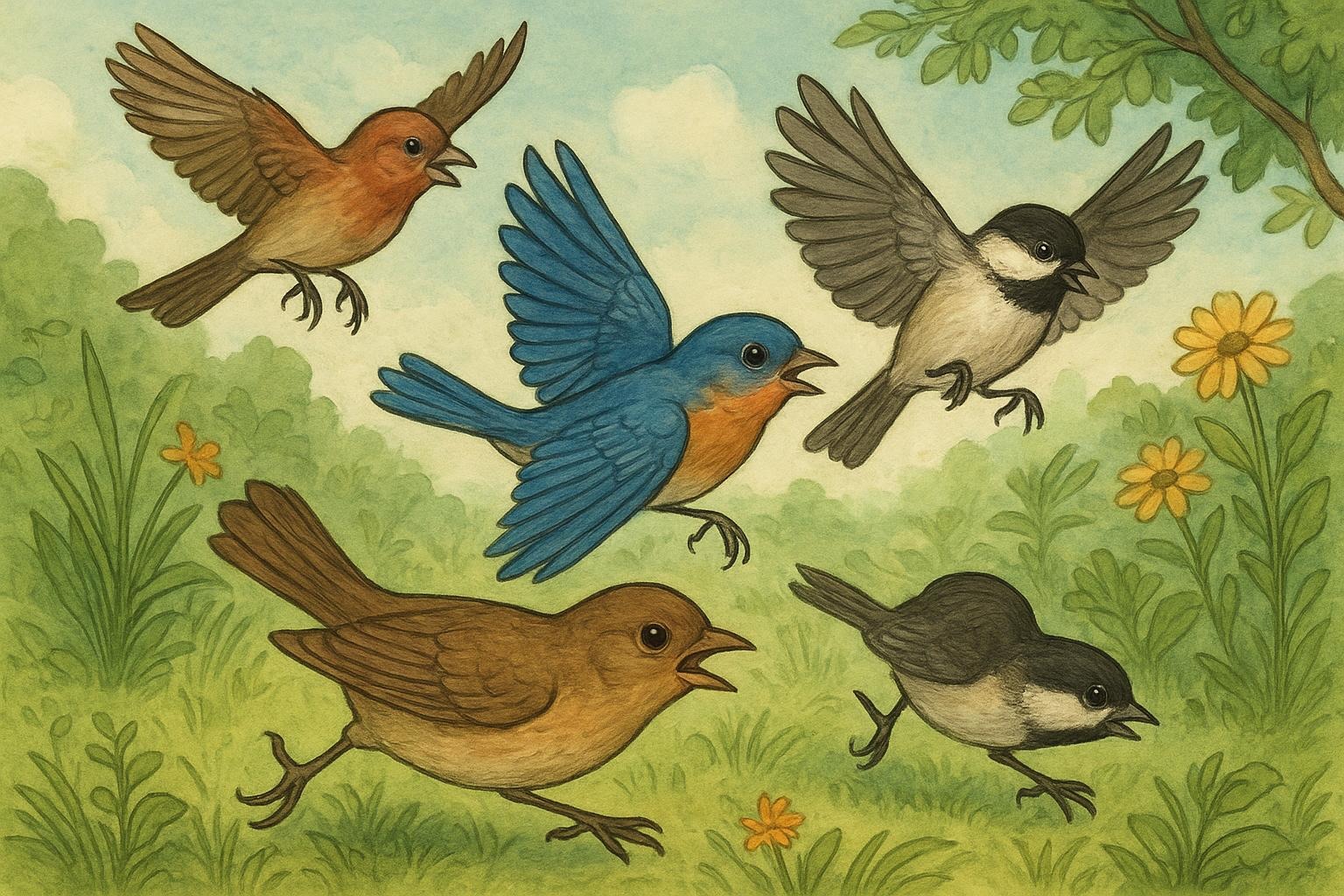
Different species have different preferences and acrobatics. American goldfinches are acrobats—they’ll cling to tiny ports and enjoy nyjer seed most. Siskins and redpolls are more likely in northern city pockets or during migration bursts. Present nyjer seed consistently and combine with nearby native plantings (like coneflower, asters, and thistles) if you have the space; this encourages natural foraging behaviors and provides alternative food sources.
#### Watching Without Disturbing
Set up your viewing spot so birds don’t see sudden movement. Use binoculars or a camera with a decent zoom. City songbirds are surprisingly tolerant when approached slowly, but sudden noise or kids chasing bubbles can empty a feeder faster than you can say “finch.”
A final practical note: when buying nyjer seed, choose reputable suppliers and look for sealed packaging that indicates freshness. This small investment yields more visits, less waste, and a longer-lasting feeding setup—plus the daily soundtrack of tiny city songbirds doing what they do best.




Leave a Reply