

You stepped outside after dusk, heard a soft hoo or a high-pitched trill, and now your curiosity is officially piqued. Watching night birds in backyards can feel like being part of a secret club — one that sometimes requires a little Sherlock Holmes, a red flashlight, and patience. Below are practical, friendly techniques for telling who’s calling, perching, or cruising over your yard.
## Owl Identification Basics For Backyards
Owl identification in a suburban or rural backyard starts with simple observations: size, silhouette, sound, and behavior. You don’t need to be an expert to get useful clues; you just need to know what to look for. Start by recording three basic data points when you spot or hear a bird: where it was, what it sounded like, and roughly how big it seemed. Those three details reduce possibilities fast.
### Size, Shape And Silhouette
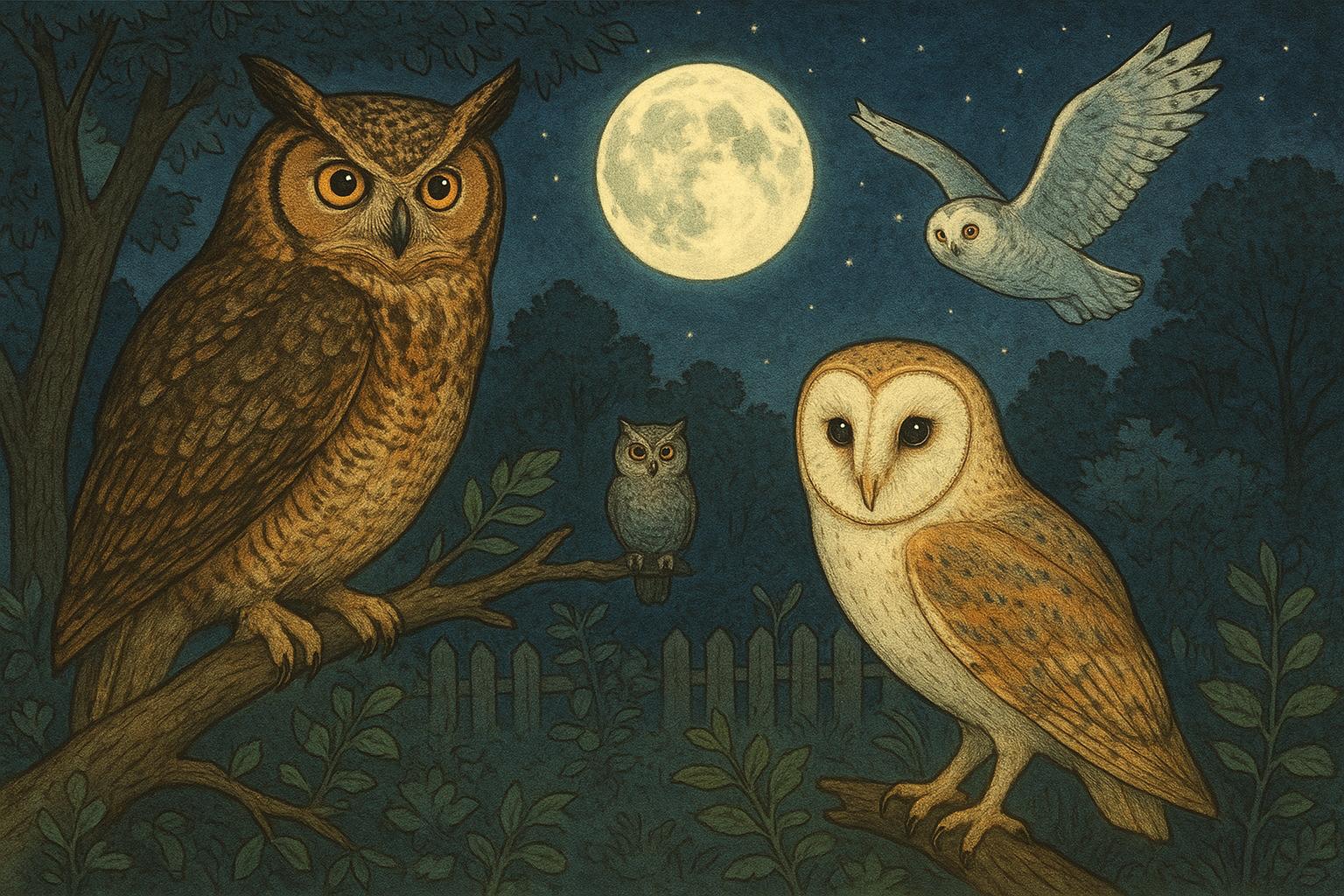
Silhouette says a lot. A compact, rounded bird with a stocky body and no ear tufts will lead you toward species like the barn owl or northern saw-whet. Long-winged, heart-faced shapes usually indicate a barn owl in patrol mode. Conversely, big, broad-shouldered shapes with ear tufts are often great horned or long-eared owls.
– Perch posture matters: Screech owls look small and squat; great horned owls look large and menacing (they kind of enjoy looking intimidating).
– Wingspan estimates help: If you know your backyard’s palm tree height or compare to a known object (a car hood, fence post), you can judge whether the bird is likely a small (10–12 inches), medium (14–18 inches), or large (20+ inches) owl.
### Calls, Songs And Vocal Clues
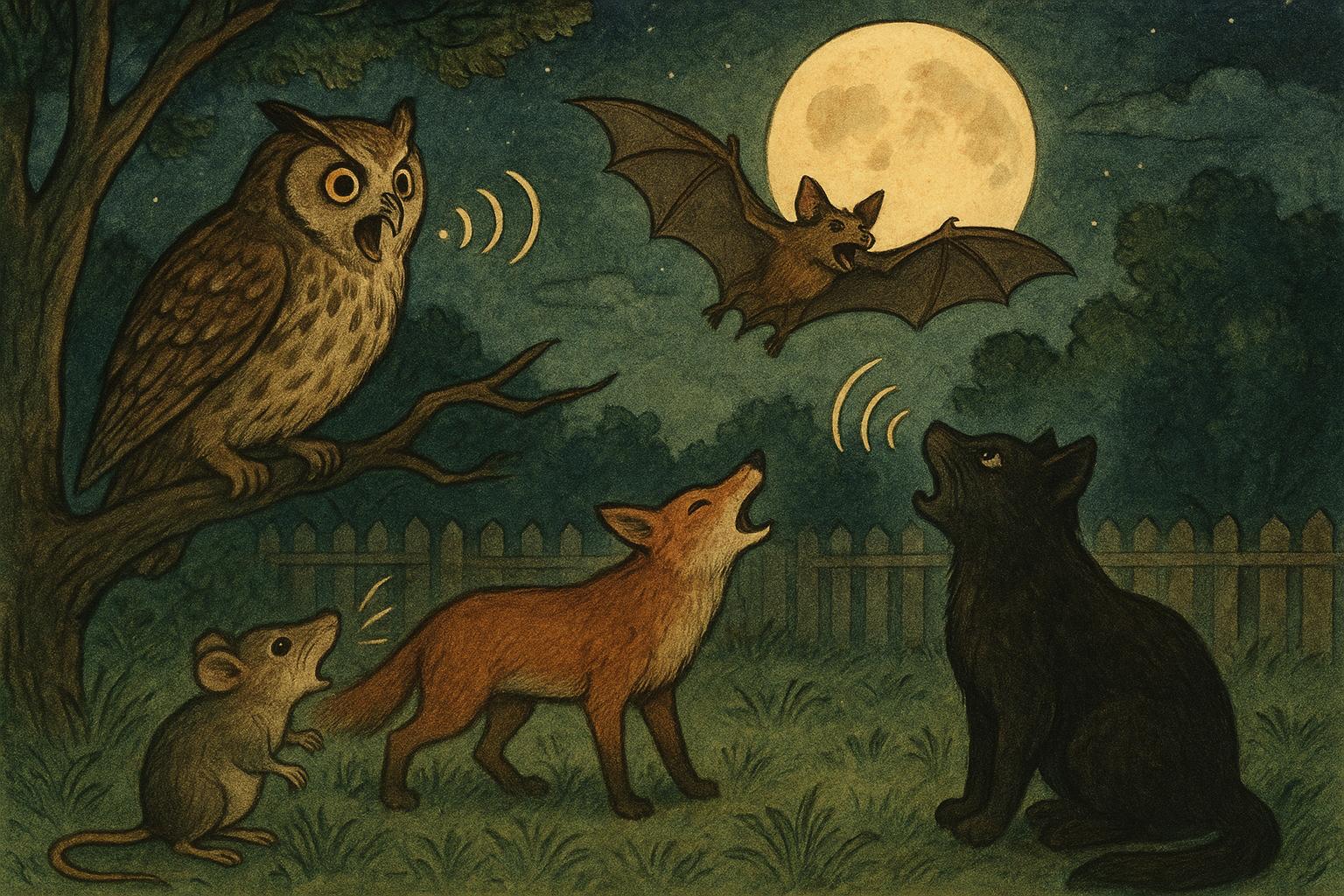
Sound is the single most reliable identification tool at night. Each species has a characteristic voice. Keep a phone or recorder handy; even a short clip is immensely helpful later for playback analysis.
– Barred Owl: Deep hoots, often with a clear “Who cooks for you? Who cooks for you-all?” rhythm.
– Eastern Screech Owl: Trills and soft whinnies; size-wise they’re tiny but loud for the effort.
– Barn Owl: Hissing screech, almost goat-like in intensity, not hooting.
– Great Horned Owl: Deep, resonant hoots that carry.
Apps and online databases can match recordings to species, but be cautious with automated IDs. Use them as a second opinion, not gospel. Throughout your practice, explicitly note that owl identification by sound is probabilistic; multiple species can produce similar notes under certain conditions.
#### Eyeshine, Movement And Flight Pattern
At night, an owl’s eyes will often reflect your light. Eyeshine color can range from yellow to orange to red depending on species and angle. Watch how the bird moves: wingbeats are slow and powerful in large owls, while smaller owls have quicker wingbeats. Silent flight (a whispery wing noise) is classic for many owls but not unique to one species.
## Where To Look And When
Timing and habitat narrow the field. Some owls favor open fields while others prefer mature woods. In backyards, check likely perches: tall dead branches, utility poles, barn rafters, or dense evergreens. Owls hunt from perches and swoop down to catch rodents — so look for them near lawns, garden edges, or fence lines that border fields.
– Seasonal behavior: Breeding season increases vocal activity; fall migration can bring different species through your neighborhood.
– Weather cues: Cold, calm nights often mean more visible hunting activity as small mammals move less, making them easier to ambush.
Remember, practicing good etiquette: never disturb an owl that’s nesting or roosting. Respect distances and avoid shining bright lights directly at them.
### Pellets, Feathers And Other Physical Clues
If you want physical proof, look for owl pellets under common perches. Pellets are compacted masses of fur and bones regurgitated by owls. Dissected pellets reveal prey species and sometimes allow identification by prey preference. Feathers left at a roost can also be compared to field guides.
– Pellet handling should be done with gloves and basic hygiene — they can contain bacteria or parasites.
– Note feather size, pattern, and coloration; a long white feather with mottling is likely barn owl-related, while larger barred patterns hint at a barred or great horned owl.
## Common Backyard Species And Quick IDs
Familiarize yourself with the species most likely to show up in backyards where you live. Quick ID cues:
– Barn Owl: Heart-shaped face, long legs, pale underparts, screeching call.
– Eastern/Western Screech Owl: Small size, ear tufts, trilling calls, often in suburban yards.
– Barred Owl: Rounded head without ear tufts, bar-like markings, “Who cooks for you” call.
– Great Horned Owl: Large size, prominent ear tufts, deep hoots, adaptable to many habitats.
– Northern Saw-whet Owl: Very small, high-pitched tooting calls, secretive.
If you’re uncertain during a sighting, write down the combination of size, facial pattern, call type, and behavior — these notes often reveal the ID later when compared to images or recordings.
## Owl Identification Tools And Tech
A few well-chosen tools make backyard owling both more successful and more ethical. A red-filter flashlight or headlamp preserves your night vision and is less disturbing to owls. A pair of binoculars with good low-light performance or a spotting scope helps with distant silhouettes. Trail cameras with infrared can capture nocturnal visits without human presence.
– Smartphone apps can log sightings and match calls. Use them, but verify with visual cues where possible.
– Recorders: a small digital recorder left near likely perches (placed discreetly and respectfully) can capture patterns over nights.
For those who prefer low-tech, keep a notebook of dates, moon phase, weather, and umpteen “heard but not seen” entries; patterns emerge over time.
## Remedy 1: Build An Owl Nest Box
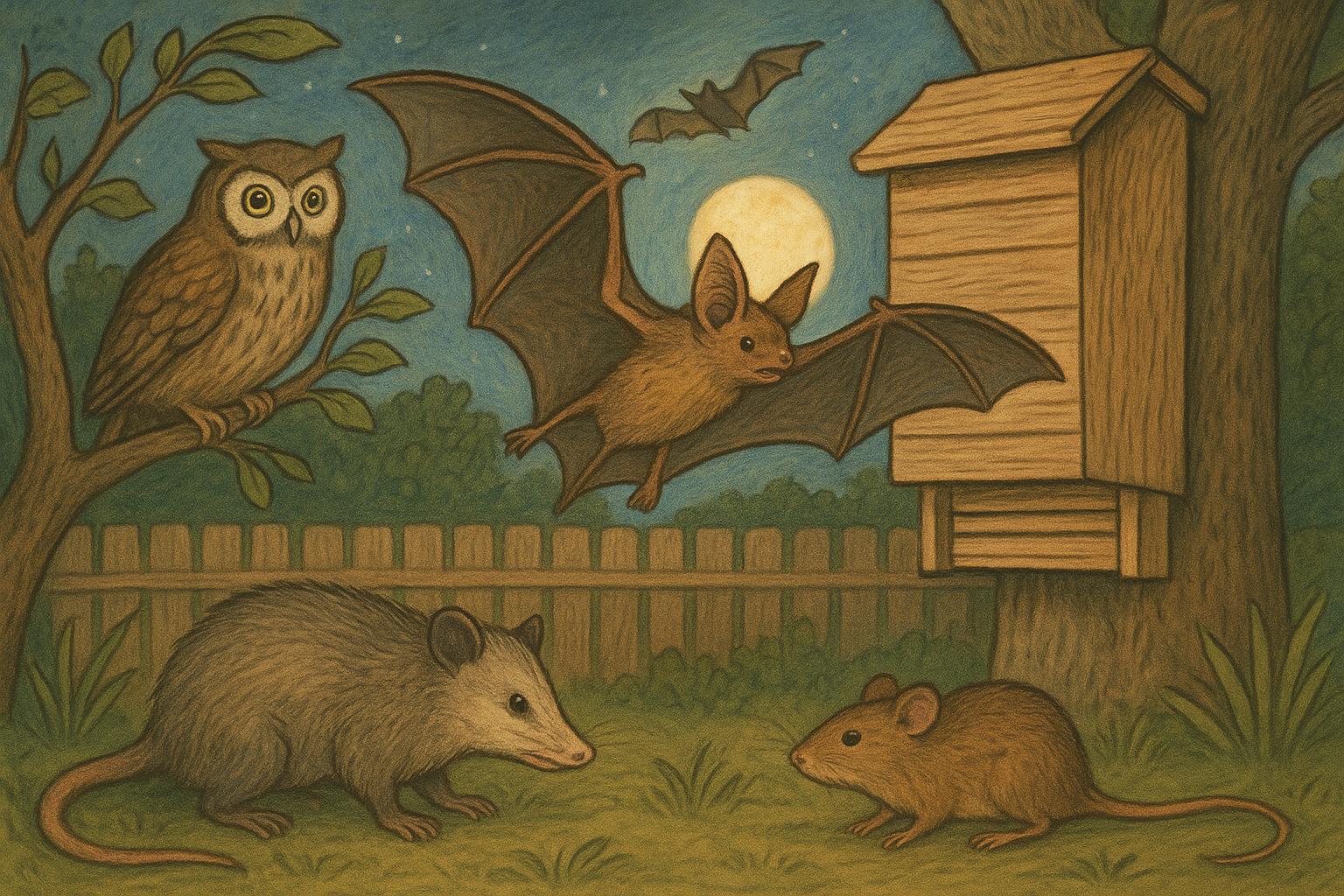
When trying to encourage owls to use your property for roosting or nesting — which makes observation and owl identification easier — a properly designed nest box can be effective. Follow these formal instructions to reduce harm and increase success.
### Materials And Tools
– Exterior-grade plywood (3/4 inch) or cedar board
– Galvanized screws and stainless-steel hinges
– Waterproof exterior wood glue
– Roofing material (asphalt shingles or metal flashing)
– 1/2 inch mesh for ventilation
– Mounting hardware (pole straps or lag bolts for trees)
– Measuring tape, saw, drill, screwdriver, paintbrush
– Optional: predator guard (metal or heavy gauge hardware cloth)
### Step-By-Step Construction And Installation
1. Cut panels: back, front, two sides, floor, and roof per species-specific dimensions (e.g., 14″ x 14″ floor for screech owls; larger for barn owls).
2. Assemble sides and floor with exterior glue and galvanized screws, ensuring joints are tight and weatherproof.
3. Attach roof with hinges so you can open the box for maintenance; overlap roof edges to divert water away.
4. Drill 1/2 inch ventilation holes near the top of the sides and a small drainage hole in the floor.
5. Install an external perch only if recommended for the target species (many owls do not need perches).
6. Apply a non-toxic, exterior-grade paint or stain to the outside only; do not seal the inside.
7. Mount box 10–20 feet high (species dependent), angled slightly downward for drainage, facing away from prevailing winds and bright lights.
8. Install predator guard to prevent raccoons or cats from accessing the box.
9. Monitor from a distance; avoid opening during nesting season unless required for management and with proper permits.
Follow local wildlife regulations before installing nest boxes; disturbing active nests is illegal in many jurisdictions. Building and installing properly increases your chances of attracting resident owls responsibly, aiding long-term owl identification by repeated observation.
## Remedy 2: Set Up A Night Camera And Recording Station
A nocturnal monitoring station provides consistent, non-invasive data for owl identification. Construct and deploy equipment following ethical standards and technical precision.
### Materials And Tools
– Trail camera with infrared/night mode (with time-stamp capability)
– Portable power supply or fresh batteries
– Small weatherproof microphone/recorder (optional: wildlife-grade shotgun mic)
– Mounting straps or brackets
– Memory cards with sufficient storage
– Notebook for logging placement, time, and battery changes
### Step-By-Step Deployment And Use
1. Choose a nondisturbing location near typical perches or hunting lanes, ensuring cameras are not aimed at neighbors’ windows.
2. Mount camera at 6–10 feet high, angled slightly downward to capture perches and the ground where hunting occurs.
3. Configure camera sensitivity and trigger settings to balance detection and false positives (wind-blown branches).
4. If using an external recorder, set it to trigger or continuous with high-quality sample rates; ensure microphones are sheltered from direct precipitation.
5. Power the devices appropriately and perform a test run during the first night to check framing and audio quality.
6. Retrieve memory cards on a scheduled basis (e.g., weekly) to reduce disturbance; replace batteries and log conditions.
7. Analyze footage and recordings with identification guides and sound libraries. Keep proper backups and document dates, times, and environmental conditions for each clip.
These systems gather long-term evidence that strengthens your backyard owl identification skills while minimizing human disturbance. Use collected data responsibly and, when in doubt, consult local wildlife rehabilitators or ornithologists for confirmation.














Leave a Reply