
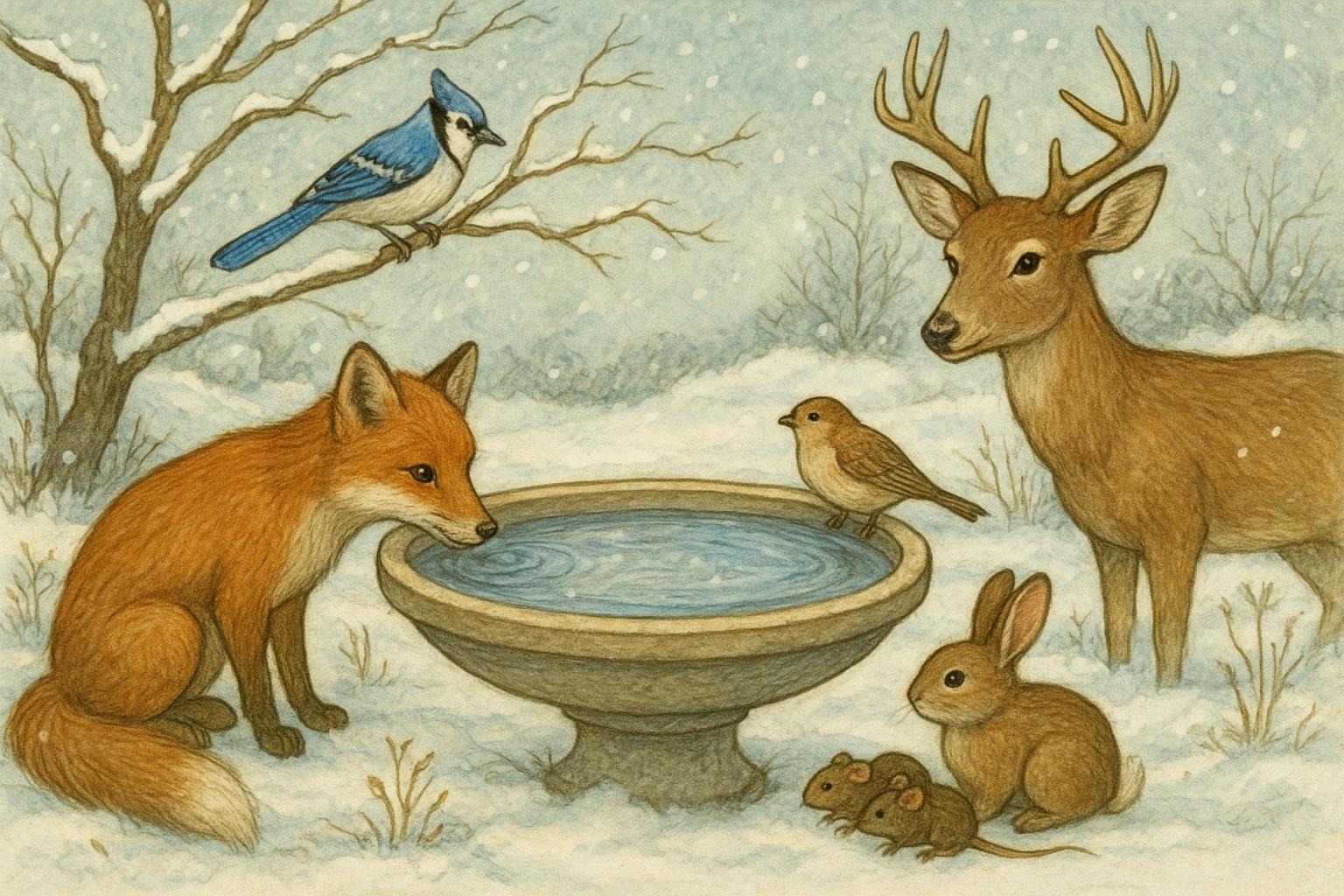
Cold mornings are dramatic: sparkling frost, slow coffee, and a yardful of tiny, thirsty faces looking for a drink. When faucets freeze and puddles turn into skating rinks, backyard critters depend on you more than you might think. Offering accessible, unfrozen water is one of the simplest, most effective ways to help local wildlife survive cold snaps and deep freezes — and yes, it’s also a fine way to earn the gratitude of your neighborhood birds, squirrels, and possibly one bold opossum who thinks your stoop is a five-star rest stop.
## Why Your Yard Needs Water For Wildlife Right Now
When temperatures dip below freezing, natural water sources vanish or become dangerous. Dehydration isn’t only a summer problem; animals need liquid water year-round for digestion, thermoregulation, and general survival. Providing water for wildlife in winter can reduce stress on local populations, keep birds in your neighborhood (good for birdwatching), and decrease risky behavior like animals approaching roads or human dwellings in desperate search of hydration.
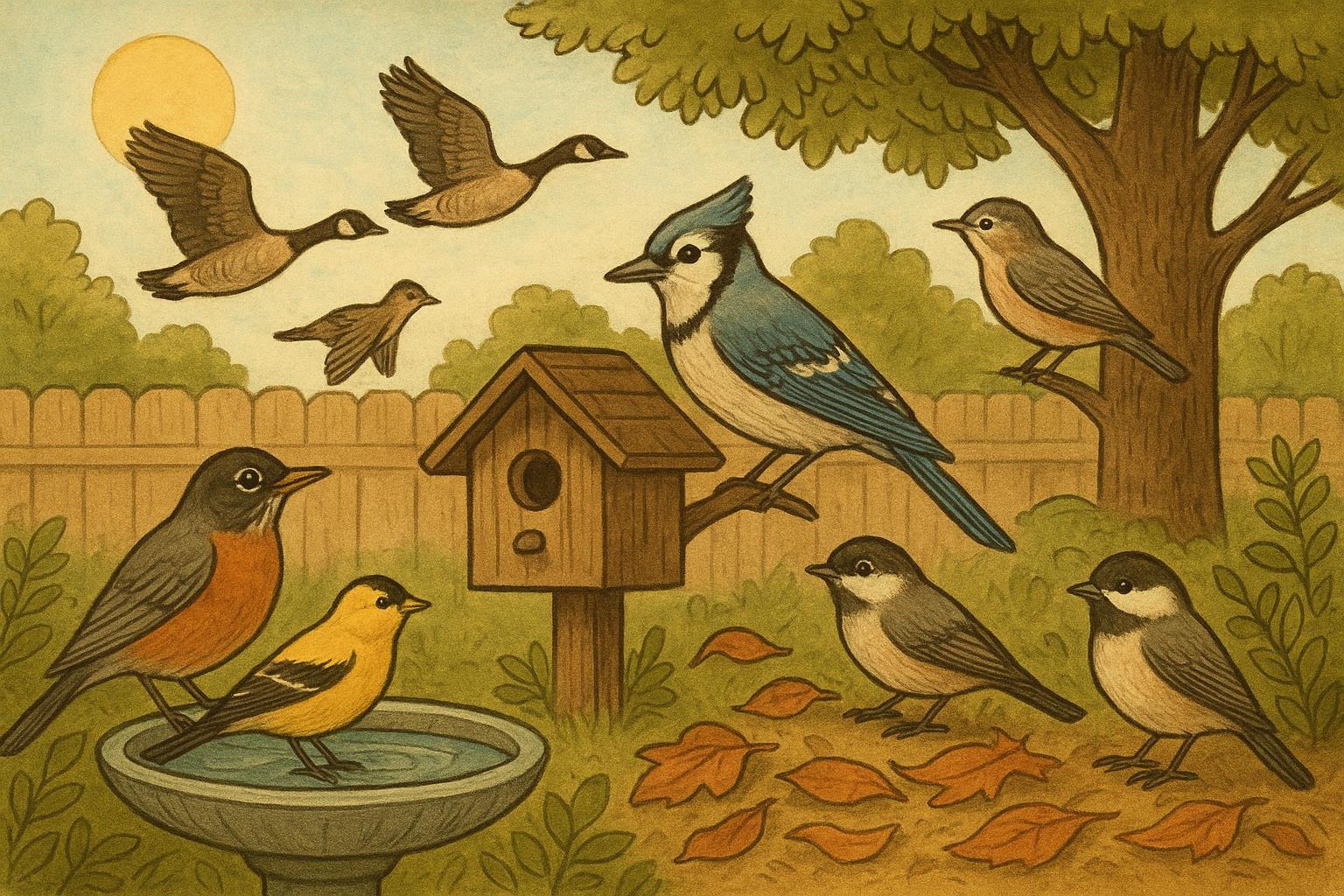
Cold weather can also amplify energy demands. Animals expend calories generating body heat; fetching water from distant unfrozen sources costs more energy and increases exposure to predators and elements. A reliable, nearby water source reduces these risks. Plus, watching a goldfinch test the thin edge of a heated birdbath is a reminder that small kindnesses have meaningful results.
### The Signs Wildlife Need Help
You don’t need a veterinary degree to spot trouble. Look for:
– Birds crowding a single tiny puddle or repeatedly visiting a frozen birdbath.
– Animals lingering near spigots, gutters, or melting snow piles.
– Increased daytime activity among typically nocturnal animals — they may be searching for hydration.
– Thin or lethargic animals that move slowly or seem disoriented.
If you see these signs, adding water for wildlife in safe, consistent ways can make a real difference.
## Remedy 1: Heated Birdbath Thaw Station (Easy DIY)
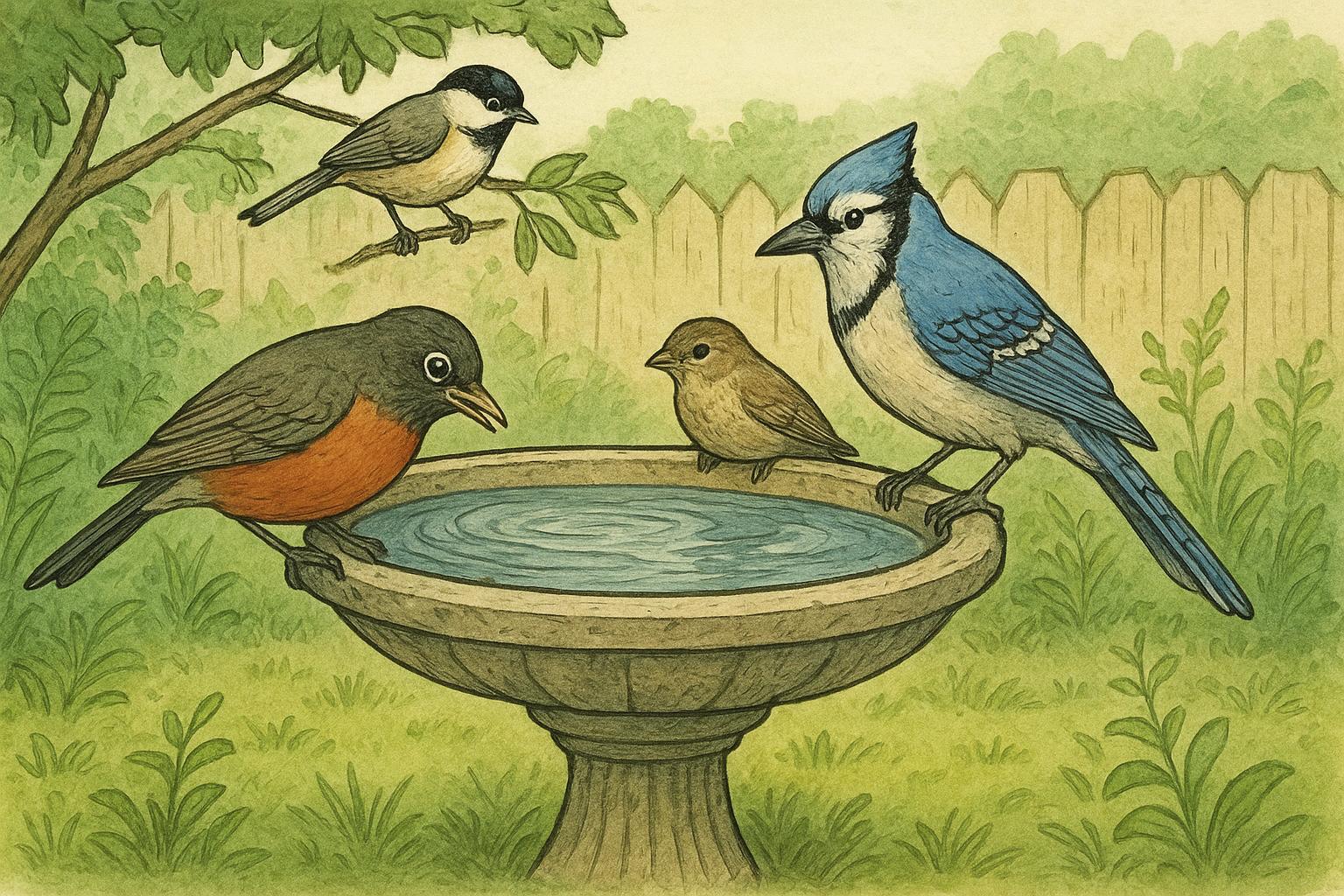
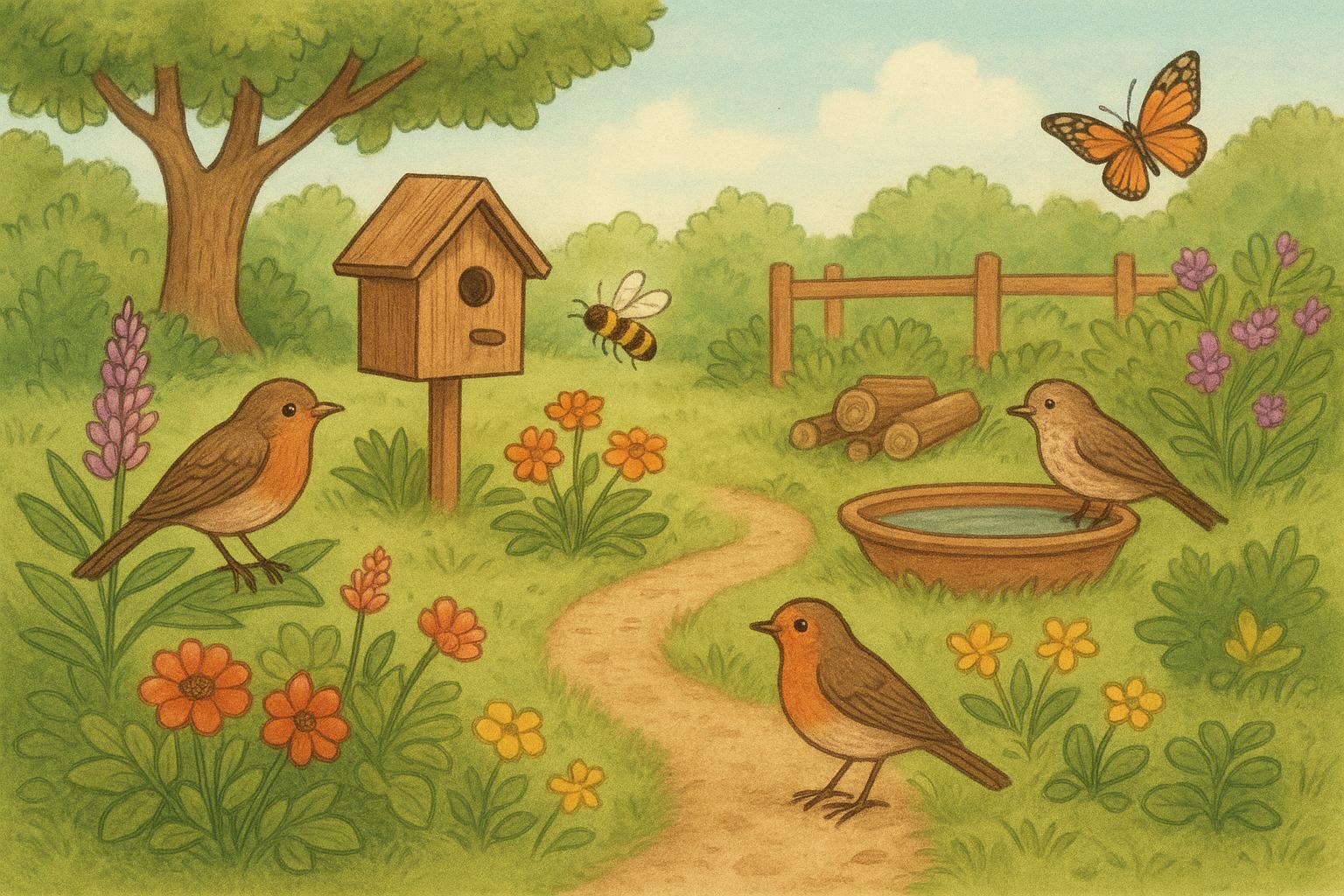
A heated birdbath is a high-impact, low-effort solution that attracts a variety of birds and small mammals. This remedy keeps a shallow basin ice-free and accessible while minimizing the need for constant refilling. The section below is formal and instructive to ensure safe construction and operation.
### Materials
– Sturdy basin or birdbath bowl (metal or ceramic; avoid brittle plastics that crack in cold)
– Thermostatically controlled pond de-icer sized for basin (or an under-tank heating pad rated for outdoor use)
– Gritty, non-slip mat or river rocks for the basin bottom
– GFCI-protected outdoor extension cord and waterproof connector
– Mount or stand to keep bowl above snow level
– Optional: floating rubber duck or small heated float to keep surface moving
### Step-By-Step Instructions
1. Select Placement: Choose a location with some overhead cover (to reduce snow buildup and wind chill) and clear sightlines so birds can watch for predators. Keep it away from windows to prevent collisions.
2. Prepare Basin: Place a non-slip mat or a thin layer of river rocks at the bottom to give birds traction and stability.
3. Install De-Icer: Position the thermostatically controlled pond de-icer in the basin according to manufacturer instructions. If using a heating pad underneath, place the pad on a firm, level surface and then sit the basin on top. Ensure all electrical devices and connections remain above expected water levels.
4. Electrical Safety: Use only GFCI-protected outlets for outdoor electrical devices. Run cords where they won’t be chewed or tripped over; use conduit or protective tubing if necessary. Weatherproof any plug connections with appropriate covers.
5. Test Operation: Plug in the de-icer and verify the water remains liquid at the desired temperature. Adjust placement so the heat is distributed evenly and does not overheat (de-icers are designed to maintain around 32–40°F).
6. Maintain Daily/Weekly: Remove debris, check water level, and ensure cords and plugs are dry and in good condition. Refill as needed to maintain a shallow depth (about 1–2 inches for small birds; deeper for larger species).
#### Safety Tips And Maintenance
– Never submerge non-rated heating elements. Use devices explicitly made for outdoor/pond use.
– Do not rely on extension cords without proper outdoor rating and GFCI protection.
– Clean basin regularly to prevent algae buildup and reduce disease transmission risk.
– In extremely cold climates, increasing the basin’s surface area (shallow and wide) helps the de-icer work more effectively.
## Remedy 2: Portable Open Water Stations For Ground Wildlife
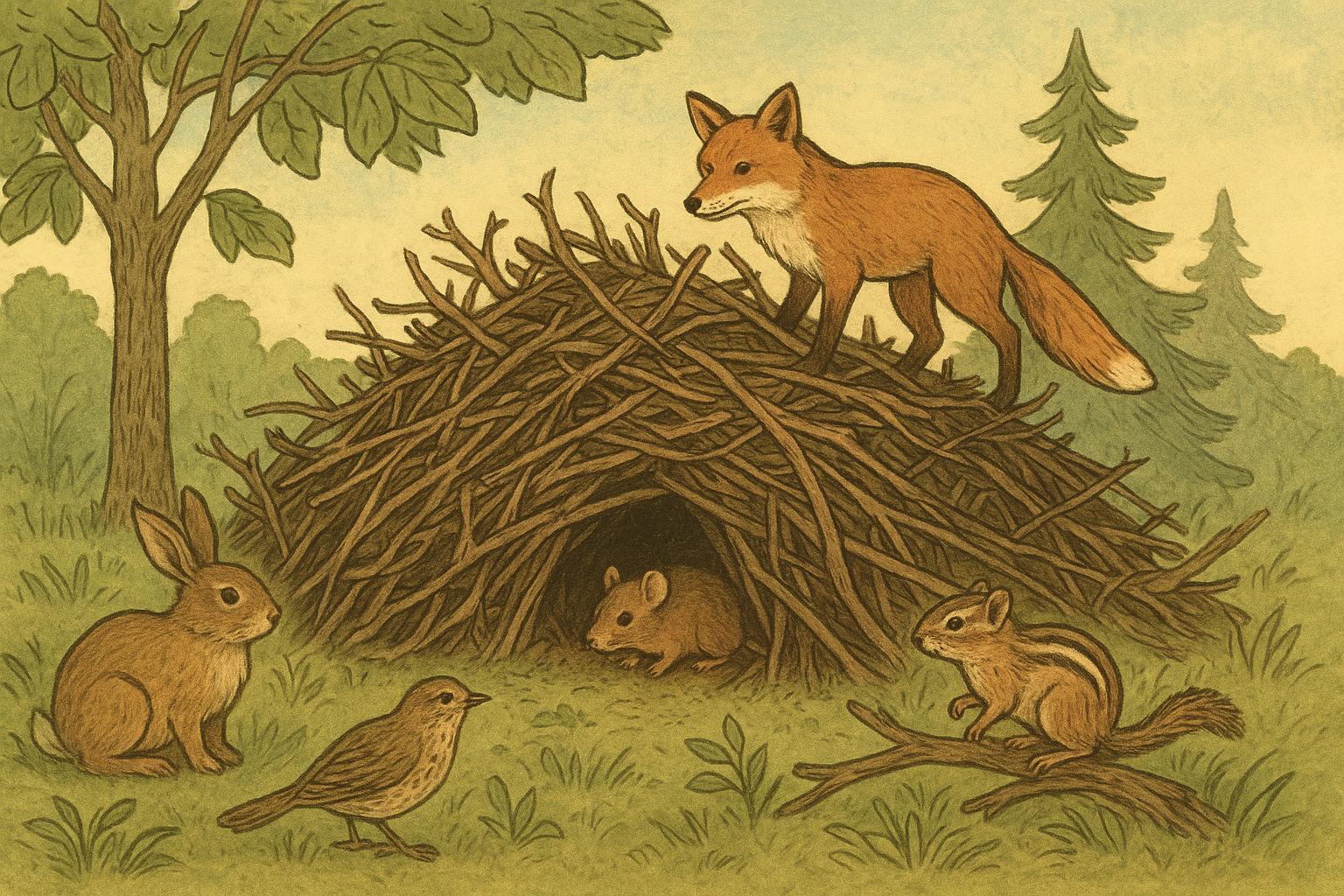
Some animals prefer or require ground-level water: squirrels, raccoons, rabbits, and deer. A portable open water station provides accessible water to these species without encouraging dangerous close contact with humans. This remedy is presented with clear, formal instructions for safe setup and use.
### Materials
– Wide, shallow plastic or metal tray (dishpan size or larger)
– Aquarium heater or small pond de-icer (low-power, thermostatically controlled)
– Insulating base (plywood or plastic riser to prevent freezing to the ground)
– Rocks or driftwood pieces for traction
– Waterproof, GFCI-protected electrical connection (if using heater)
– Optional: lid or small shelter to shield from snow and predators
### Step-By-Step Instructions
1. Select Location: Place the tray near cover but with clear escape routes (brush piles, hedgerows). Avoid areas that might concentrate predators.
2. Prepare Base: Raise the tray slightly on a riser or board to reduce conductive freezing from the cold ground.
3. Add Traction: Place a few rocks or pieces of driftwood inside the tray so animals can perch safely without slipping.
4. Install Heating Element: Use an aquarium heater or small pond de-icer rated for the volume of water. Ensure it is positioned so it warms but does not overheat the water. Follow the manufacturer’s mounting instructions.
5. Protect The Water: Create a simple shelter using a small roof or a plastic milk crate inverted over the tray to shield from snow and falling debris. Ensure the shelter allows easy access and visibility for animals.
6. Monitor And Refill: Check the station at least once daily during active freezes. Replace water as needed and inspect heating elements and cords for damage.
#### Placement And Monitoring
– Rotate water stations around the yard to reduce scent buildup and disease transmission.
– Keep multiple smaller stations rather than one large pool to lessen crowding and reduce stress.
– In suburban areas, position stations away from road edges to limit animal crossings and vehicle interactions.
## Winter Water For Wildlife Etiquette And Legal Notes
Providing water for wildlife is generous, but it comes with responsibilities. Keep these best practices in mind:
– Clean water often. Standing, dirty water can spread disease among birds and mammals.
– Avoid attracting concentrated gatherings near feeders and nesting areas; disperse water sources.
– Do not purposefully feed or water wildlife near highways or busy human activity where animals might be put at risk.
– Check local ordinances: some municipalities regulate wildlife feeding and water stations to manage disease or nuisance issues.
When installing water for wildlife systems, think like a public health official — your goal is to support animals while minimizing harm to both wildlife and people.
### When To Call A Wildlife Professional
If you encounter animals that are injured, extremely emaciated, lethargic, or unresponsive, do not attempt to medicate or rehabilitate them yourself. Keep a safe distance, contain pets, and contact a licensed wildlife rehabilitator or local animal control. Persistent sightings of sick animals may indicate broader disease issues that professionals should investigate.
A well-placed heated bath or portable station can be the difference between a bird completing migration and a squirrel making it through another thaw. Your yard can be a tiny oasis in a frozen neighborhood — practical, safe, and surprisingly effective. Keep tools dry, cords safe, and water clean, and you’ll be doing your part to give local wildlife a fighting chance until spring decides to show up again.















Leave a Reply