
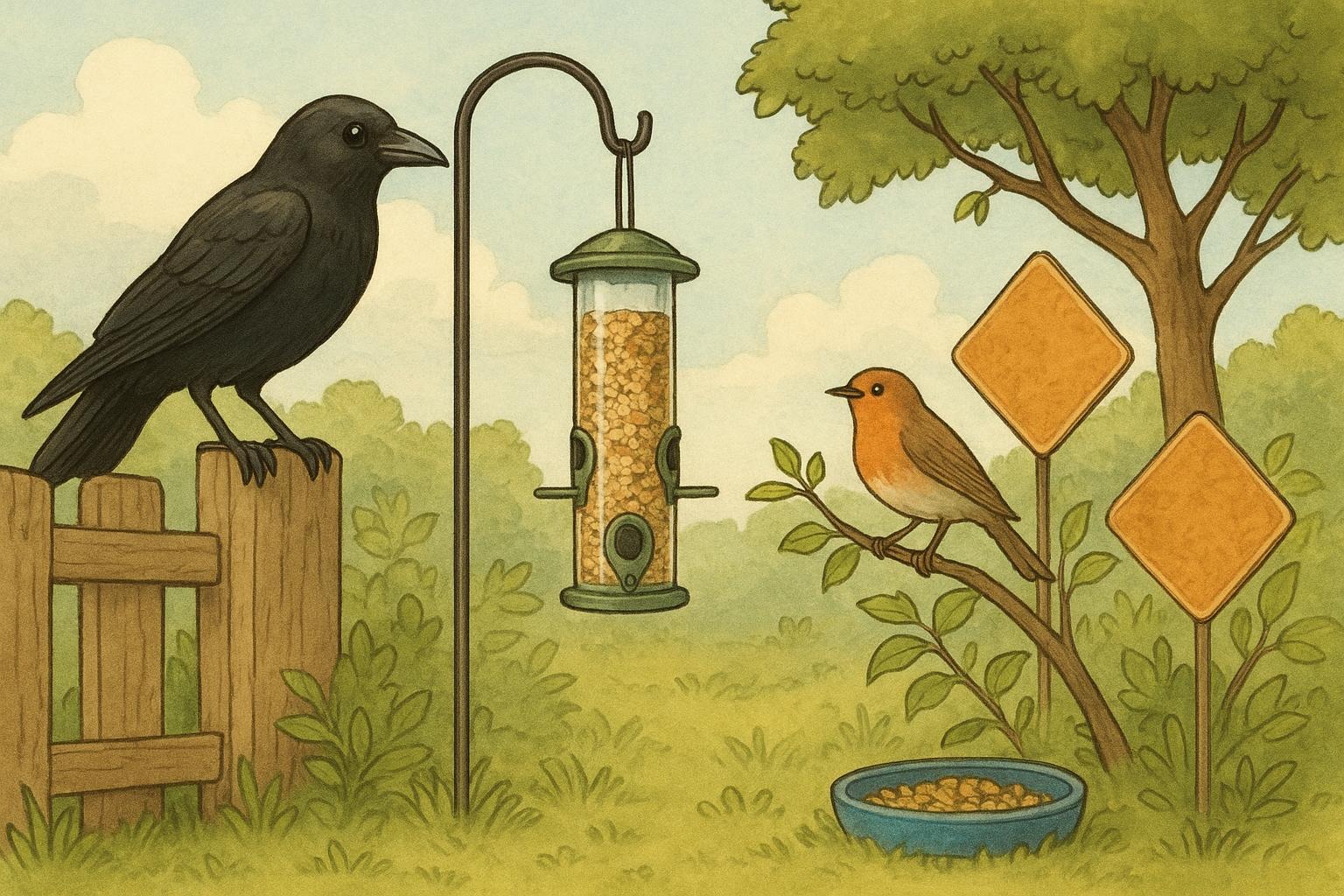
Crows are smart, loud, and stubbornly sociable. If your bird feeders have become a crow hangout zone, you’re not alone — those glossy black fellows are both entertaining and exhausting. The good news: with a few thoughtful strategies, your feeders can stay calm and quiet again. Read on for humane, practical methods that actually work.
## Crow Deterrents That Keep Feeders Calm
Crows quickly learn where the easy meals are, and once they establish a routine they’ll recruit friends. Effective crow deterrents focus on breaking that routine and making the feeder area less attractive, rather than trying to frighten them permanently. You want solutions that are legal, humane, and sustainable. A combination of approaches usually beats a single trick — think of it like cross-training for your yard: visual cues, sound management, physical barriers, and habit changes all help.
## 1. Visual Crow Deterrents
Visual deterrents rely on crows’ wariness of new objects and reflections. They can be inexpensive and low-maintenance if placed thoughtfully.
### Materials
#### Reflective Streamers And CDs
– Old CDs or shiny Mylar strips (wind chimes made from reflective tape work too)
– Thin cord or fishing line
– Scissors and a hole punch (or tape)
#### Predator Decoys
– Plastic owl or hawk decoy (rotating models are preferable)
– Mounting hardware (stake, pole, or bracket)
### Step-By-Step Application
1. Select locations: Hang reflective materials near feeders, about 6–12 feet away, so crows notice but aren’t able to land on the same perch as small songbirds. Avoid directly above seed trays where reflections could deter all birds.
2. Prepare reflectors: Punch holes in CDs or cut Mylar into strips 6–12 inches long. Tie each strip or CD to fishing line or cord, leaving varying lengths so they move independently in the breeze.
3. Install: Hang several reflectors around the feeding station at differing heights. Aim for motion — a stationary reflector is less effective.
4. Decoy placement: Install a predator decoy on a movable mount. Every 3–7 days, change its orientation or move it to a new perch. Crows habituate quickly to static objects, so novelty is the key.
5. Monitor and adjust: If songbird visitation drops, move reflectors further away or lower their density. The goal is to deter crows while keeping the feeder welcoming to intended visitors.
## 2. Auditory Crow Deterrents
Sound can be effective, but crows are highly adaptable. Use auditory methods sparingly and strategically to avoid habituation and neighborhood disputes.
### Materials
#### Motion-Activated Ultrasonic Or Sound Devices
– Motion-activated sound deterrent or ultrasonic unit designed for birds
– Weatherproof housing or mounting bracket
#### Recorded Distress Calls Or Variable Sounds
– Digital player or speaker system with randomized sounds
– Power source or rechargeable battery pack
### Step-By-Step Application
1. Select a device: Choose a motion-activated unit rather than a continuous sound source. Motion-activation limits exposure and reduces the speed of habituation.
2. Install properly: Mount the device about 6–10 feet from feeding areas, angled toward the approach path crows use. Ensure it’s weather-resistant and secured against theft.
3. Use randomized programming: If possible, program the device to play a variety of sounds (predator calls, distress calls, sudden noises) on an irregular schedule. Predictable repetition reduces effectiveness.
4. Monitor neighbor impact: Be mindful of sound carrying to adjacent yards. If complaints arise, lower volume, shorten active hours, or switch to less audible deterrents.
5. Rotate strategies: Combine auditory deterrents with visual or physical measures. Rotate or remove the sound device periodically to prevent habituation.
## 3. Physical And Behavioral Crow Deterrents
Physical modifications and behavioral changes to how you feed birds are often the most reliable long-term solutions. These methods reduce the reward that keeps crows returning.
### Materials
#### Feeder Modifications
– Caged or weight-sensitive feeders that exclude larger birds
– Baffled feeding poles or squirrel baffles
– Ground-feeding trays with small-mesh screens
#### Habitat Adjustments
– Trash can lids, secured compost bins, and pet food storage containers
– Motion-activated sprinklers (optional)
### Step-By-Step Application
1. Replace open feeders: Install feeders that have cages or ports sized for small songbirds. Ensure the entry openings are narrow enough to block crows but still comfortable for your target species.
2. Add weight-sensitive perches: Use feeders with perches that collapse under heavier birds. Set the weight threshold to allow finches and sparrows while excluding crows.
3. Limit ground feeding: Crows are excellent ground foragers. Remove or reduce ground-scattered seed by using feeders with trays that catch spills, or by feeding in trays with mesh that small birds can use but crows cannot manipulate easily.
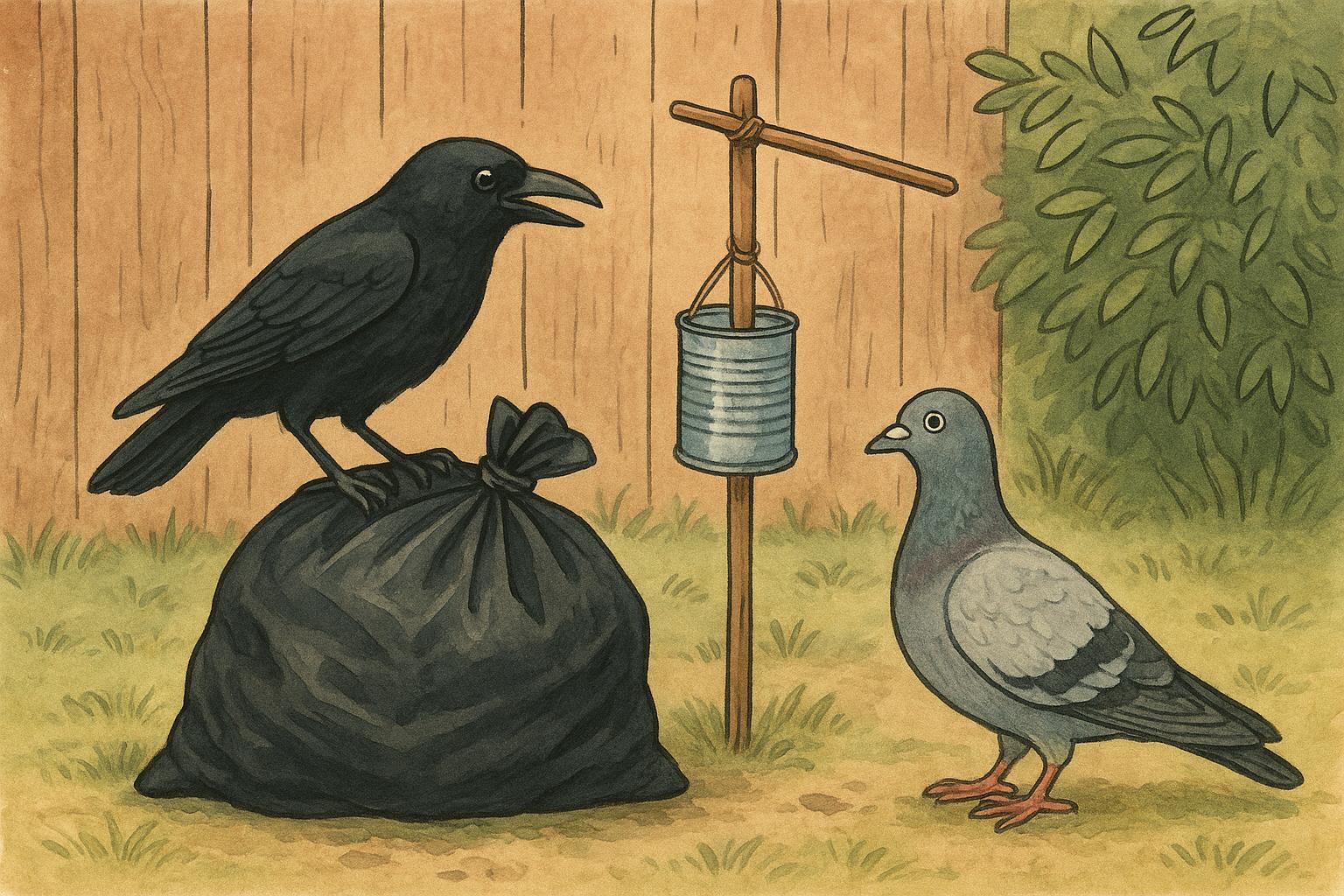
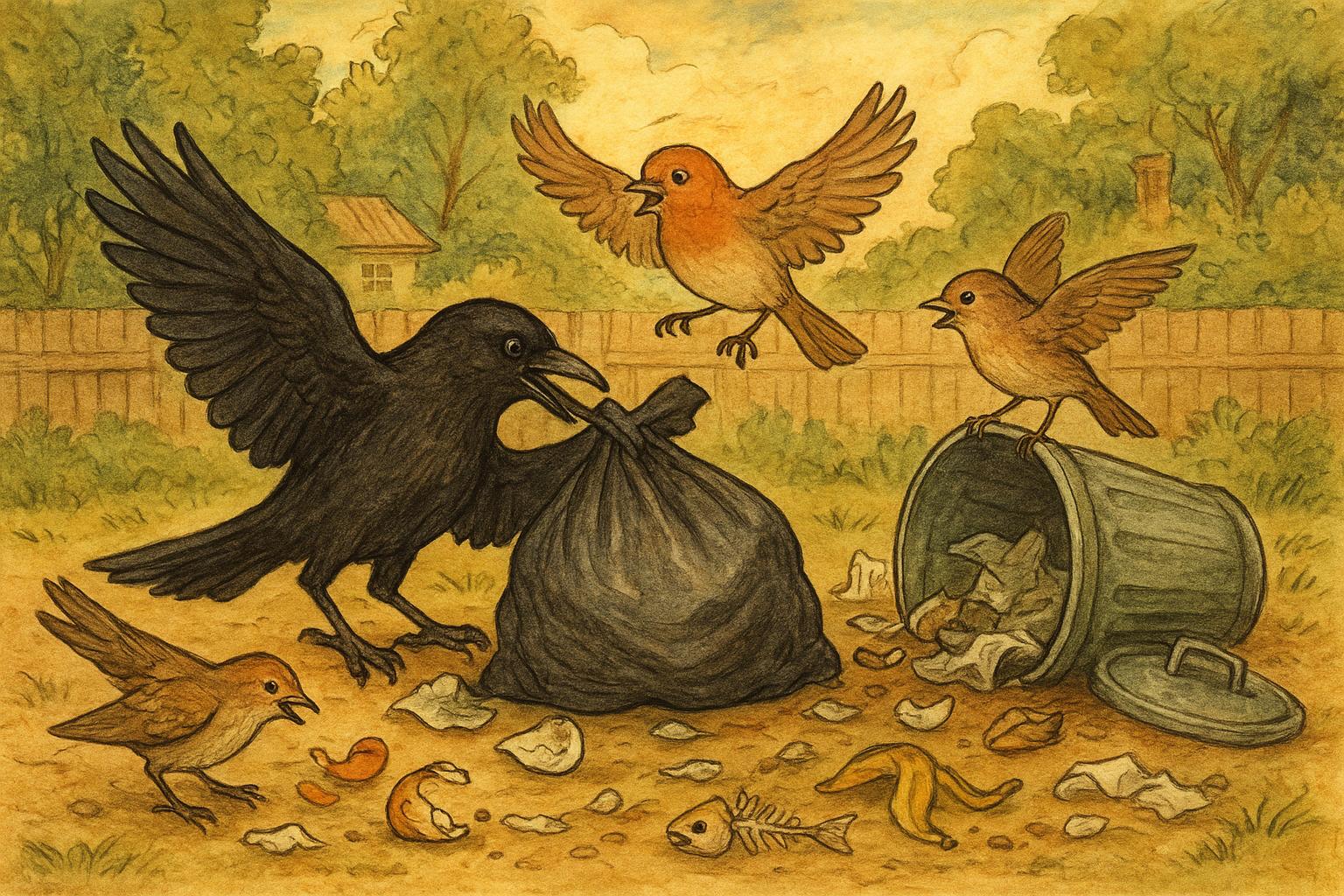
4. Secure attractants: Keep garbage bins closed, secure compost covers, and never leave pet food outdoors. Reduce alternative food sources that may reinforce crow presence.
5. Use motion-activated sprinklers if legal and appropriate: A quick, unexpected spray of water can break crow foraging patterns without harm. Position sprinklers to activate when crows land but not to soak smaller songbirds.
6. Schedule feeding: Offer food during times when crows are less active (early morning for many songbirds) and remove feeders during peak crow activity if practical.
## Other Tips For Managing Crow Pressure
### Small Habitat Tweaks
– Trim perches close to feeders so crows have fewer nearby vantage points.
– Plant shrubs or arrange perches that favor smaller birds while denying crows comfortable staging areas.
– Keep feeders clean; crows are attracted to spilled seed and leftover husks.
### Behavioral Consistency
– Implement changes all at once rather than gradually. Reducing reward immediately creates a clearer lesson for crows.
– Be patient. Crows are intelligent and persistent; consistent enforcement of deterrents over weeks yields the best results.
### Legal And Safety Considerations
– Check local wildlife regulations before deploying deterrents that could harm birds. Lethal measures are illegal in many places and unnecessary for backyard situations.
– Use only humane, non-injurious devices. Avoid sticky substances, electrical traps, or anything that could entangle birds.
– If using motion-activated sprinklers or sound devices, ensure they don’t create hazards for children, pets, or neighbors.
## When To Call Professionals For Persistent Problems
If persistent crow activity continues despite multiple, rotated deterrent strategies, consider consulting a wildlife control professional or local bird conservation office. They can assess patterns, suggest tailored changes, and help with larger-scale solutions like habitat modification or municipal waste management coordination. Professional involvement is particularly useful if crows are causing property damage, posing safety risks, or congregating in large numbers.
Crows are clever creatures and getting them to change routines takes a mix of creativity and consistency. Use a combination of the methods above, switch them around, and keep your feeders focused on the smaller birds you intended to attract. With patience and the right toolkit, your feeders can be peaceful, and your yard can be a place where songbirds, not crows, set the tone.






Leave a Reply