
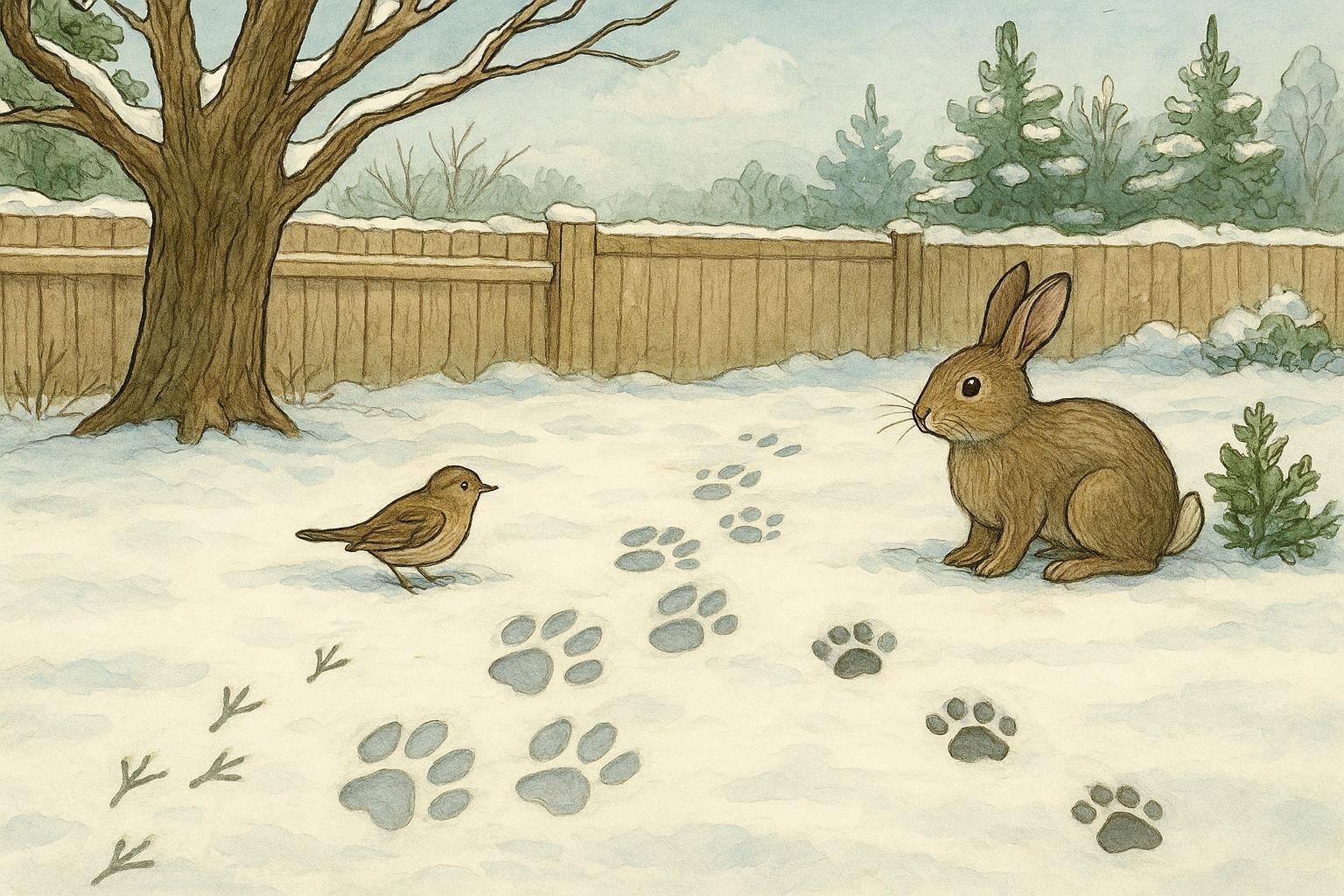
## The Backyard Detective: What You Can Learn From Winter Tracks
There’s a certain small thrill that comes with stepping outside after a fresh snowfall and peering down at a page of tiny, wordless stories written across your yard. Those little prints are the neighborhood’s secret mail system: squirrels gossiping with paw prints, rabbits sketching their afternoon commute, foxes stenciling the route of a midnight snack run. If you’re the sort who likes tea and mysteries, reading winter tracks can be just as satisfying as a cozy whodunit — and a lot less dangerous.
Reading tracks is part science, part intuition, and part remembering that nature loves to improvise. This guide will walk you through what to look for, common patterns you’ll likely see in a snowy backyard, and a pair of practical remedies: how to preserve a perfect track trail for study and how to humanely discourage repeat visitors when they become problematic.
### Winter Tracks Identification: Who Was Here?
Tracks tell a story in four main characters: size, pattern, claw/hoof details, and gait (the way an animal moves). When you stand over a fresh run of winter tracks, take a breath, squint a little, and look for the groove of continuity. Is there a straight line of prints or an alternating, hopping scatter? Do the prints show pads with claws or simple oval impressions?
These winter tracks are easiest to read within the first few hours of snowfall — or right after someone shovels and the yard is undisturbed. Sun, melting, and wind all blur the letters in this printed language, so early is better.
### Reading The Basics
Most backyard critters can be grouped by gait:
– Walkers (deer, raccoons): four tracks roughly in line, sometimes forming a diamond.
– Hoppers (rabbits, squirrels): large rear prints with smaller front prints ahead.
– Bounders (fox, coyote): closely spaced, nearly in a straight line; fox prints will often show a neat pad with four toes.
– Tip-toed visitors (weasels, mice): tiny, often in a narrow, sinuous track.
When you inspect winter tracks, pay attention to the spacing between prints — stride — and the relative size of front and back marks. Depth can tell you something about weight, and whether the animal paused (deep indentation) or sprinted (elongated, shallow impressions).
### Common Backyard Track Patterns
Below are some typical profiles to keep in mind:
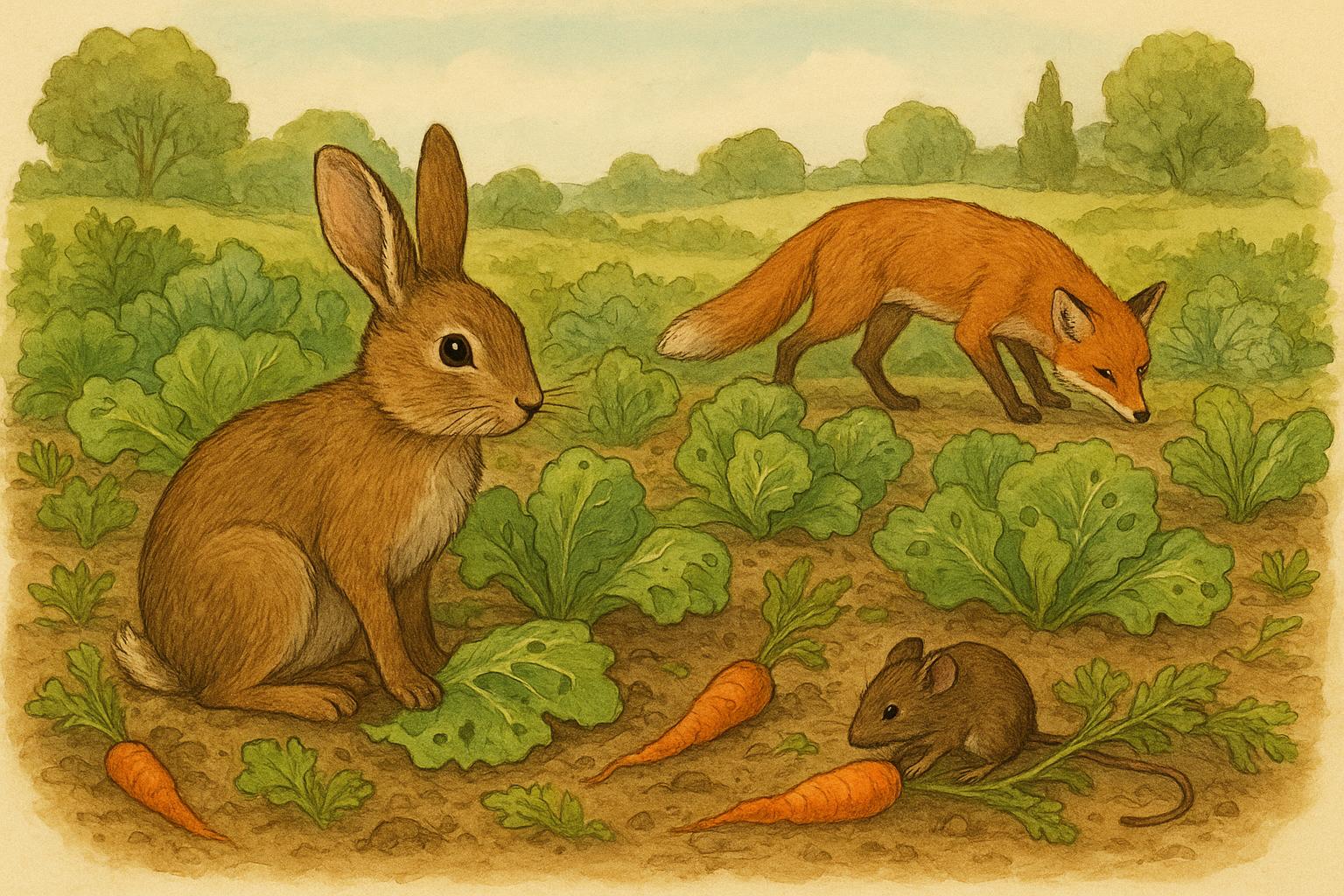
– Rabbit: Two large rear oval prints spaced together with two smaller front prints closer to their direction of travel.
– Squirrel: Similar to rabbit but smaller; often climbs trees, so tracks will head to a base and disappear upward.
– Raccoon: Hand-like prints showing five fingers; looks almost human but smaller and usually in clusters.
– Deer: Cloven hoof prints forming two teardrop shapes, often in neat pairs.
– Fox/Coyote: Four-toed paw prints with visible claw marks; fox tends to be more compact and often travels in a straight, confident line.
A little humor: if you find neat, meditative paw prints that seem to be contemplating the bird feeder, you’ve officially been judged by your neighborhood fauna.
#### Size, Shape, And Stride
Measure with a ruler if you want precision. A raccoon front print might be 2–3 inches across, while a rabbit rear print is roughly 3–4 inches long in larger species. Deer strides in a leisurely trot can be two feet or more; a rabbit’s hop will be compact but with a big gap between the rear and front prints.
#### Toe And Claw Marks
Claws make identification easier. Dogs and coyotes usually leave visible claw marks; cats often do not. Raccoons show finger-like impressions and no hooves, obviously. These tiny details help eliminate imposters and narrow your suspect list.
## Remedy 1: Preserve Winter Tracks For Study
Materials:
– Rigid cardboard or a flat clipboard
– Plaster of Paris (about 2–3 pounds for small casts)
– Water
– Disposable mixing container and stir stick
– Vegetable oil or petroleum jelly
– A small paintbrush or disposable sponge brush
– Lightweight protective gloves
– A soft brush for cleaning (like a soft toothbrush)
– A plastic sheet or tray to work on
Careful, formal instructions: when preserving prints in snow, work quickly to avoid melting or disturbing the impression. The following procedural method yields the cleanest cast.
Step-By-Step Creation And Application:
1. Protect The Track: Lightly brush loose snow from the edges of the impression with the soft brush, creating a crisp boundary but not disturbing the main impression.
2. Prepare A Border: Gently press the cardboard or clipboard into the snow around the track to create a form that reduces meltwater flow into the impression. Remove it and set aside.
3. Apply Release Agent: Using the brush, very lightly dab vegetable oil or petroleum jelly around (not in) the impression to form a thin barrier that helps separate the plaster later.
4. Mix Plaster: In the disposable container, mix plaster of Paris with water per manufacturer instructions to a consistency similar to thick pancake batter. Stir steadily to minimize air bubbles.
5. Pour Carefully: Starting at one edge, pour the plaster slowly into the lowest part of the impression. Aim for a gentle, steady pour to capture detail without eroding edges.
6. Allow To Set: Let the plaster cure undisturbed for at least 30–45 minutes. Do not test its firmness until it has set adequately.
7. Remove And Clean: Once hardened, carefully lift the cast by the edges. Brush off excess snow and flake off any loose snow under a gentle stream of cold air if needed. Do not use warm water.
8. Label And Store: Mark the cast with date, location in the yard, and direction of travel. Store in a dry box; plaster is porous and benefits from being kept out of moisture.
This method preserves the three-dimensional detail of prints and is ideal for schools, naturalists, or anyone documenting repeat visitors.
## Remedy 2: Deter Unwanted Visitors Humanely
Materials:
– Motion-activated LED light or infrared sensor light
– Commercial animal repellent (granular or spray, species-appropriate)
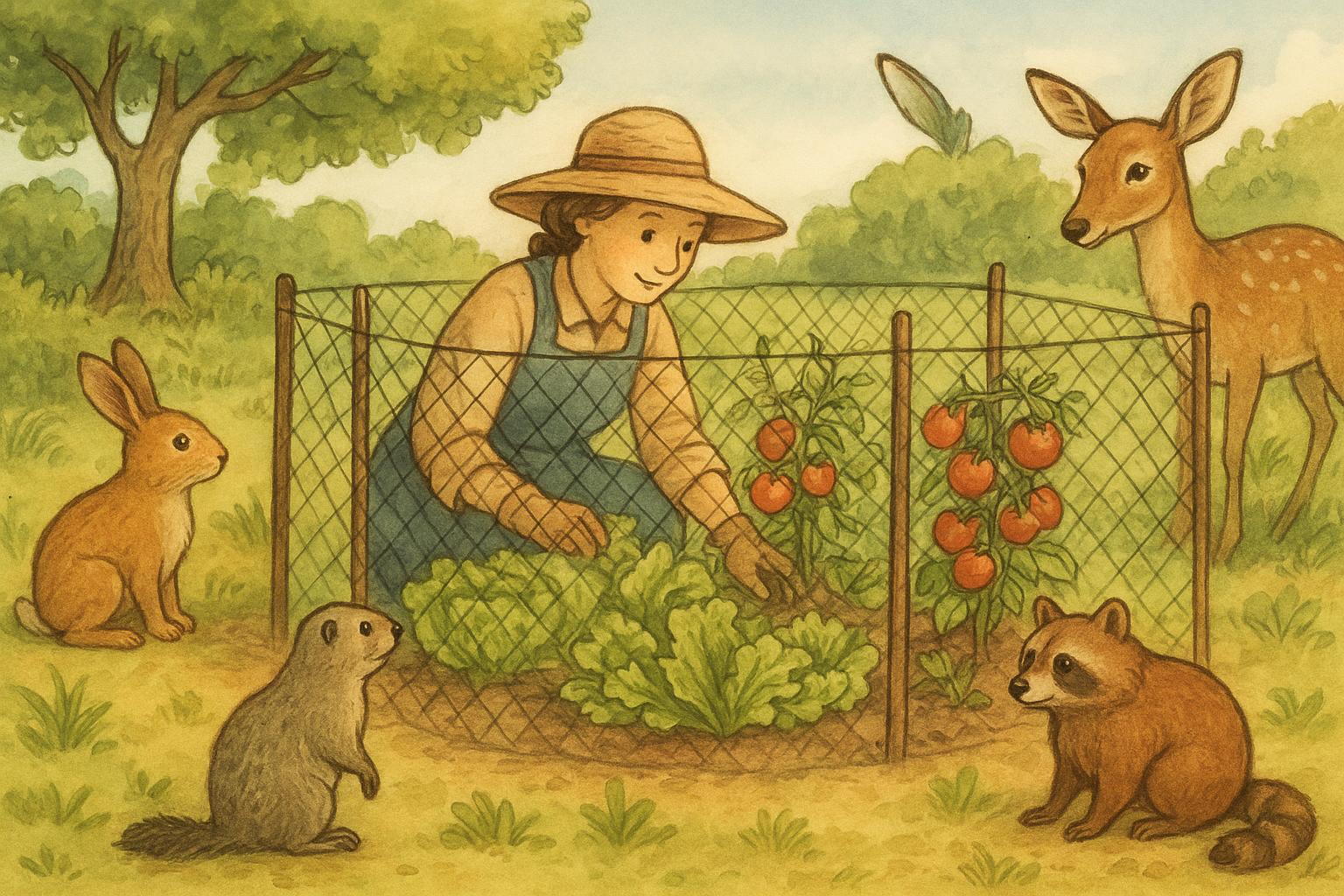
– Hardware cloth or lightweight fencing (for small garden areas)
– Zip ties or garden stakes
– Thick gloves and safety glasses
Procedural Steps And Application:
1. Assess The Problem: Determine which species is creating the undesirable winter tracks by comparing prints and activity times (nocturnal vs. diurnal).
2. Choose The Appropriate Repellent: For deer, use granular or spray repellents labeled for cervids. For rabbits and rodents, choose repellents safe for pets and plants. Follow product label instructions strictly.
3. Install Motion-Activated Lighting: Mount lights to face areas of frequent visitation, set to activate at low levels of motion. Ensure installations follow local electrical codes or use battery-operated units.
4. Erect Barriers: For gardens, place hardware cloth around vulnerable plant beds. Bury the bottom 6–8 inches to prevent animals from burrowing underneath and secure the top with stakes or zip ties.
5. Apply Repellent According To Label: Wear gloves and safety glasses. Apply granular repellent evenly or spray at the recommended distance. Reapply after heavy snow or rainfall per label intervals.
6. Monitor And Adjust: Check the area weekly. If tracks persist, reassess species identification and adjust tactics—different animals respond to different deterrents.
7. Avoid Dangerous Practices: Do not use toxic substances, glue traps, or methods that can harm pets, children, or non-target wildlife. Humane, reversible deterrents are preferable and often more effective long term.
These measures are intended to discourage repeat visits without harm. They must be carried out with careful attention to product labels and local wildlife regulations.
### Tips For Ethical Backyard Tracking
– Photograph prints before casting or altering them; date-stamped images are excellent records.
– If you suspect an injured animal, contact local wildlife rehabilitators rather than attempting to capture it yourself.
– Keep pets leashed during early morning or dusk when wildlife is most active to avoid disturbing the tracks and to protect your pet.
#### Seasonal Considerations And Safety
Winter tracks become more legible as predators and prey move differently in cold months. Deep snow masks scent trails, making visual clues more important. Remember that ice, warming days, and foot traffic can quickly erase the story written in your yard. Dress appropriately, use a small flashlight for low light readings, and be mindful of slippery surfaces.
There you have it: a compact, friendly field guide to understanding the secret chatter in the snow right outside your backdoor. Read, record, preserve if you like, and if necessary, deter with humane precision. Nature’s scripts are short and sweet in winter—enjoy decoding them.






Leave a Reply