
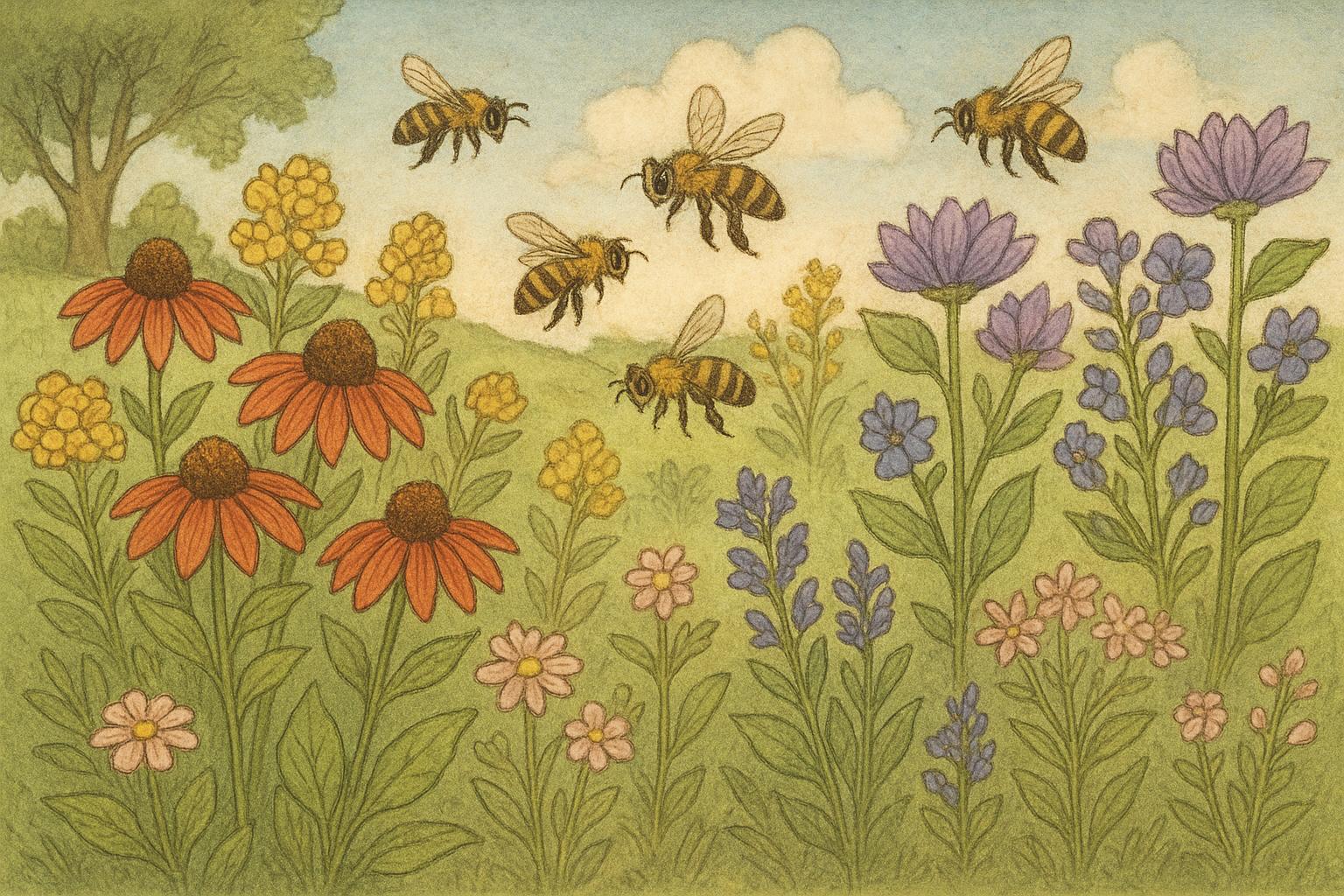
## Plants That Attract Bees: Key Species And Seasonal Choices
Creating a garden that supports wild and managed bees requires deliberate selection of plants that provide nectar, pollen and suitable nesting microhabitats. Plants That Attract Bees are typically those with accessible nectar, varied bloom times and structural diversity. Integrating a spectrum of flower shapes and colors will encourage a wider range of species, from small solitary bees to bumblebees and honey bees.
### Selecting Native Pollinator Plants For Your Region
Native pollinator plants are often the most effective foundation for a bee habitat because they co-evolved with local bee fauna. When selecting species, prioritize natives that bloom sequentially across the growing season. Consult regional extension services or native plant societies to identify species best adapted to local soil, rainfall and temperature regimes. Using native pollinator plants reduces maintenance and increases resilience to pests and disease.
### Design Principles For Bee Friendly Plants In Garden Layout
Design for bees rests on a few straightforward principles: continuity of bloom, structural variety and pesticide avoidance. Mass plantings and groups of the same species are more visible and efficient for foraging bees than scattered single specimens. Combining low-growing groundcovers, mid-height perennials and taller shrubs creates foraging corridors and safe travel lanes for pollinators. Choose bee friendly plants that offer both nectar and pollen—some showy cultivars may lack usable pollen and should be avoided.
## Seasonal Planting Calendar For Continuous Bloom
A well-planned garden supplies flowers from early spring through late fall. Plants That Attract Bees should be selected to minimize gaps in floral resources. Early-blooming native trees and shrubs, spring bulbs and native asters for autumn are essential components.
### Examples Of Plants That Attract Bees By Season
#### Spring Bloomers
– Willow (Salix spp.): Catkins are rich in pollen for early-emerging bees.
– Crocus and native bulbs: Provide nectar during cool conditions.
– Pulmonaria and native wildflowers: Important for small bees active at lower temperatures.
#### Summer Bloomers
– Lavender (Lavandula spp.) and Salvia spp.: Strong nectar sources that attract long-tongued bees.
– Echinacea and Rudbeckia: Open-face flowers allow access to many bee species.
– Monarda (Bee Balm): A classic choice among bee friendly plants for mid-season forage.
#### Autumn Bloomers
– Asters and Goldenrod (Solidago spp.): Provide late-season resources for bees preparing for winter or reproduction.
– Sedum and certain Lamiaceae species: Extend nectar availability into cool weather.
## Soil, Water And Nesting Considerations For Pollinator Habitats
Bees require more than flowers; many solitary bees nest in bare ground or in pithy stems. Provide patches of undisturbed, well-drained soil with southern exposure for ground-nesting species. Retain standing dead stems in winter to allow cavity-nesting bees to overwinter. A small shallow water source with landing stones benefits thirsty foragers, particularly in hot or dry climates.
### 1. Building A Simple Bee Bungalow
Materials
– Untreated hardwood block (approx. 8–12 inches thick)
– Drill with bit set ranging 2–10 mm diameters
– Sandpaper
– Small roof (optional): scrap untreated wood or a piece of tile
– Mounting hardware (screws or wire)
Step-by-Step Construction and Installation
1. Select a properly seasoned, untreated hardwood block to minimize chemical exposure.
2. Drill holes into the block parallel to the grain; vary diameters between 2 mm and 10 mm and depths of 6–8 cm to accommodate a range of solitary bees. Do not drill through the block.
3. Sand the entrance slightly to remove splinters while preserving roughness inside the hole for grip.
4. Fit a simple roof or overhang to protect from rain; ensure it does not block the hole entrances.
5. Mount the bungalow on a south- or southeast-facing structure 1–1.5 meters above ground, in a sheltered, sunny location, and slightly tilt upward to shed water.
6. Clean or replace the block only after two full seasons to avoid disturbing developing bees; inspect annually for mold or parasitism.
This structure encourages solitary cavity-nesting species without introducing complex materials into the garden ecosystem.
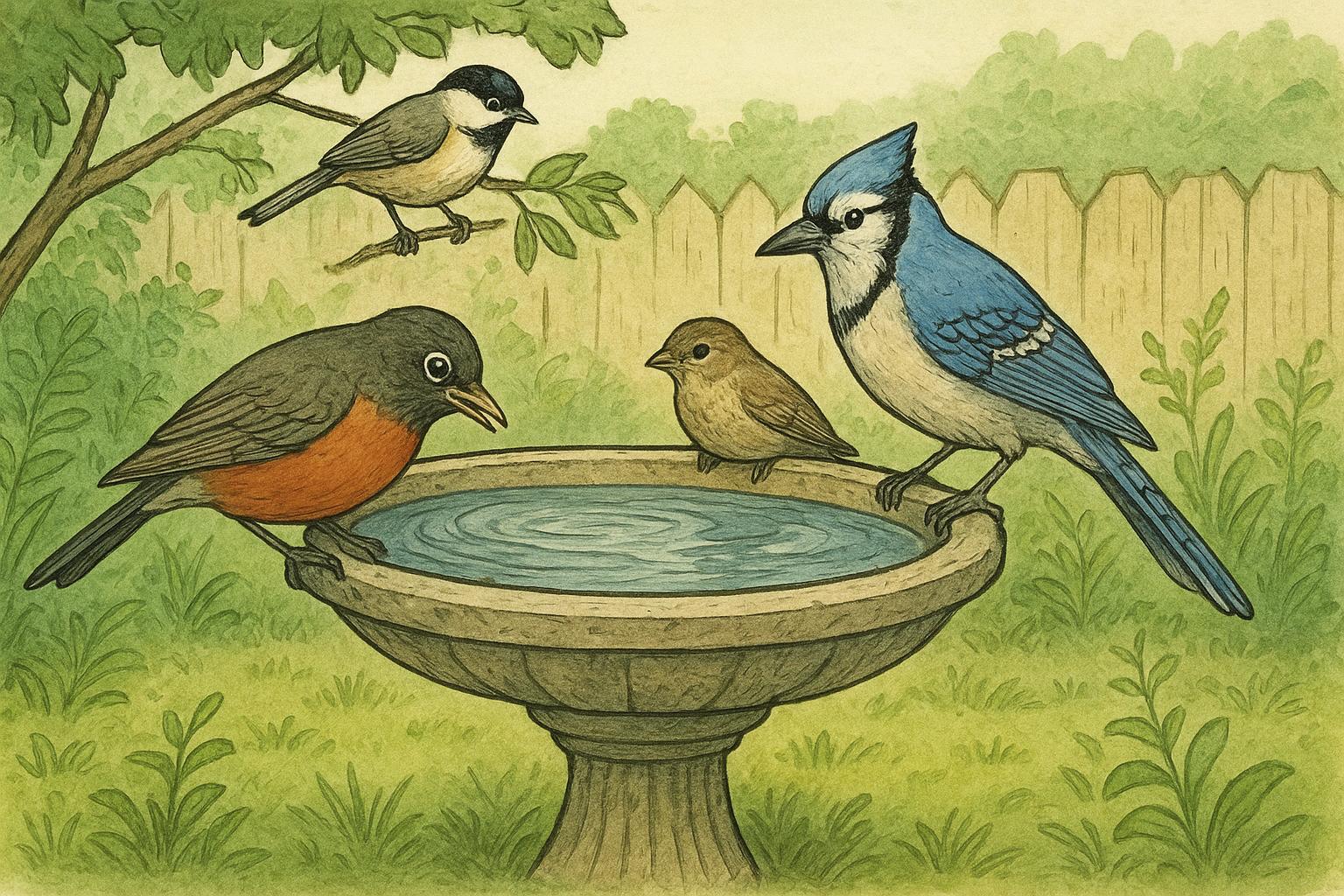
### 2. Creating A Bee Watering Station
Materials
– Shallow container or birdbath
– Smooth stones, pebbles, or corks
– Gravel or sand
– Clean water source
Step-by-Step Creation and Application
1. Select a shallow, stable container placed in a partially shaded location to minimize evaporation.
2. Line the bottom with gravel or coarse sand to retain water and provide a shallow gradient.
3. Add stones or corks that protrude above the waterline to serve as landing pads; ensure surfaces allow bees to rest without submerging.
4. Fill with clean water; change or top up regularly to prevent mosquito breeding and maintain freshness.
5. Position the station near flower beds and away from heavy foot traffic to reduce stress on foraging bees.
This remedy addresses hydration needs while minimizing harm; it is simple to maintain and can be combined with native plantings for maximum effectiveness.
## Choosing Specific Bee Friendly Plants For Diverse Bee Communities
Diversity in plant morphology supports different pollinator feeding strategies. Tubular flowers attract long-tongued species, whereas open-disk flowers are suited to short-tongued or generalist bees. Plants That Attract Bees include single-form varieties rather than double-flowered cultivars, which often lack accessible pollen and nectar. Examples of reliable species include native clovers, mint family members, and composite flowers like sunflowers and asters. These bee friendly plants contribute to overall habitat resilience and biodiversity.
### Integrating Pollinator Plants With Edible Gardens
Interplanting pollinator plants with vegetables and fruit trees enhances crop pollination and yields. Herbs such as thyme, oregano and borage function as useful edge plants; they are recognized pollinator plants and can be harvested for culinary use. Avoid placing high-volume pesticide use near productive flower patches, as systemic insecticides can contaminate nectar and pollen.
### Managing Pests Without Harming Bees
Adopt integrated pest management practices: monitor pest levels, employ mechanical removal, encourage beneficial predators and remove only heavily infested plant material. If chemical controls are unavoidable, choose targeted treatments with minimal pollinator toxicity and apply them late in the evening when bees are inactive. Label selection and strict adherence to application timing reduce unintended impacts on bees and other beneficial insects.
## Maintenance Practices To Support Long-Term Bee Habitat Health
Prune selectively to maintain staggered bloom times and avoid removing all dead stems in winter. Mulching can suppress unwanted weeds but leave some open ground for nesting. Seed collections from native species can be used to expand habitat patches, but ensure provenance matches your region to preserve local genotypes. Regularly monitor plant health, soil moisture and bloom succession to adjust planting choices for optimal performance.
### Monitoring And Recording Pollinator Activity
Establish a simple monitoring routine: record species observed, bloom dates and visitation frequency. This data informs future plant selection and garden adjustments, enabling a more effective use of pollinator plants over time. Citizen science platforms may accept observations and contribute to wider conservation knowledge.


Leave a Reply